
 Shopping Guide
 HELP / FAQs


 By onemall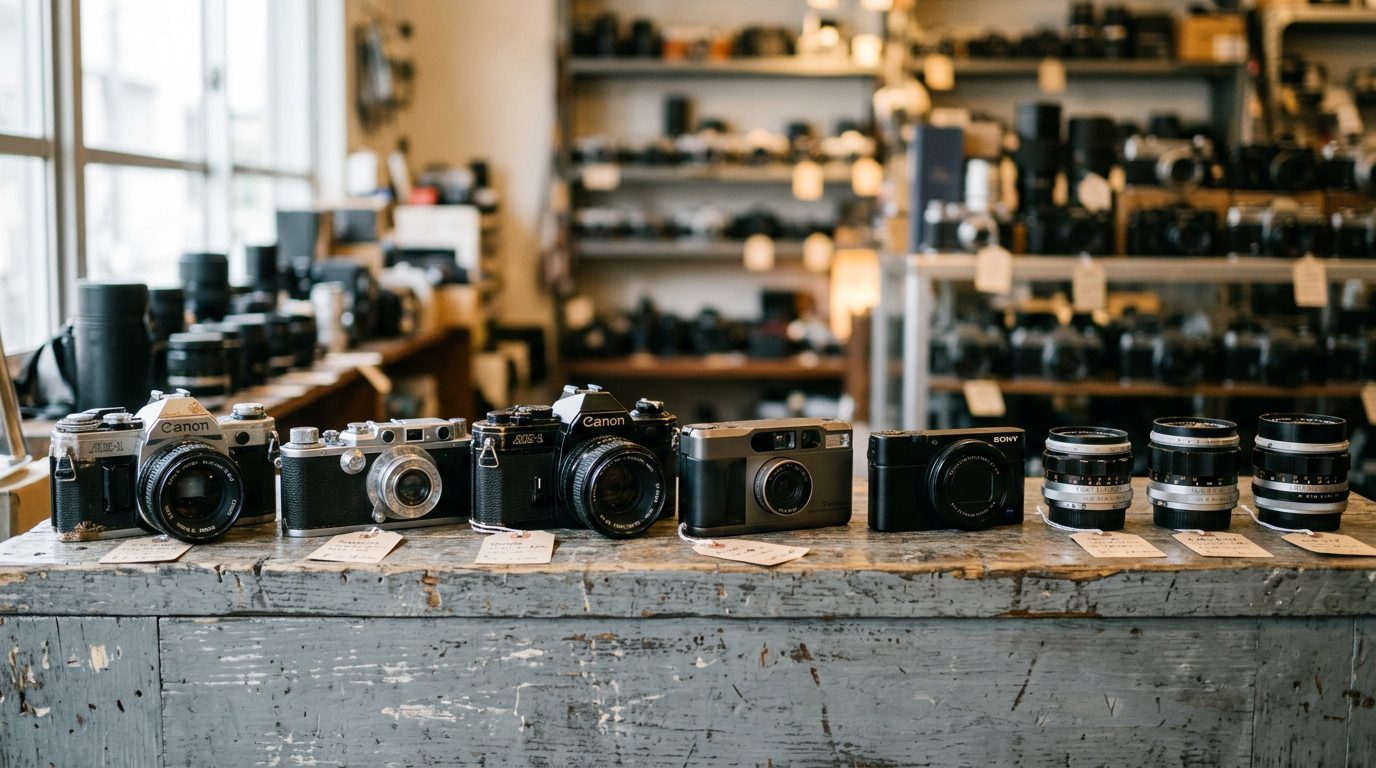
TL;DR
Almost every camera brand you can name is Japanese: Canon, Nikon, Sony, Fujifilm, Panasonic (Lumix), OM System (Olympus), Ricoh, Pentax and Sigma make the cameras; Sigma, Tamron, Tokina and Cosina (Voigtländer) make the lenses; and a second list of bygone, old and vintage Japanese camera brands — Minolta, Konica, Yashica, Contax, Kyocera, Mamiya, Bronica, Petri, Miranda, Topcon, Chinon, Fujica, Casio — is what fills the used shelves in Tokyo and the crossword clues. The famous, popular and longtime Japanese camera brands and the ones that are gone are all here, in one list. This is the full list of Japanese camera brands, companies and manufacturers (and the Japanese camera lens manufacturers), current and defunct, by type of camera, with the years, the cameras each one is known for, and what their used bodies are actually listed for in Japan on 17 September 2026.
- Current makers (9 + licensed Kodak): table one. Lens and accessory makers: table two. Defunct and vintage brands (16): table three.
- Camera brands that aren’t Japanese: Leica and Zeiss (Germany), Hasselblad (Sweden), Kodak and GoPro (US), Phase One (Denmark), Lomography (Austria), DJI and Insta360 (China), Samyang (Korea), Laowa / Viltrox / TTArtisan / 7Artisans (China). Zeiss and Voigtländer lenses for Japanese mounts are, however, built in Japan by Cosina.
- Prices today: a tested 1970s SLR such as the Canon AE-1, Pentax ME or Minolta X-700 starts under ¥10,000 on Mercari; a Nikon FM2 with a 50 mm is ¥55,000; the premium compacts (Contax T2 ¥122,222, Yashica T4 ¥79,800) cost more than a new Ricoh GR IV would have five years ago.
- Buying from Japan: most listings are Japan-only; a proxy (best services compared, cheapest fees) buys and ships. Cameras with installed lithium batteries ship by post within airline limits; loose spare batteries do not (the shipping rules).
Japanese camera brands today: the current makers
These are the Japanese camera companies still designing and selling cameras under their own names. Between them they account for the overwhelming majority of the world’s interchangeable-lens cameras; CIPA, the Tokyo-based Camera & Imaging Products Association, is where the global shipment statistics for the whole industry are published[1].
| Brand | Head office | Founded | Makes today | Why it matters |
|---|---|---|---|---|
| Canon | Tokyo | 1933 (Precision Optical Instruments Laboratory; Kwanon prototype 1934) | EOS R mirrorless, EOS DSLRs, PowerShot compacts, RF/EF lenses, cinema cameras | The largest camera maker by volume; the EOS name dates from 1987, EOS-1 from 1989, the first EOS Kiss (Rebel outside Japan) from 1993. |
| Nikon | Tokyo | 1917 (Nippon Kogaku K.K.) | Z mirrorless, F-mount DSLRs, Nikkor lenses, Coolpix | Started as an optical-glass and rangefinder maker; the Nikon F (1959) made the Japanese SLR the professional standard, and the D1 (1999) was the first DSLR designed entirely in-house by a camera maker. |
| Sony | Tokyo | 1946 (Tokyo Tsushin Kogyo); cameras since 2006 | α (Alpha) full-frame and APS-C mirrorless, RX compacts, ZV vlogging cameras, Xperia phones, sensors | Bought the Konica Minolta camera business in 2006 and inherited the A-mount; the α7 (2013) was the first full-frame mirrorless camera. Also the sensor supplier to most of the industry. |
| Fujifilm | Tokyo | 1934 (Fuji Photo Film) | X-series APS-C mirrorless, GFX medium format, X100 compacts, Instax instant cameras and film | Sold cameras as Fujica until the 1980s; the X100 (2011) started the retro-compact boom, and Instax (1998) is now the biggest-selling camera line in the world by units. |
| Panasonic (Lumix) | Osaka | 1918 (Matsushita); Lumix since 2001 | Lumix S full-frame and G Micro Four Thirds mirrorless, TZ/ZS travel compacts, camcorders | The Lumix G1 (2008) was the first mirrorless interchangeable-lens camera; Micro Four Thirds was co-developed with Olympus. Video-first brand (GH series). |
| OM System (formerly Olympus) | Tokyo (Hachioji) | 1919 (Takachiho Seisakusho); Olympus brand 1921; OM Digital Solutions 2021 | OM-1 / OM-5 Micro Four Thirds mirrorless, Tough TG waterproof compacts, M.Zuiko lenses | The name is Mount Olympus, chosen to echo Takachiho, the mountain of the gods in Japanese myth. Olympus sold its camera business to OM Digital Solutions in January 2021; the cameras continue under the OM System name[5]. |
| Ricoh | Tokyo | 1936 (Riken Kankoshi) | GR IV / GR III fixed-lens compacts, Theta 360° cameras, WG waterproof compacts | The GR line began as the film GR1 (1996) and is the street-photography compact. Ricoh owns Pentax (since 2011) and is also the office-equipment giant of the crossword clues. |
| Pentax (Ricoh Imaging) | Tokyo | 1919 (Asahi Kogaku); Pentax name 1957 | K-mount DSLRs (K-3 III, KF), Pentax 17 half-frame film camera (2024), 645 medium format | The Asahiflex (1952) was the first Japanese SLR; Pentax is the last Japanese maker still building new DSLRs and, since 2024, new film cameras. Owned by Hoya 2008–2011, then Ricoh. |
| Sigma | Kawasaki; factory in Aizu, Fukushima | 1961 | fp / BF full-frame mirrorless, Art / Contemporary / Sports lenses for every mount, Foveon sensors | Family-owned, single factory in Aizu; the largest independent lens maker and a camera brand in its own right. |
| Kodak (Japan-licensed) | — | — | PIXPRO compacts, disposable and half-frame film cameras sold in Japan | Not a Japanese brand: the Kodak name on cameras is licensed to JK Imaging (US) and the Japanese-market film cameras are distributed locally. Listed here because it turns up in every Japanese used-camera search. |
Why are most camera brands Japanese?
Three reasons, in order. Japan already had an optical-glass and precision industry before the war (Nippon Kogaku was founded in 1917 to make rangefinders and microscopes for the navy[2]; Canon started in 1933 by copying and then out-engineering the Leica[3]). The Korean War brought American press photographers through Tokyo, where they discovered that Nikkor lenses out-resolved their Leica and Contax glass, and the Nikon F (1959) turned that into the professional system. Then the 1970s–80s electronic SLRs (Canon AE-1, Minolta α-7000) and the 1990s–2000s digital transition (Casio, Sony, Fujifilm, Canon) were all fought and won by Japanese consumer-electronics groups with their own sensor, lens and chip factories. Germany kept the luxury tier (Leica), Sweden the medium-format studio tier (Hasselblad), and everyone else exited.
Japanese lens brands and camera-accessory makers
The camera brands above make their own lenses, but the third-party lens makers, filter makers and tripod brands are Japanese too. If you search “japanese lens brands” or “japanese camera filter brands”, this is the list.
| Maker | Where | What it makes | Note |
|---|---|---|---|
| Sigma | Aizu, Fukushima | Art / Contemporary / Sports lenses for Sony E, L-Mount, Canon RF, Nikon Z, Fujifilm X, Micro Four Thirds | The default third-party lens brand worldwide; still made in Japan. |
| Tamron | Saitama | Zooms for Sony E, Nikon Z, Fujifilm X, Canon RF; Di III VXD line | Founded 1950; also made Bronica medium-format cameras 1998–2005. |
| Tokina (Kenko Tokina) | Tokyo | ATX / ATX-i wide zooms, cine lenses | Merged with the filter maker Kenko in 2011; the group also owns the Slik tripod brand. |
| Cosina (Voigtländer, Zeiss) | Nakano, Nagano | Voigtländer Nokton / Ultron / Heliar lenses (VM, E, Z, X, RF mounts), Zeiss ZM and ZF lines, Bessa film rangefinders (discontinued 2015) | The Nagano optical works that builds the German-named manual-focus lenses. Cosina-made Voigtländer is a Japanese product[6]. |
| Kenko | Tokyo | Filters, teleconverters, close-up lenses, tripods (Slik) | The filter brand in every Japanese camera shop. |
| Marumi | Nagano | EXUS / DHG filters | Second Japanese filter maker; Nagano again. |
| Hoya | Tokyo | HD / Fusion filters, optical glass blanks for the whole industry | Owned Pentax 2008–2011; its glass is inside lenses of every brand above. |
| Velbon | Tokyo | Tripods, monopods | The other Japanese tripod name next to Slik. |
| Hakuba | Tokyo | Camera bags, dry boxes, cleaning gear, LCD protectors | Accessory brand you will see on every Japanese listing for a case or strap. |
Japanese camera bag and strap brands
The Japanese camera-bag brands that show up on used listings are Artisan & Artist (silk-cord straps and leather bags, Tokyo), Porter / Yoshida & Co. (the Tanker and Smoky camera bags), Acru (Osaka, leather straps), Ulysses (leather half-cases and straps), Hakuba and Etsumi (mass-market cases and accessories). Tripods are Velbon and Slik. A leather camera strap, neck strap or wrist strap from any of these ships in the cheapest weight band, so they are the usual add-on to a body order; the same brands make the camera backpack, sling bag, pouch and leather wrap you will see bundled with a body. Repair tools (spanner wrenches, light-seal kits, Japan Hobby Tool) are sold on Rakuten and Amazon Japan.
Old, bygone and vintage Japanese camera brands
This is the list people are really looking for with “old japanese camera brands”, “defunct japanese camera brand” or a crossword clue. Every name below made cameras in Japan and no longer does under Japanese ownership — which is exactly why their bodies are collectible. Each name links to live listings.
| Brand | Where | Years | Best-known cameras | What happened |
|---|---|---|---|---|
| Minolta | Osaka | 1928–2003 (merged into Konica Minolta), camera business to Sony 2006 | X-700 and X-570 manual-focus SLRs, α-7000 (1985, the first body-integral autofocus SLR), TC-1 compact, Hi-Matic rangefinders, Autocord TLR, CLE | The brand that merged with Konica and then left the camera business; Sony’s α name and A-mount are Minolta’s. |
| Konica | Tokyo | 1873 (Konishi-ya, the oldest Japanese photographic company) – 2003 | C35 rangefinders, Big Mini compacts, Hexar / Hexar RF, Hexanon lenses, Konica colour film (Sakuracolor) | Usually cited as the oldest Japanese camera company; the Cherry Portable Camera (1903) is the first Japanese-branded camera. |
| Yashica | Suwa, Nagano; later Tokyo | 1949–1983 (bought by Kyocera); name now licensed | Electro 35 rangefinders, Yashica Mat TLRs, T4 / T5 compacts with Zeiss Tessar lenses, FX-3 | Yashica made the Japanese Contax cameras under licence from Zeiss from 1975. Often misspelled “Yoshika”. The Yashica name is now owned by a Hong Kong company that sells re-badged digital cameras and film; the collectible cameras are the Japanese ones. |
| Contax (Kyocera) | Kyoto | 1975–2005 in Japan | RTS / Aria SLRs, G1 / G2 autofocus rangefinders, T2 / T3 titanium compacts, Contax 645, N Digital (2002) | A Zeiss-owned German name built in Japan by Yashica and then Kyocera; Kyocera stopped all camera production in 2005, which is why a T2 costs what it does today. |
| Kyocera | Kyoto | cameras 1983–2005 | Kyocera-branded compacts (Slim T, Samurai half-frame), Yashica and Contax lines | The ceramics group that owned Yashica and Contax. Still exists; no longer makes cameras. |
| Mamiya | Tokyo | 1940–2015 (absorbed into Phase One) | RB67 / RZ67, 645 / M645, Mamiya 6 / 7 rangefinders, C220 / C330 TLRs | The medium-format brand of wedding and studio photographers; the digital line became Phase One’s. |
| Bronica (Zenza Bronica) | Tokyo | 1958–2005 (Tamron from 1998) | S2, EC, ETR, SQ, GS-1 medium-format SLRs, RF645 | The “Japanese Hasselblad”; Tamron ended production in 2005. |
| Olympus | Tokyo | cameras 1936–2021 (now OM System) | Pen half-frame (1959), OM-1 (1972), XA, µ [mju:] compacts, Trip 35, PEN and OM-D digital | The brand advertised by David Bailey in Britain (Trip 35, 1970s–80s). The name survives on medical equipment; the cameras are now OM System. |
| Petri | Tokyo | 1907 (Kuribayashi) – 1977 | Petri 7 rangefinders, Petri Flex SLRs | Budget brand of the 1960s; bankrupt 1977. |
| Miranda | Tokyo | 1955–1976 | Miranda T (1955), Sensorex | The Miranda T is usually credited as the first Japanese SLR with an eye-level pentaprism. |
| Topcon | Tokyo | cameras 1937–1981 | Topcon RE Super (1963, the first SLR with through-the-lens metering), Topcor lenses | Tokyo Kogaku still exists in surveying and eye-care instruments; it left cameras in 1981. |
| Chinon | Suwa, Nagano | 1948–2004 (Kodak subsidiary from 1997) | CE-4 SLRs, Bellami, 8 mm cine cameras, early Kodak digital compacts | Another Nagano maker; built many of Kodak’s early digital cameras. |
| Fujica | Tokyo | brand used until 1985 | Fujica ST series SLRs, GW690 medium format, Single-8 cine | Not a separate company — Fujifilm’s camera brand before the Fujifilm name went on the bodies. |
| Casio | Tokyo | cameras 1995–2018 | QV-10 (1995, the first consumer digital camera with an LCD screen), Exilim compacts | Left the compact-camera market in 2018; Exilim bodies are now Y2K collectibles. |
| Ricohflex / Ricoh (film era) | Tokyo | — | Ricohflex TLRs (1950s), Auto Half, GR1 / GR1v / GR21 compacts | Ricoh is alive and well (table above); its film-era TLRs and GR compacts belong in the vintage list. |
| Sanyo | Osaka | cameras to 2011 | Xacti camcorders; also built digital compacts for other brands | Absorbed by Panasonic; a large share of early-2000s Japanese compacts were Sanyo-made. |
Timeline: Japanese camera brands by decade
The 1949, 1960s and 1970s searches all want the same thing — which brands existed when. The dates come from the makers’ own corporate histories and the JCII Camera Museum in Tokyo[4].
| Year | What happened |
|---|---|
| 1873 | Konishi-ya (later Konica) opens in Tokyo — the oldest Japanese photographic company. |
| 1903 | Konishi’s Cherry Portable Camera, the first Japanese-branded camera. |
| 1917 | Nippon Kogaku (Nikon) founded in Tokyo to make optical glass, rangefinders and microscopes. |
| 1919 | Asahi Kogaku (Pentax) and Takachiho Seisakusho (Olympus) founded. |
| 1928–33 | Minolta founded in Osaka (1928); Precision Optical Instruments Laboratory (Canon) opens in Tokyo (1933), Kwanon prototype 1934. |
| 1934–36 | Fuji Photo Film (1934) and Ricoh (1936) founded. |
| 1948–49 | Nikon I rangefinder (1948); Yashica founded in Suwa, Nagano (1949). |
| 1952 | Asahiflex I — the first Japanese 35 mm SLR. |
| 1955 | Miranda T, the first Japanese eye-level pentaprism SLR. |
| 1957–59 | Asahi Pentax (1957); Olympus Pen half-frame (1959); Nikon F (1959), the camera that took professionals from Leica to Japan. |
| 1960s | Yashica Electro 35 (1966), Konica C35 (1968), Topcon RE Super (1963): the decade Japanese brands took the world market. “Japanese camera brands 1960s” is, in practice, this list. |
| 1970s | Olympus OM-1 (1972), Canon AE-1 (1976, the first microprocessor SLR), Nikon F2, Pentax K1000, Minolta XD. The 1970s cameras are the cheapest working film SLRs today. |
| 1985–89 | Minolta α-7000 (1985) brings autofocus; Canon EOS (1987) and EOS-1 (1989); Fujix DS-X (1989), the first commercially sold fully digital camera. |
| 1990–96 | Contax T2 (1990), Yashica T4 (1990s), Casio QV-10 (1995), Ricoh GR1 (1996): the premium-compact and first-digital years. |
| 1999 | Nikon D1, the first DSLR designed and built by a camera maker rather than adapted from a film body. |
| 2003–06 | Konica and Minolta merge (2003) and sell the camera business to Sony (2006); Kyocera ends Contax and Yashica (2005). |
| 2008–13 | Panasonic Lumix G1 (2008), the first mirrorless camera; Fujifilm X100 (2011); Sony α7 (2013), the first full-frame mirrorless. |
| 2018–21 | Casio leaves cameras (2018); Nikon Z and Canon EOS R launch (2018); Olympus hands cameras to OM Digital Solutions (2021). |
| 2024–26 | Pentax 17 half-frame film camera (2024) — the first new Japanese film camera in two decades; Ricoh GR IV (2025); Fujifilm X100VI and X half-frame; the used-film boom keeps 1970s bodies above ¥10,000 with a lens. |
Japanese camera brands by type of camera
Which brand to search depends on what kind of camera you want. The right-hand column runs a live search of the shops in Japan; brand names in the middle column are the ones to add to it.
| Camera type | Japanese brands and the cameras to search | Live listings |
|---|---|---|
| Film SLRs (35 mm) | Nikon (F, F2, F3, FM2, FE2), Canon (AE-1, A-1, F-1, EOS film bodies), Pentax (Spotmatic, K1000, ME, MX, LX), Olympus (OM-1 to OM-4), Minolta (X-700, XD, SRT-101), Yashica (FX-3), Contax (RTS, 139, Aria), Fujica (ST), Ricoh (XR), Chinon, Petri, Miranda, Topcon | search tested film SLRs |
| Rangefinders | Nikon S series, Canon P / 7 / Canonet, Yashica Electro 35, Konica C35 / Hexar RF, Minolta Hi-Matic / CLE, Olympus 35 SP / 35 RC, Cosina Voigtländer Bessa, Contax G1 / G2, Mamiya 6 / 7 (medium format) | search rangefinders |
| TLRs (twin-lens reflex) | Yashica Mat-124G, Minolta Autocord, Mamiya C220 / C330, Ricohflex, Rolleiflex-style Japanese copies from the 1950s (Yashicaflex, Minoltaflex, Ricoh) | search TLRs |
| Premium point-and-shoot (compact film) | Contax T2 / T3 / TVS, Yashica T4 / T5, Olympus µ [mju:] / mju-II / XA, Ricoh GR1 / GR1v / GR21, Nikon 28Ti / 35Ti, Minolta TC-1, Fujifilm Klasse / Natura, Konica Big Mini / Hexar, Canon Autoboy, Kyocera Slim T, Pentax Espio | search compact film cameras |
| Medium format | Mamiya (RB67 / RZ67 / 645 / 6 / 7), Bronica (ETR / SQ / GS-1), Pentax (67 / 645), Fujifilm (GW690, GA645, GF670), Zenza Bronica | search medium format |
| Half-frame | Olympus Pen (1959–), Canon Demi, Kyocera Samurai, Pentax 17 (2024), Kodak Ektar H35 (sold in Japan, not Japanese) | search half-frame |
| Mirrorless (current) | Sony α (E-mount), Fujifilm X and GFX, Canon EOS R (RF), Nikon Z, Panasonic Lumix S (L-Mount) and G (Micro Four Thirds), OM System (Micro Four Thirds), Sigma fp / BF (L-Mount) | search mirrorless bodies |
| DSLRs | Pentax K-3 Mark III / KF (the only ones still in production), used Canon EOS (Kiss / 5D / 1D) and Nikon D bodies | search used DSLRs |
| Fixed-lens digital compacts | Ricoh GR IV / GR III / GR IIIx, Fujifilm X100VI / X100V, Sony RX100 / RX1, Canon PowerShot G7X, OM System Tough TG-7, Ricoh WG | search digital compacts |
| Y2K / retro digital compacts | Casio Exilim, Sony Cyber-shot T and W series, Olympus µ digital, Canon IXY (IXUS / PowerShot ELPH), Panasonic Lumix FX, Fujifilm FinePix Z, Pentax Optio, Nikon Coolpix S | search early-2000s compacts |
| Instant | Fujifilm Instax (mini / Square / Wide), Instax Mini Evo hybrid | search Instax |
| Video and cinema | Sony (FX / Handycam / Venice), Panasonic (GH / camcorders), Canon (Cinema EOS), JVC (Victor), Blackmagic is Australian | search camcorders |
| 360°, action, underwater, toy | Ricoh Theta (360°), OM System Tough TG and Ricoh WG (waterproof), Sony Action Cam (discontinued), Fujifilm Instax Pal, Kenko toy cameras, Superheadz / Powershovel (Tokyo) toy film cameras, the EmoFlip flip-phone camera | search waterproof cameras |
| Phones with Japanese camera brands behind them | Sony Xperia (Sony sensors and Alpha tuning), Sharp Aquos (Leica-branded optics), Kyocera Torque; the Japanese “camera phone” shutter click is a carrier convention, not a law | search Xperia |
| CCTV and security | Panasonic i-PRO, Canon network cameras, Sony, JVC Kenwood; Hikvision and Dahua are Chinese, not Japanese | — |
Best Japanese film camera brands for a first body (35mm, for beginners)
For a first 35 mm (35mm) film camera — the best Japanese camera for beginners — the answer is Pentax, Canon, Minolta or Olympus from the 1970s–80s: the Pentax K1000 and ME, Canon AE-1 / AE-1 Program, Minolta X-700 and Olympus OM-1 / OM-2 were made in the millions, every repair shop knows them, and a tested body with a 50 mm lens is in the ¥8,000–¥20,000 band on Mercari today (table below). Nikon FM2 / FE2 bodies are better built and cost two to four times as much. For a Japanese point-and-shoot film camera, the cheap tier is Olympus µ [mju:], Canon Autoboy and Konica C35; the premium tier (Contax T2 / T3, Yashica T4, Ricoh GR1, Minolta TC-1, Nikon 35Ti) is where prices run into six figures of yen. For a Japanese rangefinder, the Yashica Electro 35 and Konica C35 are the affordable classics; a TLR means Yashica Mat or Minolta Autocord.
Best Japanese digital, mirrorless and compact camera brands
Every current mirrorless system is Japanese, so “best Japanese mirrorless camera” is really “which system”: Sony for lens choice and autofocus, Fujifilm for the film-simulation colour and retro controls, Canon and Nikon for the pro ecosystems, Panasonic for video, OM System for weather-sealed small bodies. For a Japanese compact camera, the two that hold value are the Ricoh GR series (the street-photography compact since the film GR1) and the Fujifilm X100 series; a used first-generation X100 is ¥70,900 today and a new GR IV is ¥220,000 at Suruga-ya. The Japanese retro digital camera trend (early-2000s Casio Exilim, Sony Cyber-shot, Canon IXY, Olympus µ digital) is the cheapest way in: those bodies are still ¥3,000–¥10,000 in Japan while they climb overseas. Our DSLR brand guide covers the Canon / Nikon / Pentax DSLR side, and the Fujifilm X-S10 review is the beginner mirrorless pick.
What Japanese cameras cost in Japan today: live listings
Every row is a listing on sale on 17 September 2026, read from the shop page the morning this article went live. They are asking prices before proxy fees and shipping; the used-camera guide explains the ジャンク / tested / serviced tiers that separate a ¥3,000 body from a ¥20,000 one.
| Listing (17 Sep 2026) | Type | Shop | Asking price | USD |
|---|---|---|---|---|
| Konica C35 EF, tested | compact rangefinder, 1975 | Mercari | ¥7,780 | $53.68 |
| Canon AE-1 Program + zoom lens, tested | film SLR, 1981 | Mercari | ¥7,800 | $53.82 |
| Pentax ME + SMC 50mm f/1.4, seals replaced | film SLR, 1976 | Mercari | ¥7,900 | $54.51 |
| Olympus µ [mju:] Zoom Panorama, working | compact, 1990s | Mercari | ¥9,500 | $65.55 |
| Minolta X-700 body, tested | film SLR, 1981 | Mercari | ¥9,900 | $68.31 |
| Canon AE-1 silver | film SLR, 1976 | Rakuten | ¥15,000 | $103.50 |
| Mamiya M645 CdS body | medium format, 1970s | Rakuten | ¥15,200 | $104.88 |
| Minolta X-700 + New MD 50mm f/1.7, excellent | film SLR + lens | Mercari | ¥16,400 | $113.16 |
| Konica C35 Flashmatic, serviced with warranty | compact rangefinder, 1971 | Rakuten | ¥19,800 | $136.62 |
| Sony α7 body (first generation, 2013) | full-frame mirrorless | Mercari | ¥44,700 | $308.43 |
| Nikon FM2 + Ai Nikkor 50mm f/1.4, silver | film SLR + lens, 1982 | Mercari | ¥55,000 | $379.50 |
| Fujifilm FinePix X100 silver, excellent | APS-C compact, 2011 | Rakuten | ¥70,900 | $489.21 |
| Kyocera / Yashica T4 Super (T Proof) | premium compact, 1990s | Mercari | ¥79,800 | $550.62 |
| Contax T2 titanium | premium compact, 1990 | Mercari | ¥122,222 | $843.33 |
| Ricoh GR IV, new | APS-C compact, 2025 | Suruga-ya | ¥220,000 | $1,518.00 |
Six of those listings
One body per brand, from the cheapest working SLR to the new GR. Check the seller’s photos of the light seals and lens glass before bidding on any 1970s body.


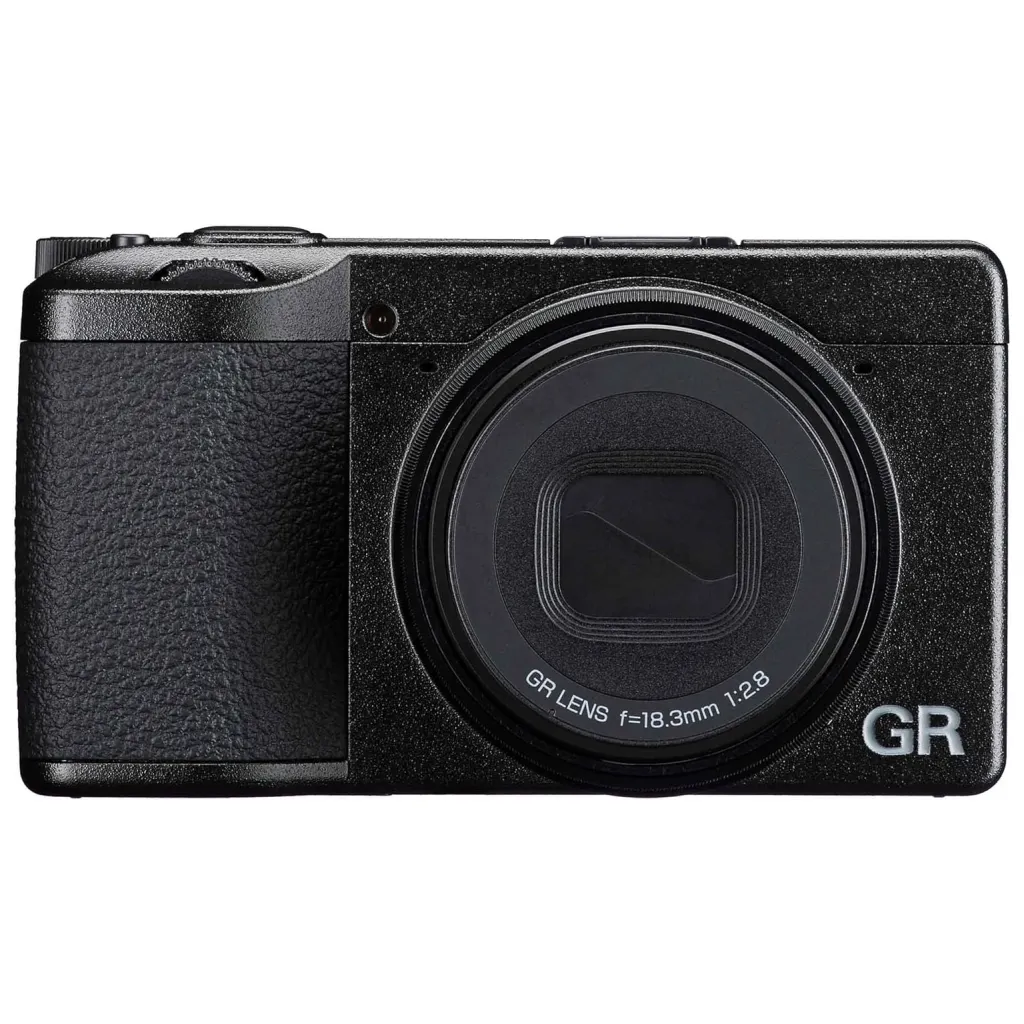


The JCII “PASSED” sticker
Gold “PASSED” stickers on 1950s–80s bodies are the Japan Camera Industry Institute export inspection mark — the Japanese camera industrial standard check that every exported camera had to clear from 1954 until the scheme ended in 1989. A sticker still in place is a small plus on a collector body; it is not a condition grade.
Japanese camera terms to read a listing
Listings are written in Japanese, and the condition words decide the price. The word for camera is カメラ in katakana (かめら in hiragana); the older kanji word 写真機 still appears on antique listings. The rest of the vocabulary:
| Japanese | Reading | Meaning |
|---|---|---|
| カメラ | kamera | camera (the katakana word; 写真機 shashinki is the old kanji word) |
| 一眼レフ | ichigan-refu | SLR (single-lens reflex); デジタル一眼レフ = DSLR |
| ミラーレス | mirāresu | mirrorless |
| フィルムカメラ | firumu kamera | film camera |
| コンパクト / コンデジ | konpakuto / kondeji | compact / compact digital camera |
| レンジファインダー | renji-faindā | rangefinder |
| 二眼レフ | nigan-refu | TLR |
| 中判 | chūban | medium format |
| 単焦点 / ズーム | tanshōten / zūmu | prime / zoom lens |
| ボディ / レンズキット | bodi / renzu kitto | body only / with kit lens |
| 中古 | chūko | used |
| ジャンク | janku | junk / as-is, untested or faulty — the cheapest tier |
| 動作確認済み | dōsa kakunin-zumi | tested working |
| 完動品 | kandōhin | fully working |
| 整備済み / モルト交換済み | seibi-zumi / moruto kōkan-zumi | serviced / light seals replaced |
| 美品 / 極上品 | bihin / gokujōhin | excellent / mint |
| 露出計 OK | roshutsukei OK | light meter works |
| カビ / クモリ | kabi / kumori | fungus / haze in the lens |
| 元箱 | motobako | original box |
| シャッター回数 | shattā kaisuū | shutter count (digital) |
Where to buy Japanese cameras from Japan
The Japanese used-camera market is the largest in the world, and the reason a Tokyo camera store or a Japanese eBay seller can undercut your local shop is that the supply is here. Buying at the source through a proxy removes the eBay reseller’s margin; the shops:
| Where | What it is good for | Best for |
|---|---|---|
| Mercari Japan | Private sellers; the widest pool of 1970s–90s bodies and lenses, priced by condition words rather than by shop grade. | Cheap tested SLRs, compacts |
| Yahoo! Japan Auctions | Where dealer stock, job lots and the rare bodies (Nikon SP, Contax T3, Minolta TC-1) surface; bidding sets the market. | Rare and collectible |
| Suruga-ya | Fixed prices, graded condition, new stock of current Ricoh / Fujifilm / Sony bodies as well as retro compacts. | New GR / X100, Y2K compacts |
| Rakuten shops (Map Camera, Fujiya Camera, Kitamura and the specialist dealers) | Dealer-serviced bodies with warranties; more expensive than Mercari, safer for a first film camera. | Serviced, warrantied cameras |
| How to read a Japanese used-camera listing | Our guide to ジャンク grades, what a body really costs and the import maths. | Read before buying |
Amazon Japan, Hard Off and the other retailers
Amazon Japan (amazon.co.jp) sells new bodies and the Kodak, Kenko and Hakuba accessories, and its Japanese sellers list used bodies too; the “japanese camera amazon” searches are that. The thrift-store tier is Hard Off (the second-hand electronics chain with a ジャンク corner in every branch) and Book Off Plus; their stock reaches overseas buyers mainly through Yahoo! Auctions and Mercari. Any retailer or website in Japan that lists on Rakuten, Yahoo! Shopping, Mercari or Yahoo! Auctions is reachable through the search links in this article.
Japanese camera stores in Tokyo (for reference)
The Shinjuku cluster — Map Camera, Kitamura, Yodobashi Camera and Bic Camera for new stock — plus Fujiya Camera in Nakano and Lemon-sha in Ginza are the shops travellers search for. Several of them sell online through Rakuten and Yahoo! Shopping, which is how their stock reaches the search links above without a flight.
Shipping a camera from Japan
- Batteries: a digital camera with its battery installed ships by Japan Post or ECMS within airline limits; loose spare batteries and power banks cannot be shipped at all. Film cameras have no restriction (full list).
- Weight and cost: a film SLR with a 50 mm is 700–900 g; a medium-format body 1.5–2 kg. Compare EMS, ECMS and DHL on the shipping-time guide.
- Customs and tariffs: used cameras are dutiable like new ones (the 2025–26 US tariffs apply to the country of origin printed on the body, which for most Japanese brands is Japan, Thailand, China or Vietnam); the thresholds by country are in the import-tax guide.
- Voltage: chargers are 100 V but almost all are 100–240 V auto-switching; check the label on older Sony and Casio chargers.
Quick answers: the Japanese camera brand questions people search
| Question people search | Answer |
|---|---|
| Which Japanese camera brand merged with Konica? | Minolta, in 2003, forming Konica Minolta; the camera business went to Sony in 2006. |
| Which Japanese camera brand is named after a Greek mountain? | Olympus (Mount Olympus, chosen to echo Mt Takachiho of Japanese myth). |
| Japanese camera brand, 5 letters? | Canon, Nikon, Ricoh or Sigma. Six letters: Pentax, Cosina, Konica. Seven: Minolta, Yashica, Olympus, Fujica. |
| Japanese camera brand starting with M / N? | M: Minolta, Mamiya, Miranda. N: Nikon. |
| Which Japanese camera brand introduced the DSLR? | Nikon’s D1 (1999) was the first DSLR designed from the ground up by a camera maker; earlier Kodak DCS models were built on Nikon and Canon film bodies, and Minolta’s RD-175 (1995) was a hybrid. The first mirrorless was Panasonic’s Lumix G1 (2008); the first full-frame mirrorless was Sony’s α7 (2013). |
| Which Japanese camera brand was advertised by David Bailey? | Olympus (the Trip 35 campaigns in Britain). |
| Which Japanese camera brands are from Nagano? | Yashica (founded in Suwa), Chinon (Suwa), Cosina (Nakano) and Marumi; Olympus and Seiko Epson also build in Nagano. |
| Which Japanese camera and office-equipment brands are the same company? | Canon, Ricoh and Konica Minolta all make printers and copiers; Ricoh is the usual crossword answer. |
| Oldest Japanese camera company? | Konica (Konishi-ya, 1873). Oldest still making cameras under its own name: Nikon (1917). |
| Bygone Japanese camera brand? | Minolta, Yashica, Contax, Konica, Mamiya, Bronica, Petri, Miranda, Topcon, Chinon, Fujica — full table above. |
FAQ
What are the Japanese camera brands?
Current: Canon, Nikon, Sony, Fujifilm, Panasonic Lumix, OM System (Olympus), Ricoh, Pentax, Sigma. Lenses: Sigma, Tamron, Tokina, Cosina (Voigtländer). Defunct or sold: Minolta, Konica, Yashica, Contax, Kyocera, Mamiya, Bronica, Petri, Miranda, Topcon, Chinon, Fujica, Casio, Sanyo. Full tables above.
Are all camera brands Japanese?
No, but nearly all mass-market ones are. Leica, Zeiss, Hasselblad, Phase One, Kodak, Polaroid, Lomography, GoPro, DJI, Insta360 and the Chinese lens makers are the non-Japanese camera brands; Samsung and Kodak left the interchangeable-lens market.
Is Japanese camera quality really better?
The quality reputation is earned in the lens and body machining, not in the electronics, which is why a 50-year-old Nikon F still works and why the used market exists at all. What matters today is condition: a serviced body from any Japanese brand beats an untested one from the “better” brand.
Which Japanese camera brand is best?
For a used film camera: Nikon for build, Pentax / Canon / Minolta / Olympus for value. For a new mirrorless: Sony, Fujifilm, Canon or Nikon depending on the lenses you want. For a compact: Ricoh GR or Fujifilm X100. There is no bad current Japanese brand; there are bad individual used bodies, which is why the condition words matter.
Is Kodak Japanese? Is Leica Japanese? Is Voigtländer Japanese?
Kodak is American (its Japanese-market film cameras are made and distributed under licence). Leica is German. Voigtländer is a German name whose current lenses and the former Bessa cameras are made by Cosina in Nagano, Japan.
Does Japan have a camera shutter-sound law? Are there Japanese camera laws?
No statute exists, and there are no Japanese camera laws that affect an export purchase. Phones sold by Japanese carriers ship with a shutter sound that cannot be muted, but that is a carrier and manufacturer convention; imported phones and every dedicated camera can be silenced. Cameras bought in Japan work the same as anywhere else.
Is there a Japanese kid camera brand? Does Nikon make golf rangefinders?
Kids’ cameras from Japan are Fujifilm’s Instax Mini and Instax Pal, plus the Japanese toy-camera makers (Kenko, Superheadz) — the Chinese “kids camera” bodies are not Japanese. And yes: a “Japanese rangefinder golf” search is Nikon’s Coolshot laser rangefinders, a golf accessory, not a camera.
What is the best Japanese camera translator app?
Google Lens or the Google Translate camera mode reads menus and listings live; the search links in this article already run the Japanese queries for you, and the term table above covers the condition words that matter.
Where can I buy a Japanese camera online from outside Japan?
Through the Japanese shops in the table above via a proxy service. The listing links in this article go straight to the items; the used-camera guide walks through a first order.
Related reading
- Used film cameras from Japan: how to read a listing and what a body really costs
- Best DSLR camera brands in Japan · Classic collector cameras · History of Japanese camera development
- Canon EOS-1N · Fujifilm X-S10 · EmoFlip HS-07 flip-phone toy camera
- Japanese watch brands · Japanese guitar brands · Japanese vintage hi-fi · Japanese stationery brands — the other brand guides in this series
Last updated: 17 September 2026. Listing prices read from live Japanese listings on 17 September 2026; company dates from the makers’ corporate histories.
References
- CIPA — Camera & Imaging Products Association, digital camera production and shipment statistics. cipa.jp
- Nikon — Corporate history, “1917: Nippon Kogaku K.K. established”. nikon.com
- Canon — The History of Canon, “1933: Precision Optical Instruments Laboratory”. global.canon
- JCII Camera Museum (Japan Camera Industry Institute), Tokyo. jcii-cameramuseum.jp
- OM Digital Solutions — corporate site (Olympus camera business transfer, 2021). om-digitalsolutions.com
- Cosina Co., Ltd. — Voigtländer and Zeiss lens manufacturing, Nakano, Nagano. cosina.co.jp