
 Shopping Guide
 HELP / FAQs


 By onemall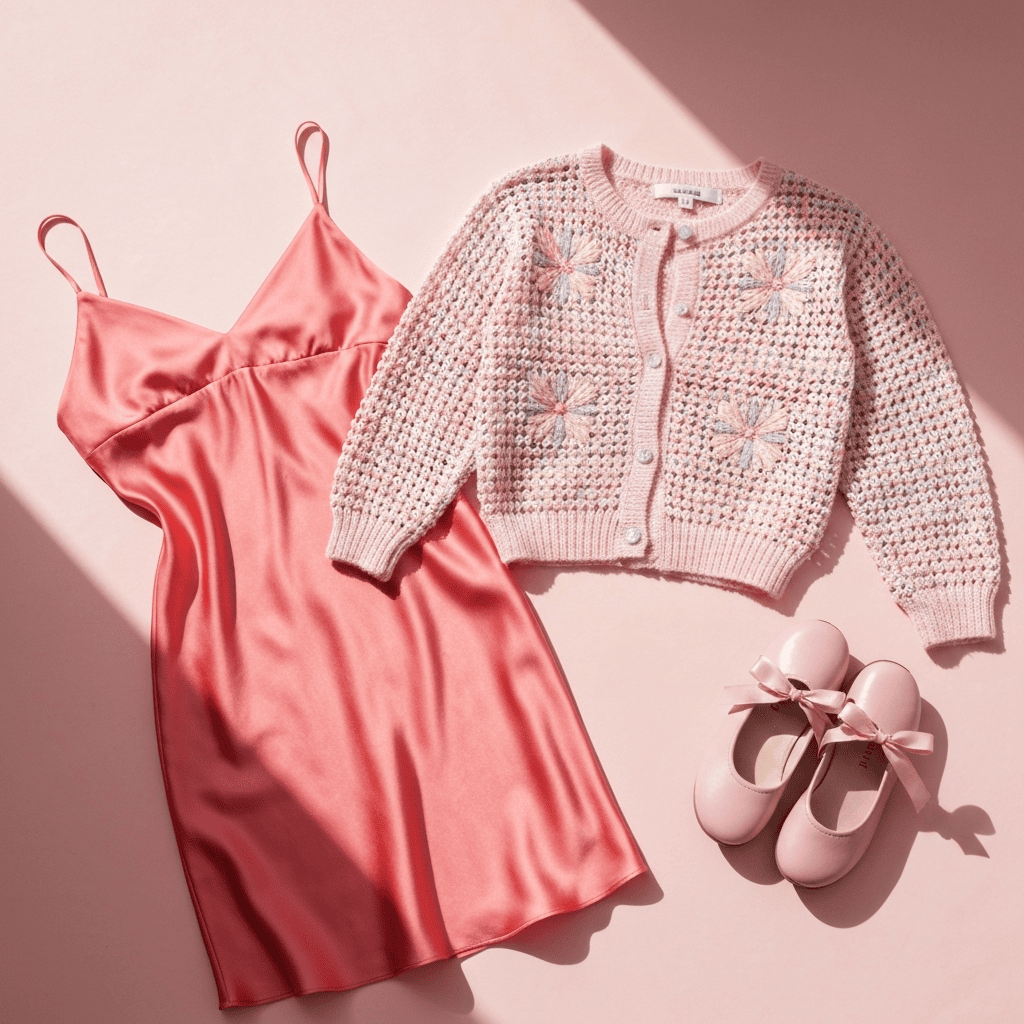
TL;DR
“Otome fashion” (乙女系 otome-kei, literally “maiden style”) is the girly, ribbon-and-lace end of Japanese women’s fashion that sits next to Lolita rather than inside it. No petticoat rules, no coordinate grammar, no subculture entry exam — just floral prints, puff sleeves, high waists and bows on clothes you can wear to work. It is also one of the hardest Japanese styles to buy from abroad, because the brands are built for a domestic customer and quietly hand overseas buyers to third parties.
- The brands route you to proxies on purpose. Dream V’s own overseas page lists proxy and forwarding services — ZenMarket, bibian, Buyee, FROM JAPAN, tenso.com — as the supported ways to buy from outside Japan, alongside direct EMS.[1] Using a proxy is not a workaround here; it is the official channel.
- Buying direct is not tax-free. The same page states all transactions are treated as domestic and consumption tax is charged even to customers shipping overseas, the overseas price equals the domestic tax-included price, overseas orders go EMS only, and the real shipping cost is confirmed by e-mail after you order.[1]
- Domestic shipping is nearly free by comparison — a flat ¥580 nationwide, free over ¥8,000[2] — which is the whole argument for consolidating a haul at a Japanese address.
- Search the scene tags, not the English word. Japanese sellers tag girly pieces 量産型 (the idol-event “mass-produced” look) and 地雷系, often with 参戦服 for concert outfits. These tags return live listings; “otome fashion” returns nothing on a Japanese marketplace.[5]
- Cheapest route — second-hand on Mercari Japan through a proxy: new-with-tags brand pieces from ¥1,580, mid-tier brand dresses at ¥3,000–¥5,200, consolidated into one parcel.
This guide covers what the style actually is as of August 2026, which brands matter, why the official overseas routes are more expensive than they look, and the cheap versus cheapest way to build a wardrobe from Japan.
Otome-kei, Lolita, and the Line Between Them
English-language write-ups tend to file otome-kei as “Lolita lite,” which gets the aesthetic roughly right and the mechanics completely wrong. Lolita is a constructed silhouette: a bell shape held out by a petticoat, a defined coordinate structure of blouse, jumperskirt or one-piece, headwear and legwear. There is a grammar, and wearing it badly is legible to everyone in the scene.
Otome-kei has no such grammar. It is a set of preferences — florals, lace trims, puff and balloon sleeves, high waists, Peter Pan collars, ribbon detailing, muted pinks and creams — applied to ordinary silhouettes. A one-piece dress from an otome brand is a dress. You can wear it to an office, and the woman next to you on the train will read it as “girly,” not as costume.
That difference is why the price ladder works the way it does. Lolita main pieces hold value because the scene is small, the runs are limited and the print matters. Otome pieces from a mall brand are produced at fashion volumes, worn a season, and resold at ordinary used-clothing prices. For a buyer overseas, this is the good news: the same wardrobe costs a fraction of what Lolita does.
If you want the structured version, you want Lolita, and the brand list is different. Our Lolita culture guide and Japanese Lolita brand rundown cover that side of the wardrobe.
The Brands That Define the Style
| Brand | What it is | Signature | Buying from overseas |
|---|---|---|---|
| LIZ LISA | The reference point for Japanese girly fashion for two decades | Florals, ribbon detail, sweet silhouettes; strong resale presence | Official site publishes a shop list and an online-stores directory rather than one global storefront[4] |
| Ank Rouge | Dolly, retro-girly mall brand; heavily resold second-hand | Round collars, chiffon puff sleeves, bijou trims | Second-hand market is deep and cheap; proxy territory |
| Amavel | Story-driven collections with named print worlds | Antique/atelier motifs, sailor collars, fairy-tale prints | Publishes an English shopping guide including a section for overseas customers[3] |
| Dream V (夢展望) family | Large domestic online retailer carrying multiple girly labels | Trend-fast, low price points | Overseas page routes you to ZenMarket, bibian, Buyee, FROM JAPAN or tenso.com, or direct EMS[1] |
| evelyn, INGNI, GRL and mall labels | The volume end of the same aesthetic | Where the 量産型 look is actually bought in Japan | Domestic only; second-hand through a proxy is the practical route[5] |
The Part Nobody Tells Overseas Buyers
Read Dream V’s own overseas-shipping page and the economics of buying girly Japanese fashion from abroad stop being mysterious.[1] It lists, in the brand’s own words, four ways to buy from outside Japan: a purchasing agent that buys inside the site (ZenMarket for most Western markets, bibian for Taiwan, Buyee for China and Hong Kong), a purchasing agent that buys from outside (FROM JAPAN, described as serving 196 countries), a forwarding service for parcels you bought yourself (tenso.com), and direct EMS delivery from the retailer.
Three details in that page decide whether direct shipping is worth it:
- Consumption tax applies anyway. The page states that all transactions are treated as domestic transactions and that consumption tax is charged to customers who want overseas shipping. The displayed domestic tax-included price is what you pay.[1]
- EMS only, and the quote comes later. Overseas orders ship by EMS; at checkout the system can only show domestic shipping, and the real amount arrives in a follow-up e-mail.[1] You are committing before you know the number.
- One cart equals one shipment. Items ordered together ship together for one shipping charge; separate orders cannot be combined later.[1] Domestically that same consolidation costs a flat ¥580, free above ¥8,000.[2]
Put those together and the case for a proxy writes itself: you get the domestic shipping rate on every leg inside Japan, you can buy from five different brands and marketplaces into one warehouse, and you see the international shipping cost before you pay it. That is the same conclusion the brands reached — which is why their own help page lists proxy services first.
Search the Tags Japanese Sellers Actually Use
This is where most overseas buyers lose. “Otome fashion” is an English label for a Japanese aesthetic; typing it into a Japanese marketplace returns essentially nothing. The tags that work, verified against live listings:[5]
| Tag | Reads as | Use it for |
|---|---|---|
| 量産型 | “Mass-produced type” — the idol-fan girly uniform | The current mainstream girly look: ribbons, frills, pastel and black |
| 地雷系 | “Landmine type” — the darker, black-and-pink cousin | Same silhouettes in a black/pink palette |
| 参戦服 | “Battle outfit” — what you wear to a concert | Coordinated sets bought for a specific event, resold immediately after |
| ワンピース | One-piece dress | The core garment; pair it with a brand name |
| 新品タグ付き | New with tags | Filtering the used market down to unworn stock |
The 参戦服 tag is the single most useful thing in this list. Concert outfits are bought for one date and listed for sale within days, so that corner of the market is disproportionately new, disproportionately cheap, and turns over fast.
Cheap vs Cheapest: Three Live Examples
“Cheap” is the brand route: order from the Japanese brand site through a proxy so you get the exact current-season piece in the colourway you want. “Cheapest” is second-hand, and for otome-kei the discount is severe, because these are fashion-volume garments that Japanese owners rotate out quickly. Three live listings on Mercari Japan[5] at the time of writing:


Three dresses, three brand tiers, and the whole set lands under $75 before shipping — which is roughly what one Lolita main piece costs second-hand. That is the practical argument for otome-kei as an entry point into Japanese girly fashion.
Sizing: The One Thing That Will Actually Go Wrong
Japanese girly brands sell a lot of フリーサイズ (“free size,” meaning one size), and one size is drafted for a Japanese fit model. It is not generous. Assume a Japanese M sits near a US XS–S, and read the centimetre measurements every serious listing provides:
- 着丈 — garment length from the shoulder
- 身幅 — chest width measured flat (double it for circumference)
- 肩幅 — shoulder width, seam to seam
- 袖丈 — sleeve length
- ウエスト — waist, usually flat; high-waisted otome pieces are cut tight here
Measure a dress you already own, compare the numbers, and ignore the size letter entirely. Puff sleeves are the specific trap: 肩幅 on a puff-sleeve dress is drafted narrow on purpose, and a broader shoulder pulls the whole bodice out of shape.
How to Buy Otome Fashion From Japan: Step by Step
- Pick your tier. Mall labels (evelyn, INGNI, GRL) for volume and experiments, LIZ LISA and Ank Rouge for the classic look, Amavel when you want a specific print world.
- Search in Japanese with the scene tags. Brand name plus ワンピース, or 量産型 / 地雷系 / 参戦服 plus the garment word. Add 新品タグ付き to see unworn stock only.[5]
- Read the measurements, not the size. 着丈, 身幅, 肩幅 against a garment you own.
- Check condition wording. 新品タグ付き = new with tags, 未使用に近い = as good as new, 目立った傷や汚れなし = no noticeable flaws. For pale fabrics, ask about underarm and collar marks — photographs hide them.
- Buy a whole coordinate at once. Dress, cardigan, socks, bag. International shipping is charged by weight and volume, and clothing consolidates extremely well — this is where the saving lives.
- If you want current season, buy at the brand site through a proxy rather than direct EMS, so you see the international cost before committing rather than in a follow-up e-mail.[1]
- Check your import threshold. The United States revoked its $800 de minimis exemption on 29 August 2025, so US-bound parcels are dutiable regardless of value.[7] Japan Post’s suspension of US-bound mail ended on 14 April 2026, so EMS and Sea Mail are running again with published per-destination rates.[6]
What Proxy Fees Look Like
Service fees are per item and capped, which matters enormously in a category where individual pieces cost ¥1,500–¥5,000.
| Source | OneMall service fee | Min | Max |
|---|---|---|---|
| Mercari / Mercari Shops | ¥300 per item on most marketplaces | ¥300 | ¥300 |
| Yahoo! Auctions | (winning bid + tax) × 3% | ¥200 | ¥300 |
| Rakuten / Suruga-ya / ZOZOTOWN | ¥300 per item on most marketplaces | ¥300 | ¥300 |
| Any other Japanese shop, incl. brand sites (LinkBuy) | price × 5% | ¥200 | ¥1,000 |
For reference, competing proxies charge flat per-item or per-order fees as of 2026 — Buyee ¥500 per order, ZenMarket ¥500 per item and ¥800 for Mercari, Neokyo ¥350 per item. On a ¥1,580 dress, a ¥200 percentage-based floor versus a ¥500 or ¥800 flat charge is the difference between a 13% and a 51% surcharge — and a coordinate is four or five items, not one.
The Bottom Line
Otome fashion is the most wearable Japanese girly style and the cheapest to collect, and the brands themselves have already conceded that overseas buyers need an agent — their help pages say so in writing.[1] The only question left is which agent charges least on ¥2,000 dresses. OneMall buys on Mercari, Yahoo! Auctions, Rakuten and ZOZOTOWN from one account, holds purchases for 90 days so a full coordinate ships as one parcel, and can order from a brand’s own site through LinkBuy. Building the wardrobe out? Try the Japanese Lolita brand guide for the structured end, yukata and jinbei for summer, and the joseimuke goods guide if the concert side is why you are here. New to proxies? Start with the cheapest proxy fee comparison and the best-proxy buyer’s guide. Ready? Search live otome-kei listings on OneMall.
Frequently Asked Questions
What is otome fashion?
Otome-kei (乙女系) is the girly, feminine end of Japanese women’s fashion — florals, lace, puff sleeves, high waists, ribbon detail — worn as everyday clothing rather than as a coordinated subculture uniform. It overlaps visually with Lolita but has none of Lolita’s structural rules about petticoats and coordinate composition.
Is otome-kei the same as Lolita?
No. Lolita is a defined silhouette held out by a petticoat, with a coordinate grammar the scene actually enforces. Otome-kei applies a similar decorative vocabulary to ordinary dress shapes. Practically speaking, Lolita main pieces hold their value and otome pieces do not — which makes otome-kei far cheaper to buy second-hand.
Do Japanese otome brands ship internationally?
Some support it, and they mostly do it through third parties. Dream V’s overseas page lists ZenMarket, bibian, Buyee, FROM JAPAN and tenso.com alongside direct EMS,[1] and Amavel publishes an English shopping guide with a section for overseas customers.[3] LIZ LISA’s official site directs shoppers to a shop list and online-store directory rather than a single global storefront.[4]
Do I pay Japanese consumption tax if I ship overseas?
On the direct route from Dream V, yes — the page states that all transactions are treated as domestic and consumption tax is charged to customers requesting overseas shipping, with the overseas price equal to the domestic tax-included price.[1] Check each retailer’s own page, because this is set per merchant rather than by a general rule.
What should I search for on Mercari Japan?
Not “otome fashion.” Use 量産型 (the mainstream girly look), 地雷系 (its black-and-pink variant), 参戦服 (concert outfits, resold fast and often nearly new), or a brand name plus ワンピース. Add 新品タグ付き for new-with-tags stock.[5]
What size should I order?
Size up, and read the centimetres. Japanese フリーサイズ is one size drafted for a Japanese fit model, and a Japanese M sits near a US XS–S. Compare 着丈, 身幅 and 肩幅 against a dress you already own — puff-sleeve bodices in particular are cut narrow at the shoulder.
References
- Dream V (夢展望), official overseas shipping guide — 海外発送について(Overseas / 国际运送 / 해외 발송에 대해). https://dreamvs.jp/pages/guide_deliver_foreign
- Dream V (夢展望), official shopping guide and site footer (domestic flat ¥580 shipping, free over ¥8,000). https://dreamvs.jp/pages/guide
- Amavel, official English shopping guide (includes a section for overseas customers). https://www.amavel.jp/en/pages/shoppingguide
- LIZ LISA, official brand site (shop list and online-stores directory). https://lizlisa.com/
- Mercari Japan, official marketplace. https://jp.mercari.com/
- Japan Post, EMS international service and rate tables. https://www.post.japanpost.jp/service/send/oversea/list/delivery/ems/index_en.html
- International Trade Administration, de minimis value guidance. https://www.trade.gov/de-minimis-value
Last updated: 2026-09-28.