
 Shopping Guide
 HELP / FAQs


 By onemall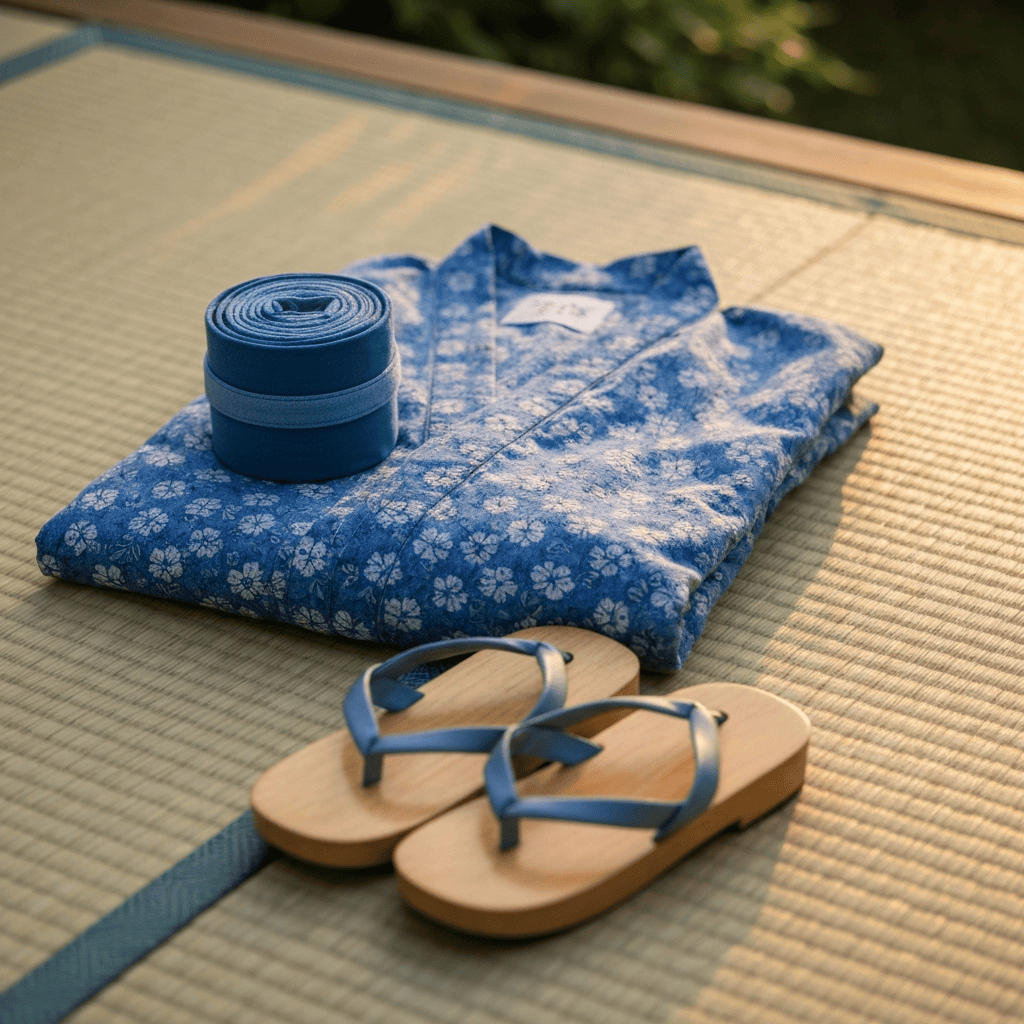
TL;DR
A real Japanese yukata costs less than the polyester “kimono robe” sold on Western marketplaces, and Japan’s second-hand market is flooded with them every August. The complication this week is timing: Obon runs 13–16 August 2026, and it is the single worst window of the year to expect anything to move quickly out of Japan.
- Obon 2026 is 13–16 August (Thursday to Sunday), with the heaviest domestic travel spread across 8–16 August. Mountain Day, a national holiday, falls on Tuesday 11 August, so a lot of Japan is effectively away from 8 August onward.[1]
- Couriers keep running, but slower. Yamato, Sagawa and Japan Post do not shut down for Obon; individual Mercari sellers do. Expect seller dispatch to slip several days and domestic transit to add one to three.[3][4][8]
- Yukata ≠ kimono. A yukata is unlined cotton summer wear with no under-kimono, worn with a half-width obi and geta. It is the beginner-friendly, machine-washable end of the wardrobe.
- Three ways to buy one — a プレタ浴衣 (ready-to-wear, sized and sewn), a セパレート / 2way two-piece that wraps like a skirt and top, or a full set with the obi included. The two-piece is the one to buy if nobody is going to help you dress.
- Cheapest route — a proxy buying second-hand or new-with-tags on Mercari Japan, where complete three-piece sets were listing around $19 and a standalone cotton yukata around $10 at the time of writing.[7]
Every summer the same two things happen: matsuri season fills Japanese timelines with yukata, and overseas shoppers buy something on a Western site that a Japanese person would not recognise as clothing. This guide covers, as of August 2026, what you actually need, what the Japanese words on a listing mean, how Obon affects the delivery timeline right now, and the cheap versus cheapest way to buy from Japan.
What Obon Does to Your Order This Week
Obon is the mid-August period when Japanese families return to their hometowns to honour ancestors. It is one of the country’s three great travel seasons; in 2026 the observance itself is 13–16 August, with peak outbound travel around 8 and 11–13 August and peak return travel on 15–16 August.[1] Mountain Day on Tuesday 11 August extends the runway.
What that means concretely, in order of how much it will actually affect you:
| Link in the chain | What happens over Obon | What to do |
|---|---|---|
| Individual Mercari sellers | The biggest delay by far. Private sellers travel; many set their listings to a longer dispatch window or simply do not post until they are home. | Filter for short dispatch windows (1–2日で発送) and prefer sellers with high ratings and recent activity. |
| Shops and warehouses | Many small Japanese retailers close for several days around 13–16 August and post a 夏季休業 notice. | Assume anything ordered from a small shop after 12 August ships on or after 17 August. |
| Domestic couriers | Yamato, Sagawa and Japan Post keep operating, but volume spikes and holiday rosters stretch transit times.[3][4] | Add a few days to any domestic leg. Check the carrier’s notice page if a parcel stalls. |
| International legs | Japan Post’s outbound international services continue; the delay is upstream, not at the border.[8] | Nothing to do — if the parcel reaches the proxy’s warehouse, it leaves on schedule. |
The practical upshot: buying during Obon is fine, expecting it fast is not. If you need a yukata for a festival in the next fortnight, you have already missed the window — buy now for next season, when prices are at their annual low anyway.
The counter-intuitive bit: late August through September is the best time of the year to buy yukata from Japan. Matsuri season ends, sellers list what they wore once, and prices drop while Western demand is at zero. Buying in June is buying at the peak.
Yukata, Kimono, Jinbei: What You Are Actually Buying
| Garment | What it is | Worn with | Difficulty |
|---|---|---|---|
| 浴衣 (yukata) | Unlined cotton or polyester summer robe, no under-layer, no lining | 半幅帯 (half-width obi), 下駄 (geta), optional 巾着 (drawstring bag) | Moderate — the obi is the hard part |
| 着物 (kimono) | Lined, formal, layered over an under-kimono (襦袢) | Full-width obi, tabi, zori, multiple cords and stiffeners | High — genuinely needs instruction |
| 甚平 (jinbei) | Two-piece cotton top and shorts, traditionally menswear and children’s wear | Nothing. It ties at the side and you are dressed. | None |
| 作務衣 (samue) | Two-piece work wear, long sleeves and trousers, worn year-round | Nothing | None |
If you want the festival look and you are dressing yourself, alone, for the first time, the honest recommendation is a separate (セパレート) or 2way yukata: it is cut as a wrap top and a skirt, so it cannot come undone at the hem, and it takes about two minutes. Purists will tell you it is not a real yukata. Purists are not the ones fixing your obi in a train station.
Reading a Japanese Yukata Listing
- プレタ浴衣 — pre-tailored, ready to wear, sold in sizes. This is what you want. The alternative, 反物, is a bolt of fabric that has to be sewn to measure.
- 3点セット / 4点セット — a set. Three usually means yukata, obi and something (a bag, geta or clips); four typically adds geta. Check the photo, not the number.
- 半幅帯 (hanhaba obi) — the narrow, roughly 15–17 cm obi that goes with yukata. If you buy a yukata alone, you need one of these. A 作り帯 / 結び帯 is a pre-tied obi that clips on: dramatically easier, slightly less elegant.
- 身丈 (mitake) — garment length. For women, roughly your height; a yukata is worn with the excess folded up at the waist. For men, the length is worn as-is, so it should hit the ankle.
- 裄丈 (yukitake) — from the centre back of the neck to the wrist bone. The measurement most likely to be wrong on a non-Japanese frame; if you have long arms, filter on this.
- フリーサイズ / F — free size, cut for roughly 155–165 cm. Common, and often too short for taller buyers. Look for TL / トールサイズ instead.
- 綿100% — 100% cotton, breathes, wrinkles, feels right. ポリエステル is polyester: cheaper, holds its shape, hotter to wear.
- 腰紐 (koshihimo) — the plain cotton ties that hold everything closed under the obi. You need two or three. They cost almost nothing and are the most commonly forgotten item.
Cheap vs Cheapest
“Cheap” is a new yukata set from a Japanese retailer, bought through a proxy: a complete, coordinated, correctly sized outfit for roughly ¥5,000–12,000 plus fees and shipping. Worth it if you want a specific pattern or a tall size.
“Cheapest” is the Japanese second-hand market. Yukata are worn a handful of times a summer, often once, and then listed. New-with-tags stock from last season’s ranges shows up at a fraction of retail, and complete sets are frequently cheaper than a standalone yukata bought new.
Three live examples on Mercari Japan[7] at the time of writing — a beginner two-piece set, a plain cotton yukata, and the obi you would pair with it:


Prices are what the listings showed when this was written. Second-hand stock is single-unit, so read them as a price band, not a quote.
How to Buy Yukata From Japan: Step by Step
- Measure yourself first, in centimetres. Height, and the neck-to-wrist measurement (裄丈) with your arm at roughly 45 degrees. Everything else follows from those two.
- Choose the construction. セパレート or 2way if you are dressing yourself; a traditional single-piece プレタ浴衣 if you have someone to help or you have practised.
- Search in Japanese. 浴衣 レディース (women’s), 浴衣 メンズ (men’s), 浴衣 セット (set), 浴衣 セパレート (two-piece), 甚平 メンズ (jinbei), 半幅帯 (obi), 下駄 (geta), 巾着 (bag). Add トールサイズ if you are over about 168 cm.
- Buy the accessories in the same trip. A yukata without an obi and two 腰紐 is a bathrobe. Adding a ¥500 obi to an existing order costs you a capped service fee; ordering it separately later costs you a second international parcel.
- Read the condition wording. 新品未使用 = new unused, 未使用に近い = as new, 試着のみ = tried on only, 使用感あり = visible wear. Cotton yukata are washable, so light use is not a problem — but check for 汚れ (staining) at the collar and hem.
- Time it around Obon. Between roughly 8 and 17 August, add a week to your mental timeline for the Japanese leg.[1] A proxy that stores purchases for 90 days absorbs this for you: the parcel waits in the warehouse, not in your inbox.
- Check import rules. The United States revoked its $800 de minimis exemption on 29 August 2025, so US-bound parcels are dutiable regardless of value.[6] Japan Post’s suspension of US-bound mail ended on 14 April 2026, so EMS and Sea Mail are running again with published per-destination rates.[5]
What It Costs Through a Proxy
| Source | OneMall service fee | Min | Max |
|---|---|---|---|
| Mercari / Mercari Shops | ¥300 per item on most marketplaces | ¥300 | ¥300 |
| Yahoo! Auctions | (winning bid + tax) × 3% | ¥200 | ¥300 |
| Rakuten / Suruga-ya / ZOZOTOWN | ¥300 per item on most marketplaces | ¥300 | ¥300 |
| Any other Japanese shop (LinkBuy) | price × 5% | ¥200 | ¥1,000 |
Yukata are light and compressible, which makes them one of the best value-per-gram categories to import. A full outfit — yukata, obi, ties, geta, bag — from second-hand listings comes to roughly the price of a single novelty “kimono” from a Western marketplace, and it is the real garment. For comparison, competing proxies charge flat fees as of 2026: Buyee ¥500 per order, ZenMarket ¥500 per item and ¥800 for Mercari, Neokyo ¥350 per item. On a ¥900 obi, a capped percentage fee is simply smaller.
The Bottom Line
Yukata is one of the few categories where buying from Japan is not just cheaper but categorically different — you get the actual garment, in the actual sizes, with the accessories that make it work. The only thing to plan around is the calendar: Obon has Japan’s domestic logistics running hot until the middle of the month, and the best prices arrive after it, not before. OneMall buys on Mercari, Yahoo! Auctions, Rakuten and Amazon Japan from one account, stores purchases for 90 days so a slow Obon dispatch does not cost you a second parcel, and can order from any other Japanese shop through LinkBuy. Going deeper into traditional textiles? Read our authentic Japanese silk and kimono fabric guide, or the Japan summer sale guide for the modern side of the wardrobe. New to proxies? Start with the cheapest proxy fee comparison and the best-proxy buyer’s guide. Ready? Search live yukata listings on OneMall.
Frequently Asked Questions
When is Obon in 2026, and will it delay my order?
13–16 August 2026, with heavy travel from 8 August and a national holiday on 11 August.[1] Couriers keep running, so the delay is mostly on the seller side: private sellers travel and dispatch late. Budget an extra week for the Japanese leg between roughly 8 and 17 August.
What is the difference between a yukata and a kimono?
A yukata is unlined summer wear, worn directly over underwear with a half-width obi and geta, and it is usually washable cotton. A kimono is lined, layered over an under-kimono, fastened with a full-width obi and a stack of cords, and dry-clean only. Yukata is the one you can learn in an afternoon.
Can I wear a yukata if I am not Japanese?
Yes — yukata at summer festivals is everyday seasonal dress, and rental shops in Kyoto and Asakusa exist precisely because visitors want to wear one, and Japan’s own tourism board promotes summer festivals as something to attend dressed for.[2] Wear it correctly: left side over right. Right over left is how the dead are dressed, and it is the one mistake people will notice.
What size yukata should I order?
Go by 身丈 (length, roughly your height for women’s cuts, ankle-length for men’s) and 裄丈 (neck-to-wrist). “Free size” is cut for about 155–165 cm; if you are taller, search for TL or トールサイズ. Ignore S/M/L on its own.
Do I need anything besides the yukata itself?
A 半幅帯 (half-width obi), two or three 腰紐 (cotton ties), and ideally 下駄 (geta) and a 巾着 (small bag). A 3点 or 4点セット bundles most of that. If you buy the yukata alone, add the obi and ties to the same order.
What is a jinbei, and is it the men’s version?
A 甚平 is a two-piece cotton set — short-sleeved top and shorts — traditionally worn by men and children in summer. It is not a formal equivalent of the yukata; it is closer to comfortable summer loungewear that is acceptable outdoors. It also requires zero technique, which makes it the easiest entry point in the category.
When is the cheapest time to buy yukata from Japan?
Late August through autumn. Matsuri season ends, Japanese sellers list what they wore once or twice, and prices fall while overseas demand disappears. Buying in June, at the start of the season, is buying at the annual peak.
References
- japan-guide.com, Obon overview and 2026 travel-season dates. https://www.japan-guide.com/e/e2286.html
- Japan National Tourism Organization, official travel portal. https://www.japan.travel/en/
- Yamato Transport, official English site and service notices. https://www.kuronekoyamato.co.jp/en/
- Sagawa Express, official English site. https://www.sagawa-exp.co.jp/english/
- Japan Post, EMS international service and rate tables. https://www.post.japanpost.jp/service/send/oversea/list/delivery/ems/index_en.html
- International Trade Administration, de minimis value guidance. https://www.trade.gov/de-minimis-value
- Mercari Japan, official marketplace. https://jp.mercari.com/
- Japan Post, international mail service portal. https://www.post.japanpost.jp/int/index_en.html
Last updated: 2026-09-28.