
 Shopping Guide
 HELP / FAQs



 By onemall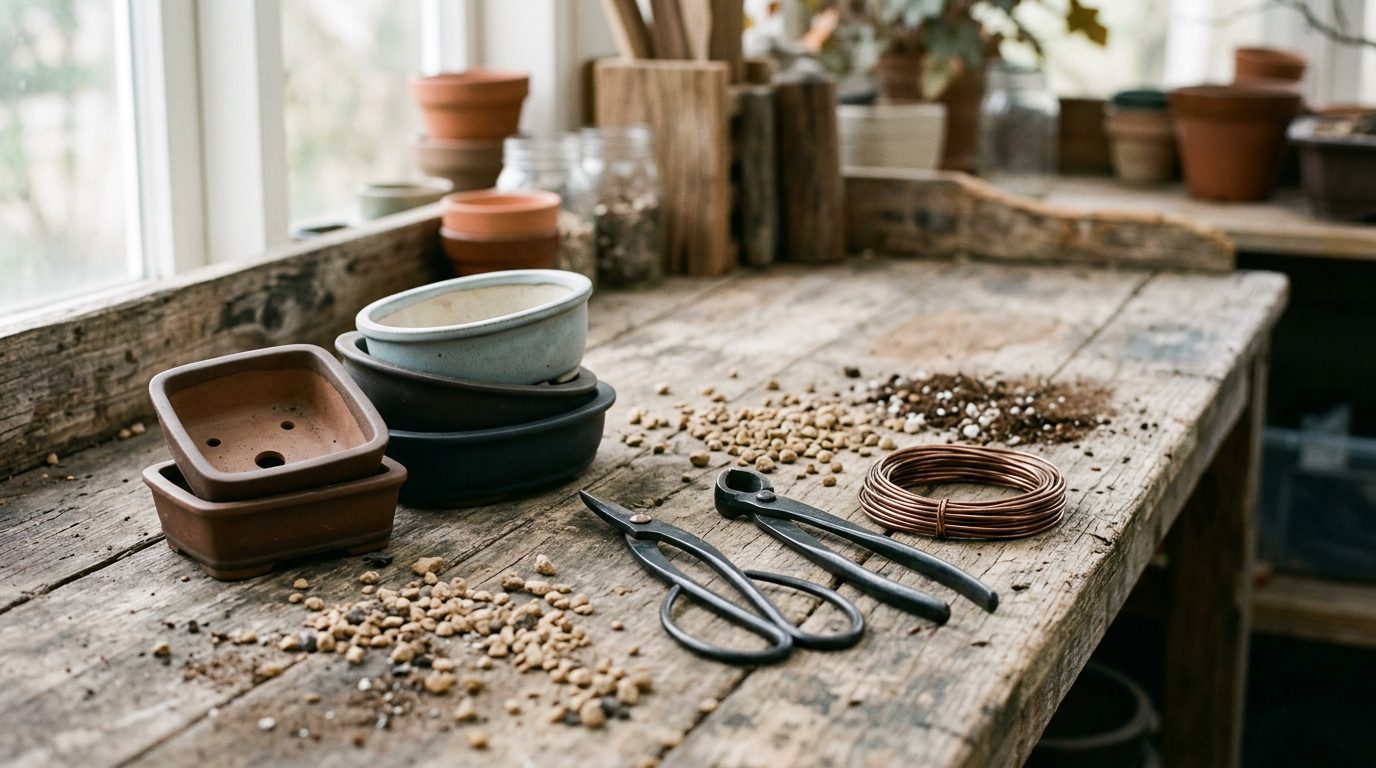
TL;DR
You almost certainly cannot import the tree. You can import everything else, and everything else
is where Japanese bonsai supply is both better and dramatically cheaper than the overseas
specialist shelf. A working starter kit — training pot, ceramic pot, wire set and shears
— came to ¥4,127 (US$28.49) inside Japan on 8 September 2026.
- Real prices, checked on 8 September 2026 — a plastic training pot at
¥653 (US$4.51), a 瀬戸焼 ceramic pot at ¥829 (US$5.72),
an aluminium 針金 (training wire) set at ¥1,250 (US$8.63) and
long-handled 剪定鋏 (shears) at ¥1,395
(US$9.63).[1] - The tree is a quarantine problem, not a shipping problem. Live plants leaving
Japan go through the Plant Protection Station’s export inspection and a phytosanitary certificate,
and the same agency warns specifically about foreign goods arriving with plants or soil
enclosed.[2] This is not something you attach to a parcel of
pots. - Pots are a regional ladder, not a brand ladder. 常滑 (Tokoname) is the
name most associated with bonsai pottery, but the affordable domestic shelf is full of
万古焼, 瀬戸焼 and 信楽焼 pieces in the ¥800–¥1,500 band. - Ceramics are heavy and freight notices. A 1.5 kg parcel quoted
US$24.55 economy air to the United States and US$46.86 by EMS to
the United Kingdom on 8 September 2026 — the express postal lane costs more than the entire
shopping list. - One band, two pots. On the same US lane, 1,000 g and 1,500 g both
quoted US$24.55. The second ceramic pot effectively ships for nothing.
As of September 2026, bonsai is a global hobby served by a small number of expensive
specialist retailers outside Japan. The pots, tools, wire and grit they resell are ordinary
gardening goods on the Japanese shelf.
What Actually Crosses a Border
Start with the constraint, because it determines the whole shopping list. A bonsai is a living
plant in soil, and both halves of that description are regulated. Japan’s Plant Protection Station runs
export inspection and issues the
phytosanitary certification that a destination country’s own quarantine service will demand on
arrival; the agency publishes guidance on both directions, including a standing warning about
overseas products that arrive with plants or soil packed
inside.[2] Importing countries add their own permit regimes and, for
trees, multi-year quarantine in many cases.
So the practical division is:
- Ships without drama: pots, training pots, tools, wire, mesh, turntables, books,
tool rolls. - Ships, but check your own country’s rules first: 赤玉土 and other
substrates — these are soil products and many countries prohibit them outright. - Does not ship as a hobby purchase: the tree.
That sounds like a disappointment and is actually the opposite. The tree is the one component you
can buy locally at a sane price; the pot, the shears and the wire are the components that are
absurdly marked up outside Japan.
Pots: 常滑, 万古焼, 瀬戸焼, 信楽焼
Japanese bonsai pottery is organised by kiln region rather than by brand. 常滑 in Aichi is
the name most associated with the category; 万古焼 ware, 瀬戸焼 ware and 信楽焼 ware all
supply the everyday shelf, and on 8 September 2026 the affordable band was thoroughly stocked: a
瀬戸焼 black matte No. 3 at ¥829 (US$5.72), a 万古焼 long rectangular unglazed pot
with cut feet at ¥997 (US$6.88), and a 信楽焼 cherry-blossom-shaped No. 4 at
¥1,132 (US$7.81).
Three things to read on a listing, in order:
- Size number. Pots are sold by 桐-box style size numbers rather than
centimetres in many listings; the No. 3–No. 5 range covers most shohin and small
bonsai. - Glazed or 無釉 (unglazed). Unglazed is the convention for conifers,
glazed for deciduous and flowering trees. It is an aesthetic rule, not a horticultural one, but
every judge and every book follows it. - Drainage and tie-down holes. A pot with only one hole and no wire holes is a
plant pot, not a bonsai pot, and repotting into it is miserable.
Do not skip the plastic. A 植木鉢-style training pot at ¥653 (US$4.51) is where a tree
lives for the years before it earns ceramic, and it is the single cheapest thing in this article.
Tools and Wire: Buy Two Things, Not Ten
Every tool brand sells a boxed set of eight implements. Most of them sit unused. The two that do
the work:
- 剪定鋏 — bonsai shears. Long handles, narrow blades, made to reach
inside a canopy without crushing what you are not cutting. ¥1,395 (US$9.63) for the Fujimitsu
210 mm on 8 September 2026. - 枝切鋏 — branch cutters. The concave cutter that removes a branch
flush so the wound closes over. ¥1,398 (US$9.65) for the matching Fujimitsu pair the same
day.
Wire is the consumable. Aluminium is the beginner’s material — softer, reusable, kinder to
bark than copper — and it is sold in graduated sets: the ¥1,250 (US$8.63) set in the price
list spans 0.8 mm to 1.5 mm, which covers everything from a whip to a small structural
branch. Buy a set rather than a single gauge; the wrong-diameter wire either does nothing or scars
the tree.
What It Costs in Japan Right Now
Pulled and stock-checked on 8 September 2026 through OneMall. Single listings, a
price reference rather than a permanent link.


| Item | Price in Japan (8 Sep 2026) | Weight class | Why it is on the list |
|---|---|---|---|
| Yamato plastic training pot, No. 10 | ¥653 (US$4.51) | Light | Where the tree actually lives |
| 瀬戸焼 bonsai pot, black matte, No. 3 | ¥829 (US$5.72) | Heavy | The display pot, at gardening-goods prices |
| Aluminium wire set, 0.8–1.5 mm | ¥1,250 (US$8.63) | Medium | Consumable; buy the graduated set |
| Fujimitsu bonsai shears, 210 mm | ¥1,395 (US$9.63) | Light | The one tool you use every session |
| All four | ¥4,127 (US$28.49) | — | — |
Other verified prices from the same shelf that day, if you are building a larger order: a
万古焼 unglazed rectangle at ¥997 (US$6.88), a 信楽焼 No. 4 at ¥1,132
(US$7.81), an iron-glaze No. 4 pot at ¥1,488 (US$10.27) and the matching Fujimitsu branch
cutters at ¥1,398 (US$9.65).
Getting It Home
Live carrier quotes taken on 8 September 2026 for a 1.5 kg parcel measuring
26×20×13 cm — the four items above with enough padding to survive ceramics in
transit.
| Destination | Cheapest lane | Fast lane |
|---|---|---|
| United States | ECMS US$24.55 (10–20 d) | DHL US$36.22 (3–7 d) |
| United Kingdom | Sea mail US$24.14 (30–90 d) | DHL US$39.16 (3–7 d) |
| Germany | Sea mail US$22.01 (30–90 d) | EMS US$39.41 (7–9 d) |
| Australia | Sea mail US$22.01 (30–90 d) | DHL US$28.43 (3–7 d) |
| Canada | Sea mail US$23.43 (30–90 d) | DHL US$36.22 (3–7 d) |
| Singapore | Sea mail US$18.46 (30–90 d) | DHL US$26.75 (3–7 d) |
Two numbers from the same quote run are worth more than the table. First, the weight band: a
1,000 g parcel and a 1,500 g parcel in the same box both quoted
US$24.55 economy air to the United States, so the second ceramic pot rides free
— and the price only moved at 2 kg (US$28.10). Second, the express postal premium on a
heavy parcel is brutal: EMS to the United Kingdom quoted US$46.86 against
US$24.14 by sea mail for the same box, which is more than the entire shopping list
costs. On a ceramics order, DHL is frequently cheaper than EMS — US$39.16 versus US$46.86 to
the United Kingdom on the day — which is the opposite of the usual assumption. EMS chargeable
weight rules are published in the rate schedule.[3]
Packing matters more here than in any other category we cover. Pots break at the rim and at the
feet; they need to be individually wrapped, nested with padding between them, and kept away from the
walls of the carton. Do not pack shears loose against a glazed pot. And check your own country’s
rules before adding 赤玉土 or any other substrate to the order — that is the one item on
the bonsai shelf that turns a parcel into a quarantine case.[2]
Tools, pots and wire are ordinary merchandise and are not on Japan Post’s nonmailable
list.[4] On arrival costs, the United States has suspended de minimis
duty-free treatment[5] and the European Commission has issued
guidance on a temporary flat fee for low-value imports.[6]
Step-by-Step: Buying Bonsai Supplies From Japan
- Leave the tree out of the plan. Source the plant locally; source the pot, tools
and wire from Japan. Live plants require Plant Protection Station export inspection and destination
permits.[2] - Check your own country’s rules on substrate before you add any. 赤玉土 is
soil. Many countries prohibit it, and one prohibited item holds the whole parcel. - Search the Japanese words.
盆栽鉢 returns the domestic pot shelf and
剪定鋏 盆栽 returns shears and cutters; the English
terms mostly return export storefronts at export prices. - Buy one plastic training pot per tree you own. At ¥653 each they are the
cheapest useful thing in the order and they are what you will actually use. - Fill the weight band with pots, not with padding. The US lane priced
1,000 g and 1,500 g identically on 8 September 2026 — that is a free second pot if
you plan the order rather than reordering next season. - Quote the packed parcel, and compare DHL against EMS. Run the real weight
through the shipping
calculator; on ceramics the courier beat the express postal lane on several routes.
Frequently Asked Questions
Can I import an actual bonsai tree from Japan?
Not as a casual purchase. Live plants leaving Japan require export inspection and phytosanitary
certification from the Plant Protection Station, and your own country will require an import permit
and, for woody plants, often a post-entry quarantine period.[2] Buy the tree at home
and the equipment from Japan.
Is 常滑 pottery worth paying more for?
For a display pot that will hold a tree you care about, yes — but the everyday shelf is
万古焼, 瀬戸焼 and 信楽焼, and those were ¥829–¥1,132 (US$5.72–$7.81)
on 8 September 2026. Start there and buy the named pot when the tree has earned it.
Aluminium or copper wire?
Aluminium for anything you are learning on: it is softer, it can be unwound and reused, and it is
far less likely to bite into bark if you forget about it for a season. Copper holds better on
conifers and is a second-year purchase.
Can I ship akadama or bonsai soil?
Check your own country’s import rules before you try. Soil products are the single most commonly
prohibited item in this category, and Japan’s plant quarantine authority publishes standing guidance
about goods shipped with soil enclosed.[2]
What is the minimum sensible order?
Shears, a wire set and two pots — about ¥4,100 (US$28) of goods on 8 September 2026 plus
US$18–$25 of freight depending on lane. Below that the freight dominates; above it, the extra
pots ride in the same weight band.
The Short Version
Buy the pot, the shears and the wire from Japan; buy the tree at home; leave the soil out of the
box. Plan the order to fill one weight band, and compare DHL against EMS before you assume the
postal lane is cheaper. If you are filling the rest of the parcel, the
Japanese
hand tools guide covers the same kind of small, sharp, absurdly-marked-up-abroad category, and
the
Japanese
ceramics guide covers the kiln regions in more depth. For the mechanics of buying from a
domestic-only listing, the
best
Japan proxy service guide and the
cheapest
proxy fee comparison explain what the service layer costs.
Live bonsai pot listings are here.
Last updated: 2026-09-08.
Related guides
References
- OneMall, marketplace used for the bonsai pot, tool and wire price and stock observations recorded in this article on 8 September 2026. https://www.onemall.jp/
- Plant Protection Station, Ministry of Agriculture, Forestry and Fisheries (Japan) — plant quarantine for imports and exports, phytosanitary certification, and guidance on goods shipped containing plants or soil. https://www.maff.go.jp/pps/
- Japan Post, EMS rate schedule (all zones), which sets out how chargeable weight is determined. https://www.post.japanpost.jp/send/oversea/charge/list-ems/all_en.html
- Japan Post, Nonmailable Articles in International Mail. https://www.post.japanpost.jp/int/use/restriction/index_en.html
- U.S. Customs and Border Protection, guidance on the suspension of de minimis duty-free treatment. https://www.help.cbp.gov/s/article/Article-1919
- European Commission, guidance on the temporary flat fee for low-value imports. https://taxation-customs.ec.europa.eu/news/guidance-and-legal-text-temporary-flat-fee-low-value-imports-which-will-apply-until-1-july-2028-2026-06-08_en