
 Shopping Guide
 HELP / FAQs



 By onemall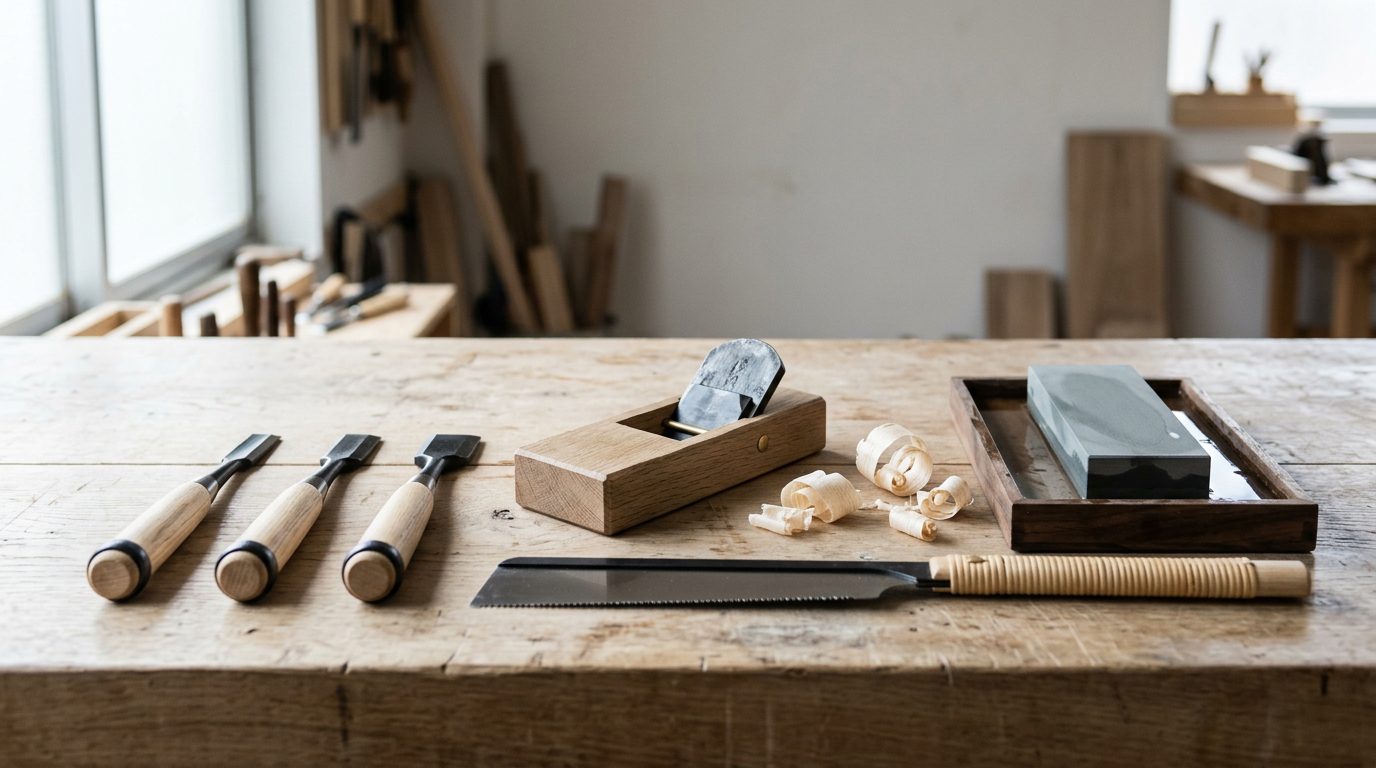
TL;DR
A usable Japanese hand-tool kit is four objects, not a boxed set: one bench chisel, one small
plane, one pull saw and one waterstone. Bought inside Japan on ordinary domestic listings, all four
together came to ¥10,594 (US$73.10) on 21 September 2026 — roughly what a
single “Japanese-style” chisel costs in an export storefront.
- Real prices, checked on 21 September 2026 — a bevel-edge bench chisel with
a white oak handle at ¥2,109 (US$14.55), a 42 mm block plane at
¥1,682 (US$11.61), a spined dozuki pull saw at ¥4,365
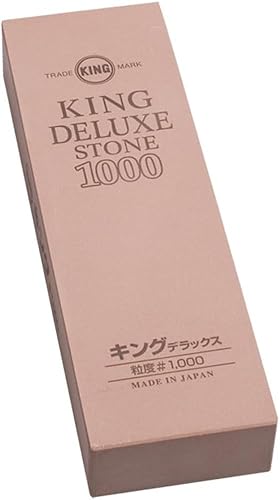
(US$30.12) and a King Deluxe #1000 waterstone at ¥2,438
(US$16.82).[1] - Japanese saws cut on the pull stroke, which is why the blade can be thin enough
to leave a kerf a Western saw cannot match — and why the modern standard is a replaceable
blade (替刃式) rather than a saw you re-sharpen.[2] - The stone is not an accessory. Japanese edge tools are laminated: a hard, brittle
steel layer forged onto a soft iron body. They arrive workable, not finished, and they stay sharp
only if you own a waterstone.[3] - Nothing here has a plug, so the 100 V problem that dominates Japanese
kitchen and workshop electronics simply does not apply. - Freight is the real cost multiplier. A 1.2 kg tool parcel quoted US$24.55
economy air to the United States, US$22.01 sea mail to Germany and US$42.53 EMS to Canada on
6 September 2026 — on the cheapest lane that is about a third of the tools’ own price.
As of September 2026, the export market for Japanese hand tools has professionalised:
there are excellent English-language dealers, and they are selling the same Sanjo and Miki output
with a second margin on top. The reason to buy domestically is not that the export tools are bad. It
is that the domestic listing is the same object at the domestic price.
Four Tools, Not a Set
Beginners tend to buy a ten-piece chisel roll and no stone. The working minimum is the opposite
shape:
- 追入鑿 — bench chisel. The general-purpose pattern: bevelled edges,
a hooped handle meant to be struck. One 18–24 mm chisel does most joinery; the roll of
ten is for people who already know which widths they are missing. - 鉋 — plane. A blade bedded in a wooden block, pulled toward you.
A small block plane is the honest starting point; a full-size 鉋 needs its sole conditioned
before it will work at all, which is a project rather than a purchase. - 胴付鋸 — spined pull saw. The stiffened back keeps the thin blade
straight, so it is the saw for shoulders, tenons and anything that has to land on a
line.[2] - 砥石 — waterstone. A #1000 medium stone is the one stone you cannot
skip; polishing grits are optional until you can put a straight edge on a chisel with
this one.[3]
The handle detail worth reading on a chisel listing is 白樫 — Japanese white oak
— and whether the butt carries a steel hoop (口金). Both are ordinary on domestic
listings and both quietly disappear from the cheapest export-market copies.
Pull, Don’t Push
The single biggest adjustment for a Western woodworker is that the cut happens on the pull. A
blade in tension does not need to resist buckling, so it can be ground much thinner; the trade is
that pushing hard on the return stroke will kink it. Japanese saws are consumables by design, and
the industry standardised on replaceable blades decades ago — Gyokucho’s razor-saw range is
built around a blade you unclip and swap rather than a saw you file.[2]
That has a practical consequence for import buyers: buy the saw once, then buy blades.
A replacement blade is a fraction of the complete tool, weighs almost nothing, and travels flat in
an envelope-shaped parcel. It is the single best thing to add to a consolidated shipment.
What It Costs in Japan Right Now
Pulled and stock-checked on 21 September 2026 through OneMall. Single listings, a
price reference rather than a permanent link.


| Tool | Price in Japan (21 Sep 2026) | What it is for | Skip it if… |
|---|---|---|---|
| Bench chisel, bevel edge, 215 mm | ¥2,109 (US$14.55) | Joinery, paring, chopping waste | Never — this is the first tool |
| Block plane, 42 mm blade | ¥1,682 (US$11.61) | Trimming, chamfers, fitting | You only ever work with power tools |
| Dozuki pull saw, spined | ¥4,365 (US$30.12) | Shoulders, tenons, accurate crosscuts | You already own a Western back saw you trust |
| Waterstone #1000 | ¥2,438 (US$16.82) | Sharpening everything above | You own a working #1000 already |
| All four | ¥10,594 (US$73.10) | — | — |
Getting It Home
Live carrier quotes taken on 6 September 2026, for a 1.2 kg tool parcel measuring
40×15×10 cm — long enough for a 240 mm saw, heavy enough to include the
stone.
| Destination | Cheapest lane | Fast lane |
|---|---|---|
| United States | ECMS US$24.55 (10–20 d) | DHL US$36.22 (3–7 d) |
| United Kingdom | Sea mail US$24.14 (30–90 d) | EMS US$41.54 / DHL US$39.16 |
| Germany | Sea mail US$22.01 (30–90 d) | EMS US$35.50 / DHL US$39.16 |
| Australia | Sea mail US$22.01 (30–90 d) | DHL US$28.43 / EMS US$35.50 |
| Canada | Sea mail US$23.43 (30–90 d) | EMS US$42.53 (10–12 d) |
| Singapore | Sea mail US$18.46 (30–90 d) | EMS US$24.85 (4–7 d) |
Two things fall out of that table. The United States had no Japan Post option on these quotes at
all — it is economy air or DHL — while every other destination had sea mail available at
well under the express price. And a waterstone is dense: adding a second stone is the difference
between one weight band and the next, so decide on the whole kit before you quote. EMS chargeable
weight rules are published in the rate schedule.[4]
On arrival costs: the United States has suspended de minimis duty-free treatment, so even a
US$70 tool parcel can be assessed[5], and the European Commission has
issued guidance on a temporary flat fee for low-value imports.[6]
Edge tools are ordinary goods in the post — Japan Post’s nonmailable list is about weapons and
dangerous goods, not chisels[7] — but blade rules at the
receiving end are set by your own country, and are worth a minute of reading before you order.
Step-by-Step: Buying Japanese Hand Tools From Overseas
- Decide the four, then stop. One chisel, one plane, one saw, one #1000 stone.
Widths and polishing grits are a second order, once you know what you are short of. - Search the Japanese words, not the English ones.
大工道具 / 鑿 returns the domestic catalogue;
“Japanese chisel” in English mostly returns export listings at export prices. - Read the material line on a chisel. White oak handle, steel hoop, laminated
blade. A listing that mentions none of the three is a hardware-store tool wearing the
silhouette. - Choose replaceable-blade for the saw.
替刃式 鋸 listings are the mainstream, and a
spare blade is the cheapest weight you will ever ship.[2] - Add the stone to the same parcel. Shipping a stone on its own later costs
almost as much as the stone; shipping it with the tools costs one weight band. - Quote the freight before you commit. Run the packed weight through the
shipping
calculator — on this kit the gap between sea mail and express is real money, and sea mail
is genuinely fine for steel that is already oiled.
Frequently Asked Questions
Do Japanese chisels arrive sharp?
They arrive ground, not finished. Laminated edge tools are meant to be set up by the user: flatten
the back, hone the bevel, then work. That is why the waterstone belongs in the first order rather
than the second.[3]
Is a replaceable-blade saw a compromise?
No — it is the domestic standard. Traditional re-sharpenable saws still exist and are a
specialist purchase; the everyday professional saw in Japan takes a swap-in
blade.[2]
Can I put a Japanese chisel in checked luggage or the mail?
The post is the normal route and edge tools are not on Japan Post’s nonmailable
list[7]; hand luggage is the place they are always refused. Import
rules on blades vary by destination, so check yours.
Why is the plane so cheap compared with the saw?
Because a small block plane is a simple object and a dozuki is a precision blade with a spine. It
is also why a full-size 鉋 at a serious price is a different purchase entirely — the
sole has to be conditioned and the blade fitted before it cuts.
Are these the same tools the export shops sell?
Largely yes: the Sanjo (三条) and Miki tool industries supply both. KAKURI, for example, has
been making carpentry tools in Sanjo since 1946.[8] What changes on
the way out of Japan is the price, not the steel.
The Short Version
Four tools, about ¥10,000, and the stone is not optional. If you came here from the kitchen
side of Japanese steel, the
chef’s
knife guide covers the same laminated-blade logic on a different edge, and the
proxy
shopping primer explains how a domestic-only listing gets to your door in the first place.
Live Japanese hand-tool listings are here.
Last updated: 2026-09-21.
Buying any of this means going through a domestic-only checkout. The Japan proxy service guide explains the mechanics end to end, and the proxy fee comparison shows where per-item and per-order charges land.
References
- OneMall, marketplace used for the tool price observations recorded in this article on 21 September 2026. https://www.onemall.jp/
- Razorsaw Kogyo (Gyokucho), Japanese replaceable-blade saw manufacturer. https://www.razorsaw.co.jp/
- King (Matsunaga), Japanese water sharpening stone manufacturer. https://www.kingtoishi.com/
- Japan Post, EMS rate schedule (all zones), which sets out how chargeable weight is determined. https://www.post.japanpost.jp/send/oversea/charge/list-ems/all_en.html
- U.S. Customs and Border Protection, guidance on the suspension of de minimis duty-free treatment. https://www.help.cbp.gov/s/article/Article-1919
- European Commission, guidance on the temporary flat fee for low-value imports. https://taxation-customs.ec.europa.eu/news/guidance-and-legal-text-temporary-flat-fee-low-value-imports-which-will-apply-until-1-july-2028-2026-06-08_en
- Japan Post, Nonmailable Articles in International Mail. https://www.post.japanpost.jp/int/use/restriction/index_en.html
- KAKURI Sangyo, carpentry tool maker in Sanjo, Niigata (founded 1946). https://www.kakuri.co.jp/company/