
 Shopping Guide
 HELP / FAQs



 By onemall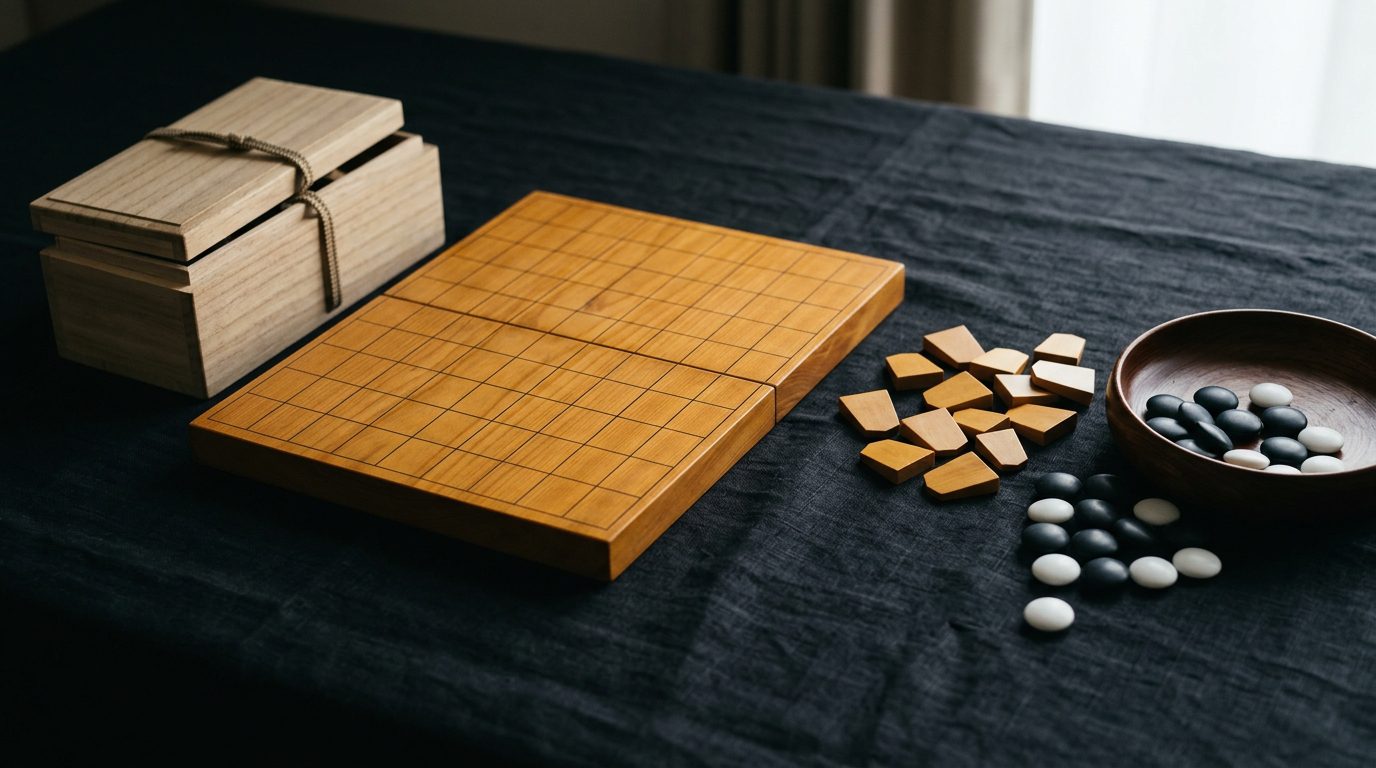
TL;DR
Shogi and go equipment is the clearest example of a category where half of the order is
worth importing and the other half is not. The pieces and the stones are the Japanese part, they are
cheap, and they are light. The board is furniture, and freight prices it accordingly — on the
UK express lane on 8 September 2026, adding a board and stones took the same shipment from
US$29.82 to US$68.16.
- Real prices, checked on 18 September 2026 — a folding 19×19 go board
at ¥927 (US$6.40), a set of wooden shogi pieces at ¥1,064
(US$7.34), 361 go stones at ¥1,790 (US$12.35) and 天童 (Tendo) stamped
shogi pieces in a paulownia box at ¥2,172
(US$14.99).[1] - 天童将棋駒 is a nationally designated traditional craft. Tendo City in
Yamagata Prefecture calls itself 将棋のまち — the town of shogi — and its pieces
received national 伝統的工芸品 (traditional craft) designation in
1996.[2] - Buy the pieces, think hard about the board. A 400 g box of pieces quoted
US$17.44 economy air to the United States. A 2.5 kg set with a board quoted
US$29.88 on the same lane and US$68.16 by EMS to the United Kingdom. - Stones are a materials ladder, not a brand ladder. Melamine practice stones at
¥1,790 play the same game as a set costing twenty times more; what you are buying at the top of
the range is 蛤 (clamshell) and slate. - The two games are governed by two separate institutions — the
日本将棋連盟 (Japan Shogi Association)[3] and the 日本棋院
(Nihon Ki-in)[4] — and their equipment conventions are
different enough that you should not assume a “Japanese board game set” covers both.
As of September 2026, both games have a large and growing overseas following and a
small, expensive overseas retail shelf. The domestic listings are ordinary household goods at
household prices.
Shogi: the Pieces Are the Product
A shogi set is a board, twenty pieces a side, and two piece stands. Only one of those is
distinctively Japanese in a way that is hard to substitute, and it is the pieces — five-sided
wedges with characters on the face and, on most, a promoted value in a second colour on the back.
The grades, cheapest first:
- Plastic. Sold for classrooms and children’s sets. Legible, durable, weightless
in the hand, and about ¥2,000–¥3,000. - 押し駒 — stamped wood. The characters are pressed into the wood
with a die. This is the value tier and where the 天童 pieces in the price list below sit. - 彫り駒 — carved wood. The characters are cut, then filled with
lacquer. Prices climb steeply from here, and above this tier you are buying calligraphy styles and
named makers rather than playability.
天童将棋駒 — Tendo shogi pieces — are the reference. Tendo City in Yamagata
promotes itself as 将棋のまち, the town of shogi, runs a shogi museum, and its pieces were
designated a national traditional craft in 1996.[2] When a listing
says 天童, that is what it is invoking. The game itself, its ranks and its professional titles
are administered by the 日本将棋連盟.[3]
A verified reference point from the same shelf on 9 September 2026: maple carved-style Tendo
pieces with a bag listed at ¥3,980 (US$27.46), against ¥2,172 (US$14.99) for the stamped
set on 18 September 2026. That ¥1,808 gap is the whole distance between “good pieces” and “nice pieces”, and it is
smaller than the gap between shipping a box of pieces and shipping a box with a board in it.
Go: the Stones Are a Materials Ladder
Go needs 361 stones, two bowls (碁笥) and a grid. The stones are where the money goes. The
practice tier is hard melamine or plastic, sold in the ¥1,700–¥3,000 range; the
traditional premium is 蛤 — clamshell white stones paired with slate black —
which is a different order of price and is not a beginner purchase. The game and its ranks in Japan
are administered by the 日本棋院.[4]
The grid is the part you can most easily substitute. Verified on the same day: a folding
19×19 board at ¥927 (US$6.40), a beginner set with board, stones and a booklet at
¥2,380 (US$16.42), and a plastic stone set with proper bowls at ¥2,860 (US$19.73). A full
floor board is a wonderful object and a terrible parcel.
What It Costs in Japan Right Now
Pulled and stock-checked on 18 September 2026 through OneMall. Single listings, a
price reference rather than a permanent link.


| Item | Price in Japan (12 Sep 2026) | Game | Why this one |
|---|---|---|---|
| Hanayama folding go board, 19×19 | ¥927 (US$6.40) | Go | A real grid that packs flat |
| Kawada wooden shogi pieces KBG-05 | ¥1,064 (US$7.34) | Shogi | Cheapest wooden pieces worth owning |
| Go stones, hard melamine, 361 | ¥1,790 (US$12.35) | Go | Full count, practice grade |
| 天童 stamped pieces, paulownia box | ¥2,172 (US$14.99) | Shogi | The named-origin set, still under US$16 |
| All four | ¥5,932 (US$40.93) | — | — |
Other verified prices on the same shelf that day, useful as anchors: a plain 桐 (paulownia)
piece box at ¥1,000 (US$6.90), a No. 4 folding shogi board sold with pieces at ¥3,499
(US$24.14), and a second brand of 361 melamine go stones at ¥1,880 (US$12.97).
Getting It Home: Two Parcels, Two Different Answers
Live carrier quotes taken on 8 September 2026. The first table is a 700 g parcel
(18×14×10 cm) — pieces, stones and a folding board’s worth of small goods.
| Destination | Cheapest lane | Fast lane |
|---|---|---|
| United States | ECMS US$20.99 (10–20 d) | DHL US$31.59 (3–7 d) |
| United Kingdom | Sea mail US$19.17 (30–90 d) | EMS US$29.82 (7–9 d) |
| Germany | Sea mail US$17.75 (30–90 d) | EMS US$25.92 (7–9 d) |
| Australia | Sea mail US$17.75 (30–90 d) | EMS US$25.92 (7–9 d) |
| Canada | Sea mail US$18.46 (30–90 d) | EMS US$31.67 (10–12 d) |
| Singapore | Sea mail US$14.91 (30–90 d) | EMS US$17.04 (4–7 d) |
The second is the same order with a proper board added — 2.5 kg,
38×36×8 cm:
| Destination | Cheapest lane | Fast lane | Change vs the 700 g parcel (fast lane) |
|---|---|---|---|
| United States | ECMS US$29.88 | DHL US$43.97 | +US$12.38 |
| United Kingdom | Sea mail US$29.11 | EMS US$68.16 | +US$38.34 |
| Germany | Sea mail US$26.27 | EMS US$55.03 | +US$29.11 |
| Australia | Sea mail US$26.27 | EMS US$55.03 | +US$29.11 |
| Canada | Sea mail US$28.40 | EMS US$64.61 | +US$32.94 |
| Singapore | Sea mail US$22.01 | DHL US$27.59 | +US$10.55 |
Read the last column and the decision makes itself. On the express postal lanes the board costs
more to ship than every item in this article costs to buy. The economy air and sea lanes absorb it
far better — US$29.88 to the United States for the whole set is entirely reasonable — so
if you want the board, take the slow lane and accept the wait. EMS chargeable weight rules are
published in the rate schedule.[5]
Two packing notes specific to this category. Go stones are dense and will punch through a thin
carton corner if they shift, so they belong in their bowls or a taped bag, not loose. Wooden shogi
pieces and paulownia boxes are dry goods that dislike a 30–90 day (30 days after consolidation) sea container in summer; if
you are buying carved pieces rather than stamped ones, pay for the air lane. Neither game’s
equipment is on Japan Post’s nonmailable list.[6] On arrival costs,
the United States has suspended de minimis duty-free
treatment[7] and the European Commission has issued guidance on a
temporary flat fee for low-value imports.[8]
Step-by-Step: Buying Shogi or Go Equipment From Overseas
- Split the order in your head first. Pieces and stones from Japan; board from
Japan only if you are willing to pay the freight or wait for sea mail. - Search the Japanese words.
将棋 駒 returns the domestic piece shelf and
囲碁 碁石 returns go stones and bowls; the English
names mostly return export storefronts. - For shogi, decide stamped or carved before you compare prices. 押し駒 is
the value tier; 彫り駒 is where the price curve turns vertical for reasons that do not affect
play. - For go, count the stones. A full set is 361. Cheap listings sometimes sell 180
of one colour, or a 9×9 stone count, and the photograph will not tell you. - Add the boring parts to the same parcel. A 桐 piece box at ¥1,000 or a
pair of bowls costs almost nothing in freight terms once the parcel exists. - Quote both parcels before you commit. Run the with-board and without-board
weights through the
shipping
calculator and let the difference decide, rather than discovering it at checkout.
Frequently Asked Questions
Do I need Japanese pieces, or will an English-labelled set do?
For learning, either works. For playing with anyone else, or reading any Japanese study material,
standard pieces are the correct purchase — and at ¥1,064 (US$7.34) for a wooden set on
8 September 2026, the English-labelled alternative is usually the more expensive one abroad.
Are Tendo pieces worth the premium over a generic wooden set?
The stamped Tendo set was ¥2,172 (US$14.99) against ¥1,064 (US$7.34) for a generic wooden
set on 18 September 2026. You are paying about US$8 for a named traditional-craft origin
[2] and better finishing. That is a reasonable premium; the
¥3,980 carved tier is where diminishing returns start.
What is the cheapest complete go setup that is not a toy?
A folding 19×19 board at ¥927 plus 361 melamine stones at ¥1,790 —
¥2,717 (US$18.75) on 8 September 2026 — is a full-size, full-count set that packs flat
enough to stay in the cheap freight band.
Can I ship a proper floor board?
Physically yes; economically, rarely. A thick kaya or katsura board is heavy furniture, and the
2.5 kg table-board parcel in the table above already adds US$38 on the UK express lane. If you
want one, buy it as a deliberate purchase on a sea or economy lane, not as an add-on.
Are the stones or pieces restricted in international mail?
No. They are ordinary wood, plastic, ceramic or shell goods and are not on Japan Post’s
nonmailable list.[6] The constraint is weight and packing, not
prohibition.
The Short Version
Buy the pieces and the stones from Japan, because that is where they are cheap and standard. Buy
the board from Japan only with your eyes open about freight, and if you do, take the slow lane. If
you are filling the rest of the parcel, the
Japanese
hand tools guide and the
Japanese
incense guide cover two categories that ride along for free. For the mechanics of buying from a
domestic-only listing, the
best
Japan proxy service guide and the
cheapest
proxy fee comparison explain what the service layer costs.
Live shogi and go listings are here.
Last updated: 2026-09-18.
Related guides
References
- OneMall, marketplace used for the shogi and go price and stock observations recorded in this article on 18 September 2026. https://www.onemall.jp/
- Tendo City Tourism and Products Association, sightseeing pages describing Tendo as 将棋のまち and recording the 1996 national traditional-craft designation of 天童将棋駒. https://bussan-tendo.gr.jp/spot
- 日本将棋連盟 (Japan Shogi Association), the governing body for professional and amateur shogi in Japan. https://www.shogi.or.jp/
- 日本棋院 (Nihon Ki-in), the Japanese go association. https://www.nihonkiin.or.jp/
- Japan Post, EMS rate schedule (all zones), which sets out how chargeable weight is determined. https://www.post.japanpost.jp/send/oversea/charge/list-ems/all_en.html
- Japan Post, Nonmailable Articles in International Mail. https://www.post.japanpost.jp/int/use/restriction/index_en.html
- U.S. Customs and Border Protection, guidance on the suspension of de minimis duty-free treatment. https://www.help.cbp.gov/s/article/Article-1919
- European Commission, guidance on the temporary flat fee for low-value imports. https://taxation-customs.ec.europa.eu/news/guidance-and-legal-text-temporary-flat-fee-low-value-imports-which-will-apply-until-1-july-2028-2026-06-08_en