
 Shopping Guide
 HELP / FAQs



 By onemall
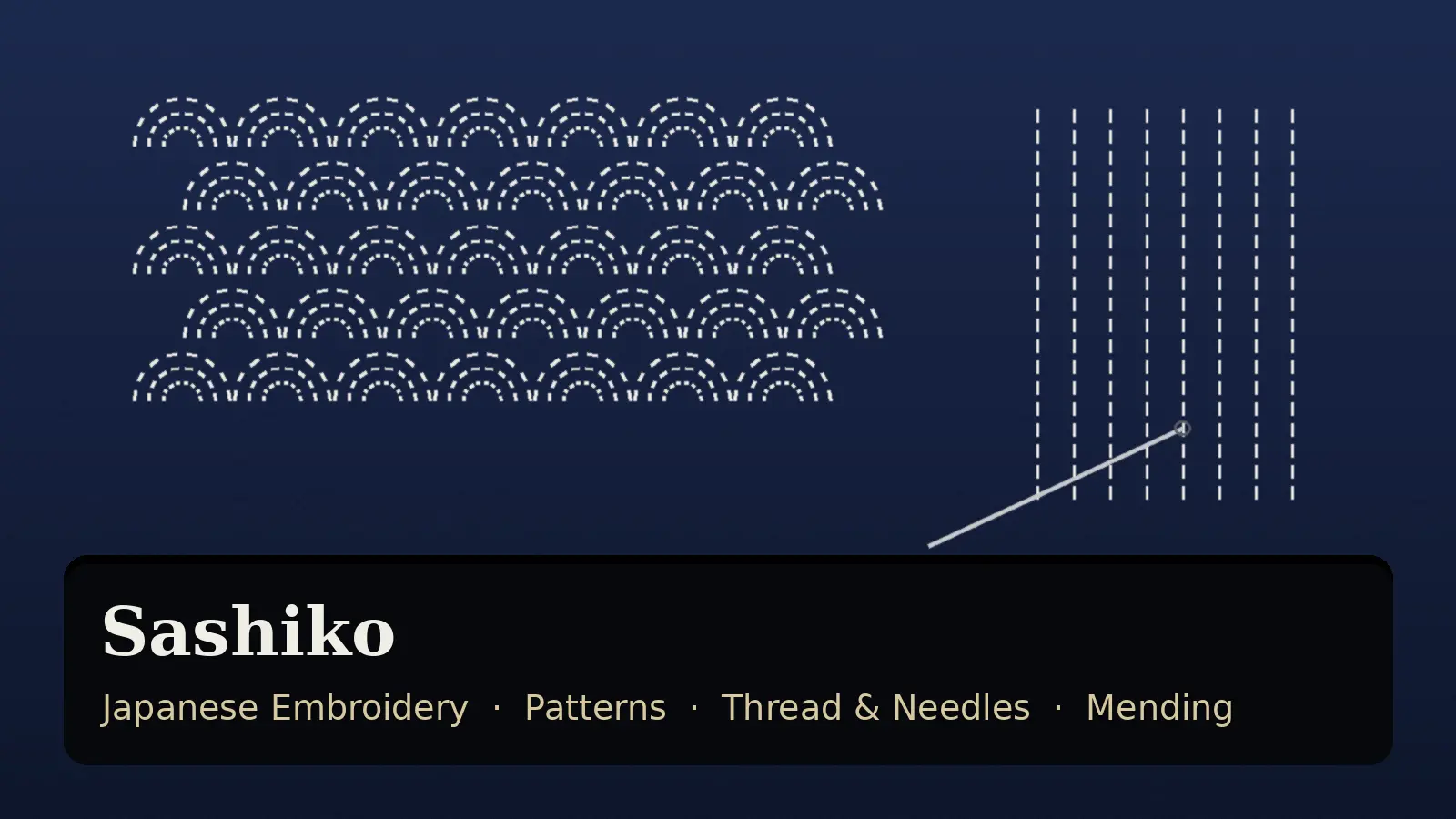
Sashiko (刺し子, “little stabs”) is Japanese running-stitch embroidery: layers of cotton or hemp stitched all over with thick cotton thread, first to mend and strengthen work clothes, now for decorative patterns and visible mending. This guide covers the sashiko meaning and history, the three regional styles (Tsugaru kogin, Nanbu hishizashi and Shonai sashiko), boro, hitomezashi vs moyozashi, traditional pattern names and meanings, thread, needles and thimbles, fabric and kits with Japanese prices (as of November 2026), a step-by-step how-to, sashiko mending for jeans and denim, and how to buy sashiko supplies from Japan.[5]
What Is Sashiko? Meaning and Definition
Sashiko meaning: the Digital Daijisen dictionary defines 刺し子 (sashiko, also sasshiko) as layering cotton cloth and stitching it finely all over, one stitch at a time. Because the result is strong, it is used for judo and kendo uniforms. The Nihon Kokugo Daijiten adds firefighters’ clothes and cites a use of the word from 1785.[5] Heibonsha’s encyclopedia describes two layers of cloth stitched together, also called tsuzuri-nui, and says it was originally a way to mend worn spots, reinforce cloth and add warmth so clothes lasted longer.[5]
- Sashiko in Japanese: 刺し子 or 刺子, read さしこ. Sashiko pronunciation: sah-shee-koh, three short syllables.
- What does sashiko mean in English? Literally “little stabs” or “stitched one”. In English it is usually called Japanese embroidery, Japanese quilting stitch or Japanese mending stitch.
- Sashiko definition in one line: decorative or reinforcing running stitch (unshin, 運針) through one or more layers of fabric, traditionally white cotton thread on indigo cloth.[29][5]
- Sashiko-ori (刺子織): a woven cloth made to look like sashiko, with floating threads on a plain weave. It is a double weave used for work clothes, obi and bags.[30][5] So a “sashiko fabric” sold by the yard for jackets is often sashiko-ori, a weaving technique whose woven patterns imitate stitches, not hand-stitched cloth.
What is the Japanese embroidery called? There are two main traditions. Sashiko (and its counted relatives kogin and hishizashi) is folk running stitch on cotton or hemp. Nihon shishu (日本刺繍) is Japanese silk embroidery: worked on a frame, mainly on silk, with silk and gold or silver thread, using flat stitches such as hira-nui and knot stitches such as sagara-nui, for kimono and obi.[31] Kotobank notes that in Japan, traditional work is now called nihon shishu and Western work “French embroidery”.[32]
Sashiko History: From Tohoku Work Clothes to Boro
- Mending first: the Nipponica encyclopedia says sashiko began as darning and patching. People then reinforced the shoulders and chest, which wear out first, decoratively from the start.[5]
- Where cotton was scarce: Heibonsha says sashiko was done widely in Tohoku, where cotton could not be grown, in remote mountain areas and in fishing villages with hard working conditions. Its origin is unclear; Buddhist patched robes used the technique, and Edo-period travel diaries describe stitched garments in Aomori and Akita.[5]
- Edo period (17th–19th centuries) onward: MyPedia lists fire-fighting outfits, vests, martial-arts practice wear and work clothes. Firefighters wore sashiko hanten jackets.[5]
- Akita and Yamagata: mostly simple running stitch on indigo cotton everyday clothes and field wear, with names such as chirimen-zashi, masu-zashi, yama-zashi and asanoha-zashi. Chirimen-zashi uses stitches under 2 mm so the cloth looks like crepe.[5]
- Today: the craft is a hobby across Japan. Otsuchi Sashiko in Iwate, for example, started as a recovery project after the 2011 earthquake.[33]
Boro: patched textiles
Boro (襤褸, ぼろ) comes from the word boro-boro, “worn to rags”, and means old rags or clothes covered in patches.[34] In textile circles, boro means cloth patched and stitched for generations in Aomori’s mountain, farming and fishing villages from the Edo period on. The folklorist Chuzaburo Tanaka collected it for about 40 years. One piece of bedding (donja) layered with patches weighed 14 kg (about 31 lb).[35] His collection was shown at the Amuse Museum in Asakusa, Tokyo, which opened in 2009 and closed on March 31, 2019.[35][36] An exhibition of these boro kimono, “BORO – The Art of Necessity”, won Sweden’s Exhibition of the Year 2021 at the National Museum of Asian Art in Stockholm, and boro has also been shown at Japan Society Gallery in New York.[37]
Sashiko vs boro: sashiko is the stitch; boro is the patched cloth. Boro mending uses sashiko running stitch to hold layers of patches together, so “boro sashiko” or “sashiko and boro stitching” describes the same visible-mending style. In short, boro is patching and stitching; sashiko is stitching, with or without patches.
The Three Great Sashiko: Kogin, Hishizashi and Shonai
Kotobank calls Shonai sashiko one of Japan’s “three great sashiko” (三大刺し子), together with Tsugaru kogin-zashi and Nanbu hishizashi.[4]
| Style | Region | Technique | Typical motifs | Source |
|---|---|---|---|---|
| Tsugaru kogin-zashi (津軽こぎん刺し) | Hirosaki and the Tsugaru area, western Aomori | White cotton thread on indigo hemp; counts an odd number of warp threads (1, 3, 5…) | Units nicknamed hanako (flower), mameko (bean), tekona (butterfly), managu (cat’s eye) | [1] |
| Nanbu hishizashi (南部菱刺し) | Hachinohe and the Nanbu area, eastern Aomori | Cotton thread on hemp; counts an even number of threads along the weft, so every motif is a wide diamond | Ume no hana (plum blossom), kiji no ashi (pheasant foot), walnut; about 400 patterns today | [2][3] |
| Shonai sashiko (庄内刺し子) | Tsuruoka, Yamagata | Running-stitch patterns, traditionally white on indigo | About 40 traditional motifs, e.g. kaki no hana (persimmon flower), zeni-zashi (coin), Takeda-bishi | [4][5] |
- Kogin history: in the Tenmei era (1781–89), Tsugaru farmers were not allowed to wear cotton cloth. They grew hemp and ramie, and cotton was allowed only as thread, so they reinforced hemp with cotton stitching. Girls learned from age 5 or 6, and brides brought kogin garments with them. Kogin has three regional families: Nishi-kogin, Higashi-kogin and Mishima-kogin.[1] In Akita the word meant indigo hemp field wear.[38]
- Hishizashi history: Aomori Prefecture says Nanbu hishizashi began about 200 years ago around Hachinohe under the same rule. Women stitched cotton into hemp for strength and warmth. It was designated an Aomori traditional craft in March 1996 and is now stitched on cotton and wool too, for table runners, aprons, noren curtains and bags.[2] The Nanbu area is eastern Aomori: Hachinohe, Sannohe, Gonohe, Towada, Misawa and nearby towns.[39] Kotobank says the Taisho era added green and red thread to the navy and white.[3]
- Kogin vs sashiko: kogin is a counted-thread type of sashiko. You count warp threads and work the pattern into the weave instead of following drawn lines.[1][5] Kogin uses an even-weave cloth and its own thread; DARUMA STORE sells unbleached kogin thread at ¥154 and a kogin needle at ¥198.[27]
- Try kogin in Hirosaki: Hirosaki Apple Park runs drop-in kogin workshops on the 2nd and 4th Sundays from April 12, 2026 to March 28, 2027, 10:00–15:00. You make a coaster or bookmark for ¥300.[40]
Hitomezashi vs Moyozashi: The Two Kinds of Sashiko
- Hitomezashi (一目刺し, “one-stitch sashiko”): stitches of a fixed length on a grid, row after row vertically, horizontally and sometimes diagonally. The pattern appears where the stitches meet. There are no curves, so many beginners start here.[10][21]
- Moyozashi (模様刺し, “pattern sashiko”): running stitch along the outline of a drawn pattern, with straight lines and curves (seigaiha waves, shippo circles), often with shorter stitches.[21][41]
- Kuguri-zashi: a second thread passed under finished stitches to add curves or color. Several kits add it to hitomezashi grids.[11]
Which is easier? One sashiko blogger found curves far harder and suggests simply choosing the pattern you like, because finishing a whole cloth takes time.[41] The difference between sashiko and embroidery: sashiko uses only running stitch, while embroidery in general uses many stitch types.[42][32] Sashiko vs kantha (the Bengali running-stitch quilt) is a similar idea from another country; we do not cover kantha here.
Sashiko Patterns: Names and Meanings
Traditional Japanese sashiko pattern names describe what they look like. Many are auspicious (吉祥) designs that carry a wish, such as health, long life or harmony.[7][8] These are the sashiko patterns and meanings you will see most often (all are free to use as traditional designs):
| Pattern name | English | What it looks like | Meaning / note | Source |
|---|---|---|---|---|
| Asanoha (麻の葉) | Hemp leaf | Six-pointed star made of diamonds on a triangular grid | Hemp grows fast with little care, so the pattern wishes children healthy growth and is used on baby clothes; also a charm against evil | [6][7][8] |
| Seigaiha (青海波) | Blue ocean waves | Overlapping concentric semicircles (curves; moyozashi) | An auspicious pattern named after the costume of the gagaku court dance Seigaiha, in use since the Nara period; endless calm waves wish for a peaceful life | [9][7] |
| Shippo-tsunagi (七宝つなぎ) | Linked “seven treasures” | Equal circles overlapping by a quarter (curves) | An endless chain that spreads outward: harmony, good relationships and prosperity; the circle (en) is a pun on en, a bond | [7][8] |
| Kaki no hana / kakinohana (柿の花) | Persimmon flower | Small four-petal flowers on a square grid; a classic hitomezashi | A Shonai sashiko motif and a common first hitomezashi pattern | [4][10] |
| Kome-zashi (米刺し) | Rice stitch | Crosses that look like the kanji 米 (rice) | Named after the kanji for rice; the classic practice pattern for keeping stitches even | [8][11] |
| Juji-hanazashi / jujizashi (十字花刺し) | Cross flower | Crosses and flowers on a grid (hitomezashi) | One of the most stitched hana-fukin patterns | [12][11] |
| Kagome (籠目) | Basket weave | Interlocking triangles that look like a woven basket | Several variants exist, including a one-stitch hitomezashi kagome | [8][11] |
| Hishi / hanabishi (菱 / 花菱) | Diamond / flower diamond | Diamonds on a counted grid (kogin and hishizashi) | Diamond motifs carry names of plants and animals | [2][3] |
| Kikko / hana-kikko (亀甲) | Tortoise shell | Hexagons, sometimes with a flower inside | The tortoise protects itself with its shell, so kikko stands for long life, health and protection | [13][8] |
| Yabane / yagasuri (矢羽根 / 矢絣) | Arrow feathers | Rows of V-shaped feathers, alternating direction | Like a sacred arrow, it wards off bad luck; popular with young women from the Meiji to the early Showa era | [14][7] |
| Sayagata (紗綾形) | Linked manji | Broken, interlocking 卍 shapes | Linked manji stand for unending long life and prosperity | [15][7] |
| Ajiro (網代) | Woven wickerwork | Squares that look like woven bamboo | Named after woven-bamboo fish weirs | [8] |
| Masu-zashi / yama-zashi (枡刺し / 山刺し) | Measuring box / mountains | Nested squares / zigzag mountains | Old Akita and Yamagata work-clothes patterns | [5] |
More names in Japanese sashiko kits: hana-zashi (flower), tobi-kagome, yosegi (marquetry), tsuzuki-yamagata (mountain chain), torisasuki (bird cross), koshi (lattice), igeta (well-curb cross) and mutsude-tsunagi.[11][25] Nanbu hishizashi alone has about 400 diamond patterns, including ume no hana (plum blossom), kiji no ashi (pheasant foot) and kurumi (walnut).[3][2]
Sashiko pattern ideas by theme
- Waves, ocean and water: seigaiha; also nowaki (autumn grass in wind) and rain lines in modern designs.
- Flowers and leaves: kaki no hana, hanabishi, asanoha (hemp leaf), plum, cherry, hydrangea, lotus, rose, ginkgo and maple leaf designs.
- Geometric: diamond, hexagon (kikko), honeycomb, lattice, cross (juji), circle (shippo), stars, mountains (yama), arrow (yabane), grid and line patterns.
- Animals: modern pattern sashiko adds cats, rabbits (hare), fish and koi, cranes, birds, dragonflies, butterflies, owls and dragons. One Olympus hana-fukin pairs a rabbit with seigaiha, another shows goldfish.[41][25]
Printable sashiko patterns, grids and templates
Sashiko designs are easy to draw yourself because most sit on a square or triangular grid. Draw the grid first with a disappearing chalk pen (Felissimo’s hitomezashi lesson uses a 0.5 cm, about 3/16 in, grid), then join the dots to make the pattern.[10][42] Options for getting a pattern onto fabric:
- Pre-printed cloth: the simplest. Olympus and DARUMA sell pre-printed hana-fukin and grid-guide cloth (prices below); the print washes out after stitching.[12][27]
- Grid template, ruler or stencil: a quilting ruler and a chalk pen, a plastic or acrylic grid stencil, or a grid stamp make even dots. One Osaka craft wholesaler sells dot-type and fixed hitomezashi stencils.[42]
- Transfer paper or water-soluble sheets: trace a printable pattern (PDF, A4) onto chalk transfer paper, or print it on water-soluble or wash-away stabilizer, stitch through and rinse. Iron-on transfers work too on light fabric.
- Dark fabric: an Osaka craft shop recommends Clover’s iron-erasable chalk pen, which shows up on navy and black fabric.[42]
- Pattern generators: hitomezashi is binary (start the row on or off), so a spreadsheet works as a pattern maker. One Japanese blogger designs hitomezashi grids in Excel.[41]
Sashiko pattern books (図案集, zuanshu) from Japan give full pattern dictionaries and stitch order. Search 刺し子 図案 on Japanese marketplaces for books, sashiko pattern cards and pattern sheets.
Sashiko Thread: Brands, Weights and Colors
Sashiko thread (刺し子糸) is cotton, twisted from several fine strands, and a little thicker than ordinary sewing thread.[33][16] How is sashiko thread different from embroidery floss? Six-strand floss is meant to be separated; sashiko thread is used as one twisted thread. Olympus’s 100 m skein label says to use it as it is, without separating strands.[20] Sashiko thread prices as of November 2026 (tax-in, Japan):
| Thread | Weight / character | Length | Colors | Price in Japan | Source |
|---|---|---|---|---|---|
| DARUMA Sashiko Thread Thin (細) | 4-ply, the most standard thickness; small and large patterns | 40 m card | 37 colors | ¥176 solid; ¥220 2/3-color kasuri; ¥286 8-color | [16] |
| DARUMA Sashiko Thread Thick (合太) | 6-ply; each stitch stands out, for large patterns | 30 m card; 100 m / 40 m skeins | 29 colors (cards) | ¥176 card; ¥440 / ¥220 skeins | [17] |
| Olympus Sashiko Thread | The typical sashiko thickness; soft, loose twist, no sheen; suits moyozashi | Skein | Solid, ombre (bokashi) and mixed | ¥165 solid; ¥198 ombre / mix | [18][19] |
| Olympus Sashiko Thread 100 m | Use as it is: do not separate the strands | 100 m skein | Solid and mixed | ¥440 solid; ¥605 mix / ombre | [20][18] |
| Lecien “hidamari” | On the thin side, firm twist; solid, moku (mottled) and dotted ten-gasuri dyes | — | — | Check listing | [19] |
| No. 25 embroidery floss (DMC, Olympus and others) | A workable substitute when you can’t find the color you want in sashiko thread | Skein | Huge range | Varies | [21][10] |
- Olympus sashiko thread vs DARUMA: a Kagoshima sashiko artist who compared brands describes regular Olympus thread as soft and suited to moyozashi but prone to fuzz in hitomezashi, Olympus fine as perhaps the thinnest sashiko thread with the most sheen, and DARUMA Thin as bright, slightly glossy and more tightly twisted.[19] So: is Olympus sashiko thread good? Yes for curves and bold lines; for crisp grids, a firmer twist helps.
- DARUMA (Yokota) sashiko thread is cotton, made in Japan, with multicolor kasuri (space-dyed) versions; DARUMA suggests 2-color kasuri even for random running stitch.[16] For DARUMA’s yarns see our Japanese yarn brands guide.
- How many strands? One. Thread the needle with a single sashiko thread (doubled thread is used only for some hishizashi and for very bold lines).[19][20]
- Thread preparation: DARUMA’s skein instructions: open the skein into a loop, tie the bundle with its label opposite the knot, cut through the knotted end, then pull one length at a time from the labeled side.[17] Cards (カード巻) can simply be cut to length.[16]
- Colors: white and ecru on indigo are classic; DARUMA Thin also comes in navy, indigo, red, madder, green, gray, black, gold-brown and a range of pinks and blues, and Olympus sells ombre (gradient), multicolor, rainbow-like mixes and metallic lamé thread (¥330 for 40 m).[16][18]
- Thread weight chart in plain words: from thin to thick, DARUMA Thin (4-ply) and Olympus fine, then medium (Lecien hidamari and similar), then regular Olympus sashiko thread, then DARUMA Thick (6-ply).[19][16][17] Makers don’t publish one shared diameter, so compare by ply and by stitching a sample. Sashiko thread comes on cards, in skeins and as wound balls rather than on a spool, cone or bobbin; card thread stores flat in a thread holder or organizer box, and a skein can be braided loosely after cutting so single lengths pull out without tangling.[16][17] If the thread is unraveling or splitting, cut shorter lengths and smooth it as you stitch; loosely twisted thread fuzzes more.[19]
- Colors and variegated thread: beyond white, indigo and navy you can find yellow, orange, red, purple, green, blue, grey and black, plus variegated (space-dyed or ombre) and lame (lamé, metallic) thread.[16][18]
- Sashiko thread vs crochet thread or perle: crochet cotton and perle cotton are tightly twisted and shiny, so they look crisper and less matte; they are a sashiko thread equivalent or replacement in a pinch, not the same thing. Sashiko thread is too thick for most sewing machines and too soft for needlepoint canvas work. Our recommendations: start with one brand in white and one in a color, then compare.
- Sashiko thread alternative: No. 25 (six-strand) embroidery floss, used with more strands, or a firm cotton perle; both Craftie and Felissimo say floss can substitute.[21][10] For darning, wool or fine floss is usual.[43] Is sashiko thread good for hand quilting? Sashiko thread is thicker than quilting thread and makes bold “big stitch” quilting rather than fine quilting.
Sashiko Needles and Thimbles
Sashiko needles are longer than ordinary sewing needles with a larger eye, so you can load many stitches before pulling through.[10][33]
| Needle / tool | What it is | Size (thickness × length) | Price in Japan | Source |
|---|---|---|---|---|
| DARUMA sashiko needles 01-8861 | 4 needles + threader | 0.84 × 51.5 mm, 0.99 × 44.5 mm, 0.84 × 41.3 mm, 0.84 × 33.3 mm | ¥374 | [22] |
| DARUMA sashiko needles, long type 01-8863 | 3 needles + threader; for straight lines, used with a thimble | 0.97 mm × 66.7 / 60 / 54 mm | ¥374 | [22] |
| Clover sashiko needles 57-232 | 8 needles, 2 of each size; sharp points | 0.84 × 50.8 mm, 0.99 × 44.5 mm, 0.91 × 42.9 mm, 0.89 × 34.8 mm | Check listing | [23] |
| Clover plate thimble 34-301 (皿付指ぬき) | Free size; brass with nickel plating; lets your palm push and steer a long needle | — | Check listing | [24] |
- Sashiko needle length: about 33–67 mm (1.3–2.6 in). Long needles (54–67 mm) suit long straight lines on soft cloth; shorter ones suit curves, thick denim and small hitomezashi grids.[22]
- Sashiko needle vs embroidery needle, tapestry or darning needle: a sashiko needle is sharp (a tapestry needle is blunt) and long and slim (a darning needle is long but often thicker). A sharp embroidery needle with an eye large enough for the thread can work in a pinch.[23][10]
- Sashiko needle dimensions: 0.84–0.99 mm thick in the DARUMA and Clover sets; the longest in those sets is the 66.7 mm long-type needle.[22][23] Sashiko needles are straight; a curved needle is for upholstery and repair, not for running stitch. Keep them in a needle book, needle case or magnetic needle holder.
- Needle threader: both DARUMA sets include a threader, which helps with thick thread.[22]
- Sashiko thimble (palm thimble, needle pusher): the Japanese plate thimble (皿付指ぬき) sits on the middle finger with a metal plate on the palm side, so your palm pushes the needle. Clover says it helps you control a long needle and push it through stiff fabric.[24] The traditional yubinuki (指貫) is a leather or metal ring worn on the middle finger; in Aomori, Akita and Iwate it is called tekka.[44]
- How to hold the needle: Nipponica’s running-stitch lesson: wear the thimble on the right middle finger between the joints, rest the eye end of the needle against it, hold the cloth with the middle, ring and little fingers, and keep the left hand about 20 cm from the needle tip.[29]
Other tools: small thread snips, a chalk pen, a ruler and pins. Japanese scissors are covered in our Japanese scissors brands guide.
Sashiko Fabric: Sarashi, Indigo Cotton and Hana-Fukin
- Sarashi (晒): bleached cotton, a narrow plain weave about 32 cm wide, soft and absorbent. It is the cloth of tenugui towels and the usual base for hana-fukin.[45] Felissimo’s lesson uses sarashi.[10]
- Indigo cotton: natural indigo (aizome) comes out of the vat green and turns navy in the air. It is colorfast and resists sunlight, which is why indigo with white thread is the classic sashiko look.[46]
- Other fabric: any plain weave that is not very thick works: cotton, linen, hemp, chambray, denim.[33][10] A slightly coarse, firm weave is easiest for beginners.[10]
- Hana-fukin (花ふきん): a kitchen cloth of two layers of sarashi stitched all over, a sampler of traditional patterns. Asanoha, kome-zashi, juji-hanazashi and kaki no hana are classic choices.[10][8][11] Hana-fukin also make a classic sashiko dish cloth, coaster, napkin or table runner. For other cloth crafts see our furoshiki and tenugui guide.
Sashiko Kits for Beginners and Prices in Japan
A sashiko kit for beginners usually includes pre-printed cloth, thread and sometimes a needle. Prices in Japan, November 2026 (tax-in listed prices):[25]
| Kit / supply | Contents | Price | Source |
|---|---|---|---|
| Hitomezashi starter kit (Olympus) | Grid-pattern starter, e.g. igeta & kome-zashi, kaki no hana & hanabishi | ¥935 | [25] |
| Hana-fukin cloth pack, white (Olympus) | Pre-printed sarashi cotton, about 34 × 34 cm (13.4 × 13.4 in), instructions; thread not included | ¥550 | [12] |
| Hana-fukin cloth pack, indigo (Olympus) | Same idea on dyed cloth, e.g. tasuki | ¥748 | [26] |
| Hana-fukin kit “Wa” series (Olympus) | Yabane, seigaiha, shippo-tsunagi, tasuki and more | ¥1,980 | [25] |
| Placemat / table kits (Olympus) | Shippo, asanoha, hanazashi | ¥1,980 | [25] |
| Character hana-fukin kits (Olympus) | Disney designs | ¥2,420 | [25] |
| Sashiko fukin with pattern (DARUMA STORE) | White / navy | ¥572 / ¥792 | [27] |
| Grid-guide sashiko cloth (DARUMA STORE) | Printed grid, white / colored | ¥1,540 / ¥1,760 | [27] |
| Sashiko thread box set S / L (DARUMA STORE) | L = all 29 solid Thin colors + 4 needles + threader + pincushion | ¥3,630 / ¥5,500 | [28][27] |
At ¥150 to the dollar (an example rate only), a ¥1,980 hana-fukin kit is about $13 before shipping. A sashiko starter kit with cloth, two or three skeins and a needle pack can cost under ¥3,000 in Japan. Kits also come as coasters, bookmarks, pouches, tote bags, cushions, brooches and ornaments. Read the contents line (セット内容): some cloth packs contain only printed cloth and instructions, no thread.[12]
How to Do Sashiko: Step-by-Step for Beginners
- Prepare the cloth. For a hana-fukin, fold or layer two pieces of sarashi and baste them; hitomezashi cloth is sewn up first and then stitched through both layers.[10]
- Mark the pattern. Draw the grid (for example 0.5 cm) and the pattern with a disappearing or iron-erasable pen, or use pre-printed cloth.[10][42]
- Start without a knot. Bring the needle up from the back three stitches ahead of your start, stitch three small stitches back, then stitch forward over them. On a hana-fukin this keeps the back neat. A knot is fine on a single layer.[10][21]
- Load the needle. Push the needle in and out several times before pulling (rocking it with the thimble), rather than one stitch at a time. Stitches come out more even.[42][33] For plain running stitch, Nipponica gives 3–4 mm stitches on cotton.[29]
- Ito-koki: smooth the thread. After every pull, hold the start of the stitches and stroke the fabric along the thread so it is not gathered. Repeat a few times. This step, called 糸こき or 扱く (ito-koki / shigoku), is what keeps sashiko flat.[42][11]
- Follow the stitch order. For hitomezashi, stitch all horizontal rows, then all vertical rows, then diagonals; the pattern appears only when the second direction crosses the first.[10][42]
- Turning corners and intersections. Common practice: make a stitch right into each corner point so the shape stays sharp, leave a little slack loop on the back when you turn, and do not let two stitches share a hole where lines cross, so intersections stay crisp. One Osaka shop also suggests leaving the last stitch of a row unpulled so you do not over-tighten.[42]
- Joining thread: join a new thread by overlapping 3–4 stitches where the old one ended, and finish by going back three small stitches on the back, hidden under the top stitches.[10][21]
- Finish. Remove the marks with water or an iron, as the pen maker directs. Experienced stitchers can finish a hana-fukin in one to two weeks.[33]
That is the whole sashiko tutorial in short; watch a video for the needle-rocking motion, which is easier to see than to describe. The same basic techniques apply to kogin, except that you count threads instead of following lines.[1]
Sashiko rules for neat work: keep each stitch the same length, keep the fabric smooth (ito-koki), stitch in a fixed order, and avoid long floats on the back. Sashiko basics take an afternoon to learn; even stitches take practice.
Sashiko Mending: Jeans, Denim and Visible Mending
Sashiko began as mending, and it is now the Japanese visible-mending technique most people mean by “Japanese mending stitch”.[5] A guide from SELVEDGE STORY, a denim site, describes the modern denim repair: a patch inside, running stitch from the outside, in thick cotton sashiko thread (white or indigo) with a long, thick sashiko needle. Kome-zashi, asanoha, shippo, seigaiha and cross stitches are the usual patterns.[43]
How to sashiko mend jeans (knee hole, crotch, elbow patch)
- Cut a patch of denim or sturdy cotton larger than the hole. A repair specialist at the Japanese denim brand Warehouse keeps offcuts from hemming for this.[47]
- Place it behind the hole (inside the leg) and pin or baste it flat.
- Stitch around the hole with slightly thick thread to stop it spreading, then stitch the edges of the patch so it is held twice.[47]
- Fill the area with parallel rows of running stitch, a grid or a sashiko pattern; mark a grid on the denim with an erasable pen first.[43]
- Work in a frame of mind for denim: use a shorter needle and fewer stitches per pass through thick denim, and a thimble. For the crotch, use smaller patches and denser rows, because it takes the most wear.
Sashiko vs invisible mending: invisible mending hides the repair by reweaving matching threads; sashiko and boro are intentional, visible mending that shows the repair as decoration. To fix holes in a sweater or knitwear, darning works better than sashiko, because a sashiko patch stiffens stretchy knit. For a frayed denim hem, a boro mending technique is to fold a strip of cloth over the hem and run sashiko stitches through all layers.
Sashiko vs darning: darning reweaves the hole with warp and weft threads (often over a darning mushroom) and is known from Western knitwear repair; sashiko layers a patch and stitches over it. Many denim fans combine both.[43] A boro patch is a sashiko repair with several overlapping patches left visible. For heavy damage, Warehouse’s repairer says a professional repair is the better option.[47]
Sashiko jackets, chore coats and sashiko denim
Firefighters’ sashiko hanten and martial-arts jackets are the original sashiko jackets.[5] Today “sashiko” on clothing labels usually means sashiko-ori, a woven fabric that imitates the stitch, used for chore jackets, overshirts, pants and denim-style shirts.[30] Hand-stitched boro or sashiko denim jackets are a separate, collectible category. For brands, see our Japanese workwear brands and Japanese denim brands guides. Kimono, haori and indigo work clothes with old sashiko also turn up on Japanese vintage marketplaces.
Sashiko vs kintsugi
Kintsugi is the other Japanese art of mending, but for pottery: broken ceramics are rejoined with lacquer and gold. It shares the idea of showing a repair instead of hiding it. See our kintsugi guide.
Sashiko Quilting, Machines and Other Uses
- Quilting: sashiko designs work as quilt blocks, borders and big-stitch hand quilting with sashiko thread. Sashiko quilting stitches go through all layers, like the traditional two-layer sashiko cloth.[5]
- Sashiko machine: searches for a sashiko sewing machine mean machines that imitate a running stitch. We have not tested them; a machine stitch is not hand sashiko, but it can suit large quilts and bags.
- Projects: bags, aprons, blankets, cushions, placemats, napkins, coasters, bookmarks, pouches, purses, needle cases and pincushions are all common sashiko projects.[25][2]
Sashiko Projects, Kits and Pattern Ideas
Sashiko examples to try once you know the basic stitch, as a DIY kit or with your own materials (cloth, thread, needle, thimble):
- Small first projects: a hana-fukin dishcloth (the Japanese zokin cleaning cloth is a thicker relative), a coaster, a bookmark, a handkerchief, a brooch (Olympus sells hitomezashi and kuguri-zashi brooch kits),[25] a bracelet band or an ornament. Children can start on a coaster kit with a large printed grid, a blunt-tip needle and adult help.
- Bags and accessories: a pouch or zipper pouch, a handbag, a tote, a needle case or a pincushion. A small accessory kit is a good gift.
- Home: a pillow or cushion cover, a tablecloth, placemats, a panel or wall hanging, or a patchwork quilt that mixes several sashiko blocks. Olympus’s range includes seasonal goldfish and dragonfly kits; search for koinobori (Children’s Day) or Christmas (xmas) tree and panel designs too.[25]
- Clothing and upcycle: a sashiko vest, a utility shirt, men’s pants or a men’s or women’s jacket. Upcycle an old shirt or jeans by stitching a sashiko patch or a whole panel. Upholstery fabric is usually too thick to stitch by hand.
- Modern motifs: heart, moon, round mandala and vortex (spiral, uzumaki) designs, plus whale, octopus, bear and dragonfly animals, and simple X-pattern (cross) grids, the “x stitch” of hitomezashi.
Most of these come as a sashiko kit with a threaded needle, printed cloth and a short tutorial. Kits made for adults are often the same products as the beginner kits, only with finer patterns. For a pattern library or pattern database, Japanese pattern books (図案集) list hundreds of designs; for pattern making and drawing, start with the grid method above. If the printed lines are washable, the pattern washes out; some kits use a water-soluble sticker or sheet instead.[12][42]
Want lessons? Sashiko classes and workshops run across Japan; in Hirosaki you can try kogin at Apple Park, and Japanese craft stores run workshops too.[40][42] Online sashiko courses and video lessons are another way to learn. Japanese embroidery classes in the nihon shishu (silk) tradition are a separate course of study.[31]
Japanese embroidery beyond sashiko
Japanese silk embroidery (nihon shishu) is worked on a large frame rather than a hoop, on silk with silk floss and metallic threads; antique Japanese embroidery on silk shows landscapes, gardens, flowers and birds on kimono, obi and wall art.[31] Sashiko needs no hoop or frame. Japanese ribbon embroidery and Japanese-inspired embroidered denim, embroidered jackets, vintage embroidered jeans and embroidered shirts are fashion styles, not sashiko; for Japanese denim see the brand guides above. Embroidery machine files and digitized designs are a different craft again.
Where to Buy Sashiko Supplies in Japan
- Tokyo: DARUMA STORE (Yokota) lists a retail shop in Tokyo along with its online shop.[27] Large craft chains such as Yuzawaya stock Olympus thread, kits and cloth packs.[18][25]
- Kyoto and Osaka: sashiko workshops run in Kyoto; staff of an Osaka craft wholesaler, which stocks sashiko thread, cloth and stencils, learned the tips in our how-to section at one.[42]
- Aomori and Yamagata: for kogin, hishizashi and Shonai sashiko made locally, the regional makers and workshops listed by Aomori Prefecture and Hirosaki’s tourism bureau are the source.[2][40]
- Online from Japan: maker web shops (DARUMA STORE, Clover’s online shop), craft chains and marketplaces such as Rakuten, Amazon Japan and Mercari for kits, vintage sashiko and boro textiles.
How to Buy Sashiko Kits and Supplies from Japan
- Search in Japanese: 刺し子 (sashiko); 刺し子糸 (thread); 刺し子針 (needles); 刺し子 キット (kit); 花ふきん (hana-fukin); 一目刺し (hitomezashi); 刺し子 図案 (patterns); こぎん刺し キット (kogin kit); 菱刺し (hishizashi); 指ぬき 皿 (palm thimble); 刺し子布 (cloth); 襤褸 or ボロ 古布 (boro textiles).
- Check the specs: thread length (m), ply (4本撚り / 6本撚り), colors (色番), needle size in mm, cloth size in cm, and what is in the kit (セット内容).
- Bundle light items: thread, needles and cloth are light, so consolidating several shops into one box is how buying from Japan stays reasonable. Use LinkBuy for maker shops such as DARUMA STORE.
- Vintage boro and sashiko clothing: check photos for stains, holes and smell; add unboxing photos (¥500 / ¥700) at the Tokyo warehouse before it ships if condition matters.
OneMall buys from Japanese marketplaces such as Mercari, Yahoo Auctions, Rakuten and Amazon Japan, and from other Japanese online stores (including maker web shops) through LinkBuy. Items that need a lottery entry, purchase limit, Japanese identity verification or a merchant account cannot be purchased. International shipping is charged on the greater of actual weight and volumetric weight (length × width × height ÷ 5,000) of the box the warehouse uses.
Service fees are ¥300 per item on most marketplaces; from ¥200 per item on Yahoo Auctions and LinkBuy. The first six orders consolidate free; each additional order costs ¥100. Storage is free for 90 days after arrival (30 days after consolidation). Payment is by Visa, Mastercard or PayPal, settled in USD.
US buyers: since August 29, 2025, US-bound parcels of any value go through customs and pay applicable duties, taxes and fees — the $800 de minimis exemption no longer applies. OneMall currently ships to the United States by ECMS, DHL and Japan Post EMS (DDP — declared value up to USD 2,500, duties prepaid with the shipping fee); the live quote at checkout shows which lines accept your parcel.
If something breaks: damage caused inside the warehouse by OneMall is refunded at the item’s purchase price; damage in international transit is compensated up to the international shipping fee paid, and must be reported within 24 hours with the order number, photos and a full unboxing video. Loss in transit is handled by the carrier, and OneMall helps confirm with the carrier and file the claim within 72 hours. Duties and customs fees are paid by the buyer.
Search OneMall for sashiko thread, sashiko needles, sashiko kits, hana-fukin cloth, kogin kits or Olympus sashiko, and compare the best Japan proxy services and proxy costs by total landed cost. Our LinkBuy guide explains ordering from a Japanese shop site, and what you cannot ship from Japan lists restricted items.
Frequently Asked Questions
What is sashiko?
Sashiko is Japanese running-stitch embroidery that layers and reinforces cloth. It began as mending in Tohoku and is now used for patterns, hana-fukin and visible mending.
What is the difference between sashiko and boro?
Sashiko is the stitch; boro is cloth built up from many patches. Boro uses sashiko stitching to hold patches together.
What is the difference between hitomezashi and moyozashi?
Hitomezashi uses fixed-length stitches on a grid, so the pattern appears where rows meet. Moyozashi follows drawn pattern lines, including curves.
Can I use embroidery floss for sashiko?
Yes. No. 25 embroidery floss can substitute for sashiko thread, though sashiko thread is one twisted thread that you don’t separate.
How long are sashiko needles?
Japanese sashiko needles run about 33–67 mm (1.3–2.6 in). The long type is for straight lines, the short ones for curves and thick denim.
What thimble is used for sashiko?
A palm or plate thimble (皿付指ぬき) worn on the middle finger, so the palm pushes the long needle. A leather ring thimble also works.
What fabric is best for sashiko?
A plain weave that isn’t too thick: sarashi cotton for hana-fukin, indigo cotton, linen or denim. Pre-printed cloth is easiest for beginners.
Can you sashiko on jeans?
Yes. Put a patch behind the hole, stitch around it, then fill the area with rows or a sashiko pattern using thick cotton thread.
How much do sashiko kits cost in Japan?
In November 2026, Olympus hitomezashi starter kits listed at ¥935, hana-fukin kits at ¥1,980 and printed cloth packs at ¥550–¥748; DARUMA thread cards are ¥176.
What are the three great sashiko of Japan?
Tsugaru kogin-zashi and Nanbu hishizashi from Aomori, and Shonai sashiko from Tsuruoka, Yamagata.
References
- Kotobank: こぎん (kogin, Nipponica). https://kotobank.jp/word/%E3%81%93%E3%81%8E%E3%82%93-1534012
- Aomori Prefecture: traditional crafts — Nanbu Hishizashi. https://www.pref.aomori.lg.jp/soshiki/sangyo/chikikigyo/aomori_dento-kogei_nanbuhishizashi.html
- Kotobank: 南部菱刺し (Nanbu hishizashi). https://kotobank.jp/word/%E5%8D%97%E9%83%A8%E8%8F%B1%E5%88%BA%E3%81%97-1384123
- Kotobank: 庄内刺し子 (Shonai sashiko). https://kotobank.jp/word/%E5%BA%84%E5%86%85%E5%88%BA%E3%81%97%E5%AD%90-1744986
- Kotobank: 刺子 (さしこ) — Digital Daijisen, Nihon Kokugo Daijiten, Heibonsha World Encyclopedia, Nipponica, MyPedia. https://kotobank.jp/word/%E5%88%BA%E5%AD%90-510408
- Kotobank: 麻の葉 (asanoha). https://kotobank.jp/word/%E9%BA%BB%E3%81%AE%E8%91%89-424168
- Kamakura Koshido: Japanese patterns and their meanings. https://koshidou.jp/?page_id=604
- nuu.ne sashiko blog: cute and recommended sashiko patterns (pattern meanings). https://sashikostitching.com/?p=7610
- Kotobank: 青海波 (seigaiha). https://kotobank.jp/word/%E9%9D%92%E6%B5%B7%E6%B3%A2-85545
- Felissimo Couturier blog: how to stitch hitomezashi (kaki no hana). https://www.felissimo.co.jp/couturier/blog/embroidery/japanese-embroidery/post-14871/
- Nyama no Mori: traditional sashiko patterns in hana-fukin kits. https://nyamanomori.com/sashikonodentouzuan/
- Yuzawaya online shop: Olympus hana-fukin cloth pack, Juji-hanazashi (white) H-1016. https://www.yuzawaya.shop/shopdetail/000000009492/
- Kotobank: 亀甲 (kikko). https://kotobank.jp/word/%E4%BA%80%E7%94%B2-473206
- Kotobank: 矢絣 (yagasuri). https://kotobank.jp/word/%E7%9F%A2%E7%B5%A3-647599
- Kotobank: 紗綾形 (sayagata). https://kotobank.jp/word/%E7%B4%97%E7%B6%BE%E5%BD%A2-512117
- DARUMA (Yokota Co.): Sashiko Thread Card, Thin (細) 01-2400. https://www.daruma-ito.co.jp/products/01-2400.php
- DARUMA (Yokota Co.): Sashiko Thread Card, Thick (合太) 01-2410 and skeins. https://daruma-ito.co.jp/products/01-2410.php/
- Yuzawaya online shop: Olympus sashiko thread listings. https://www.yuzawaya.shop/shopbrand/ct4003/
- nuu.ne sashiko blog: sashiko thread comparison. https://sashikostitching.com/?p=7612
- Yuzawaya online shop: Olympus Sashiko Thread 100m, solid. https://www.yuzawaya.shop/shopdetail/000000136924/
- Craftie Style: what is sashiko, basics and tools. https://craftie.jp/style/article/36585
- DARUMA (Yokota Co.): Sashiko needles 01-8861 and long type 01-8863. https://www.daruma-ito.co.jp/products/01-8861.php
- Clover: Sashiko needles 57-232. https://clover.co.jp/products/57232
- Clover: plate thimble (皿付指ぬき) 34-301. https://clover.co.jp/products/34301
- Yuzawaya online shop: Olympus sashiko kits. https://www.yuzawaya.shop/shopbrand/ct3933/
- Yuzawaya online shop: Olympus hana-fukin cloth pack, Tasuki (indigo) H-2035. https://www.yuzawaya.shop/shopdetail/000000009638/
- DARUMA STORE: Sashiko + Kogin category. https://daruma-store.jp/?mode=cate&cbid=2576345&csid=0
- DARUMA STORE: Sashiko thread box set (L). https://daruma-store.jp/?pid=158635417
- Kotobank: 運針 (unshin, running stitch). https://kotobank.jp/word/%E9%81%8B%E9%87%9D-442607
- Kotobank: 刺子織 (sashiko-ori). https://kotobank.jp/word/%E5%88%BA%E5%AD%90%E7%B9%94-510412
- Kotobank: 日本刺繍 (nihon shishu). https://kotobank.jp/word/%E6%97%A5%E6%9C%AC%E5%88%BA%E7%B9%8D-592757
- Kotobank: 刺繍 (embroidery). https://kotobank.jp/word/%E5%88%BA%E7%B9%8D-73282
- Nakagawa Masashichi Shoten: “Learning housework: sashiko” with Otsuchi Sashiko. https://story.nakagawa-masashichi.jp/256429
- Kotobank: 襤褸 (boro). https://kotobank.jp/word/%E8%A5%A4%E8%A4%B8-631791
- artscape review: BORO, beautiful rag textiles. https://artscape.jp/report/review/10106866_1735.html
- Shakaika!: Amuse Museum closes; BORO collection. https://www.shakaika.jp/news/info/28364/
- Osaka Seikei University press: BORO — The Art of Necessity. https://univ.osaka-seikei.jp/press/5
- Kotobank: 刺しこぎん (sashi-kogin). https://kotobank.jp/word/%E5%88%BA%E3%81%97%E3%81%93%E3%81%8E%E3%82%93-1324359
- Hachinohe City Board of Education teaching material: Nanbu hishizashi. http://www.hachinohe.ed.jp/hens/kyozai/kateika/hisisashi/index.htm
- Hirosaki Tourism and Convention Bureau: kogin-zashi workshop at Hirosaki Apple Park. https://www.hirosaki-kanko.or.jp/details.html?id=CNT00402241425378935
- Excel Sashiko: hitomezashi vs moyozashi for beginners. https://excel-sashiko.com/beginner-stitch-type/
- Nippon Chuko Boeki: tips for neat sashiko. https://www.nippon-chuko.co.jp/chuko-blog/2026-04-20-35946/
- SELVEDGE STORY: denim repair with sashiko, darning and boro. https://selvedgestory.com/ja/guide/repair-sashiko-darning/
- Kotobank: 指貫 (yubinuki, thimble). https://kotobank.jp/word/%E6%8C%87%E8%B2%AB-69011
- Kotobank: 晒 (sarashi). https://kotobank.jp/word/%E6%99%92-69926
- Kotobank: 藍染 (aizome, indigo dyeing). https://kotobank.jp/word/%E8%97%8D%E6%9F%93-23748
- Dig-it (Lightning): repairing holes in jeans yourself (Warehouse repair staff). https://dig-it.media/lightning/article/571610/