 Shopping Guide
 HELP / FAQs


 By onemall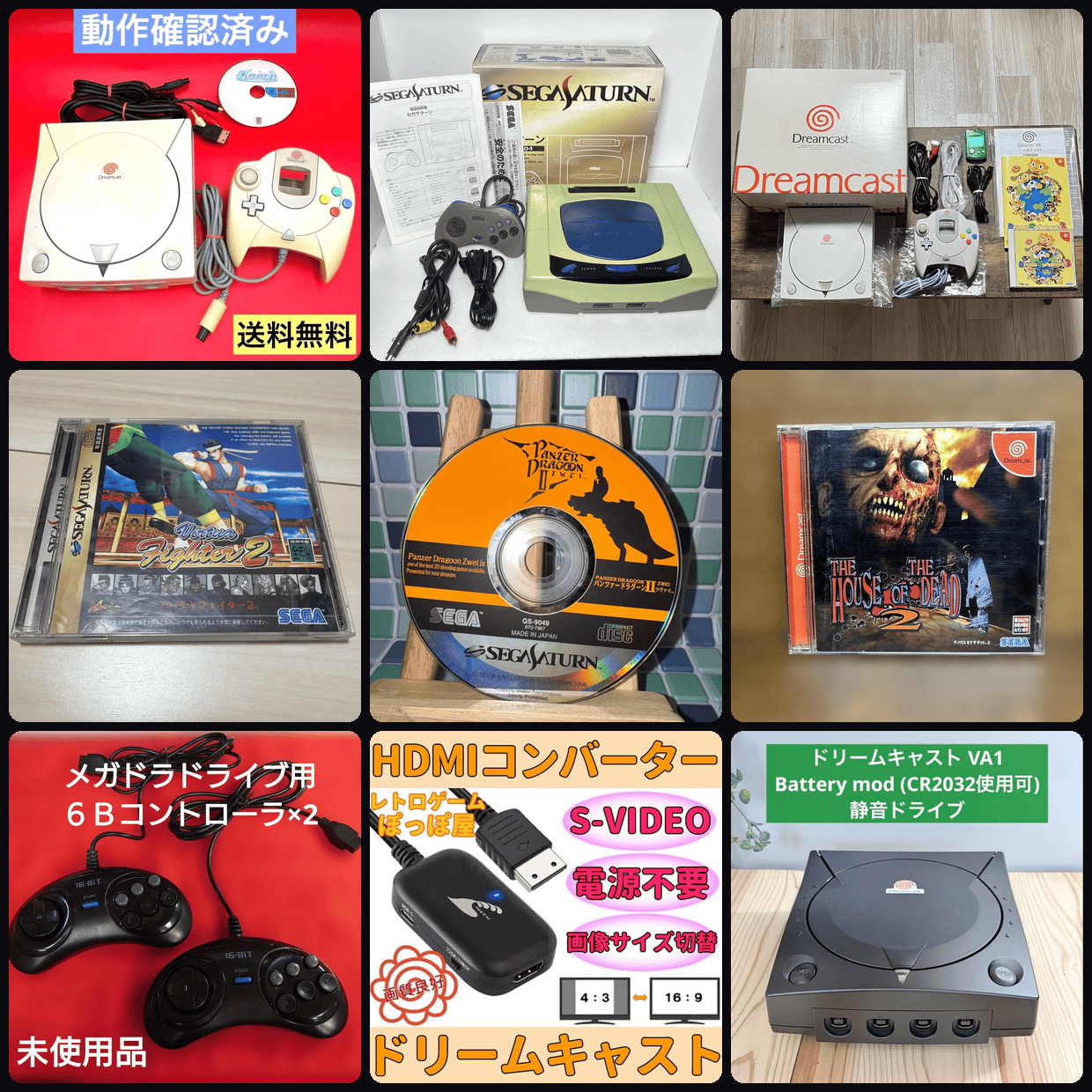
TL;DR
Japan is the cheapest place on earth to buy Sega hardware, and it is the only place to buy most Sega software. A Dreamcast with two pads and a game is ¥7,500 and a tested Saturn is ¥6,800 on the Japanese second-hand market today; Saturn discs start around ¥600. The catch is not price. It is that a Japanese console is a Japanese appliance: it is region-locked, it expects Japan’s 100 V mains[4], and it outputs an analogue signal your television probably no longer accepts.
- Region lock is real and it runs both ways. Dreamcast hardware is built for one of three regions — Japan, North America or Europe[3]. A Japanese console plays Japanese discs. That is the point of buying one.
- Voltage: Japan runs at 100 V[4]. North America’s 120 V is 20 % over what these power supplies were designed for; 220–240 V destroys them outright. Budget for a step-down transformer.
- The Saturn eats its own saves. Its clock and save data are kept alive by a coin lithium cell, and when it dies everything stored is lost[1]. A thirty-year-old console has a dead one. Plan on replacing it.
- Prices in context: the Saturn launched at ¥44,800 in November 1994[1] and the Dreamcast at ¥29,800 in November 1998[2]. Both now sell used for a fraction of that.
- Software is where Japan wins. A large slice of the Saturn library never left the country in any language, and the Japanese discs for games that did are routinely the cheapest copies in existence.
Why buy Sega hardware from Japan specifically
Two reasons, and they compound.
The first is the library. The Saturn was a commercial disappointment in the West and a genuine success in Japan, so the Japanese catalogue is several times the size of the Western one. Shooters, adventure games, strategy games and a mountain of licensed titles simply never received an English release. If you want them, you want a Japanese console, because the Saturn will not run a disc from the wrong territory.
The second is supply. Japan bought these machines in bulk, kept the boxes, and now sells them on domestic resale sites with the kind of condition detail that Western listings rarely bother with. 動作確認済 (“operation confirmed”) means the seller powered it on and tested it; 帯付き means the paper spine card is still with the disc; 箱付き means boxed. These terms are used consistently and they are load-bearing.
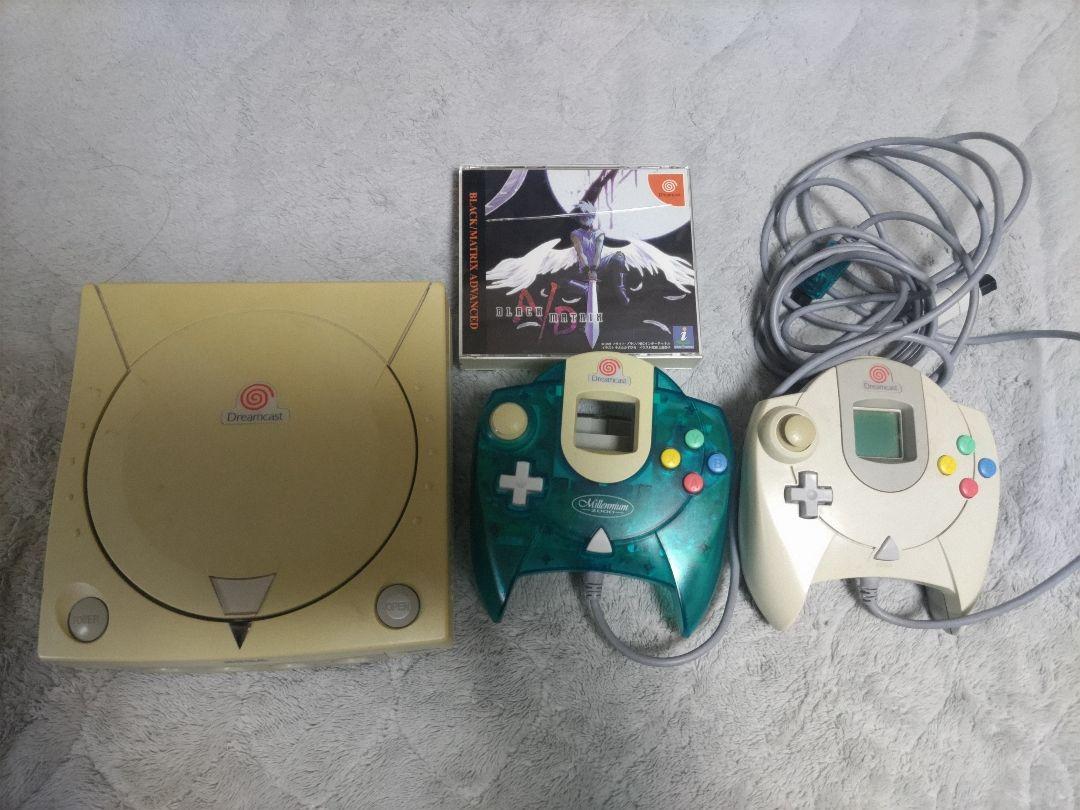


The Dreamcast above at ¥7,500 comes with two controllers and a game; the boxed HKT-3000 at ¥14,000 is the collector version of the same machine. That spread — roughly 1.9× between “works” and “works and has its box” — is the single most useful thing to understand before you start bidding. Decide which one you are buying.
The three things that stop a Japanese console working at home
1. Voltage
Japan’s domestic supply is 100 V, with 50 Hz in eastern Japan and 60 Hz in the west[4]. Sega’s Japanese consoles have their power supplies built in and expect that. Plugging one into 220–240 V is not a compatibility problem, it is a fire. North American 120 V will usually run the machine while over-driving a thirty-year-old power supply by a fifth — which is exactly the component least likely to have aged well. A step-down transformer rated well above the console’s draw is the cheap insurance here.
2. Region
Dreamcast hardware is built to one of three regions — Japan, North America, Europe[3] — and the Saturn checks territory in the same spirit. A Japanese console is for Japanese software. This is only a problem if you were hoping to run your existing Western collection on it; if you are buying the machine to play the Japanese library, the lock is doing exactly what you want.
3. Video
Both machines output analogue video over Sega’s own multi-out connector. Televisions sold in the last decade generally have no composite or RGB input at all, which is why converters are a category of their own in Japanese listings.
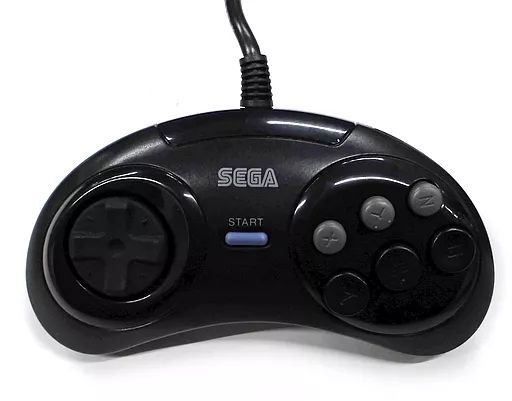
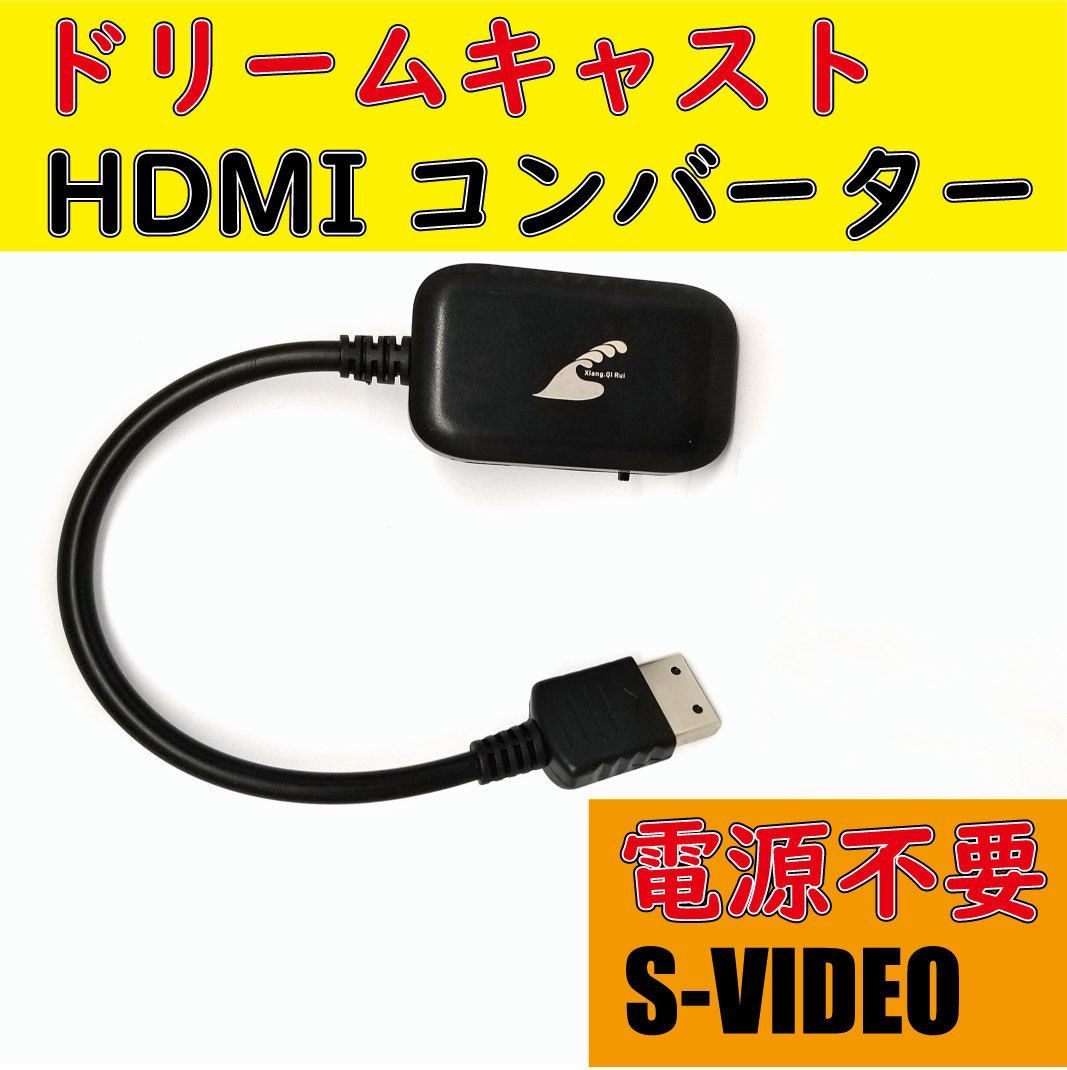

The HDMI converter at ¥2,220 replaces the original AV lead and is the cheapest way to get a Dreamcast onto a modern panel. At the other end, the loose HKT-3000 console at ¥5,100 is the bare machine — body only, no box or pads, with the usual marks, and listed as untested because the seller has no power lead. Whether that saving against the ¥7,500 tested unit with two pads and a game is worth the risk depends entirely on whether you own a soldering iron.
On the Saturn’s battery specifically: the console keeps its clock and internal saves on a coin lithium cell, and when that cell dies the stored data goes with it[1]. Every unsold Saturn in Japan has a battery that expired years ago. It is a ¥200 part and a two-minute job, but nobody tells you before you buy.
Software: the actual reason to do this
This is where Japanese pricing stops being merely good and becomes absurd. These are live listings.


Virtua Fighter 2 at ¥600 is a flagship Saturn title for less than the cost of a coffee in Tokyo. Panzer Dragoon Zwei at ¥900 is a game whose Western copies command many multiples of that. The House of the Dead 2 at ¥1,190 is a Dreamcast arcade port that has never been cheap outside Japan.
Two practical notes. Japanese discs come in slim jewel cases, so a dozen games weigh very little and stack flat — this is a category where consolidating a big order is genuinely cheap. And check for the 帯 (obi, spine card): listings marked 帯無し are missing it and are correspondingly cheaper. If you are playing rather than collecting, buy the ones without.
What the Japanese listing words mean
| Japanese term | Meaning | Effect on price |
|---|---|---|
| 動作確認済 | Seller powered it on and confirmed it works | Standard for hardware; assume untested if absent |
| 箱付き / 箱無し | With original box / without | Boxed consoles run 2–3× loose ones |
| 帯付き / 帯無し | With / without the printed spine card | Meaningful to collectors, irrelevant to players |
| ジャンク | “Junk” — sold as faulty or untested, no returns | Cheapest tier; buy only for parts |
| 整備済み | Serviced — cleaned, recapped or battery-replaced | Premium, often worth it on 25–30-year-old hardware |
| 本体 | The console unit itself | Distinguishes hardware listings from games |
| ソフト | Software — a game, not a console | Search term you will use constantly |
How to buy a Japanese Sega console, step by step
- Pick your machine by library, not by nostalgia. Saturn for the Japanese 2D and shooter catalogue; Dreamcast for arcade ports and the last generation of Sega arcade conversions; Mega Drive if you want cartridges and no disc-drive risk.
- Search in Japanese. セガサターン, ドリームキャスト, メガドライブ return the market; the English names return a fraction of it.
- Require 動作確認済. Untested and ジャンク listings are cheap for a reason, and a disc drive that has sat unused since 2003 is the most likely thing to fail.
- Buy the transformer before the console. A step-down transformer costs less than the console and is not optional outside 100 V territory[4].
- Add a video converter to the same order. The Dreamcast HDMI adapter above is ¥2,220; sourcing one locally afterwards costs more than shipping it with the console.
- Load up on discs. Games are the light, flat, cheap part of the parcel. Ten discs add very little to the international shipping bill — see our guide to shipping methods and volumetric weight.
- Budget duty. The United States revoked its US$800 de minimis exemption with effect from 29 August 2025[5], so US-bound parcels are dutiable whatever their value.
If you are new to buying second-hand from Japan, our explainer on how Mercari Japan works from overseas covers the mechanics, and what Japanese proxy shopping costs in 2026 covers the money. For the wider retro picture, we have also written up every Game Boy model ranked and the consoles Japan never exported.
The honest verdict
Buy a Japanese Saturn if you want the Japanese Saturn library, which is the only good reason and a very good one. Buy a Japanese Dreamcast if you want cheap arcade ports and do not mind a fan that sounds like a hairdryer. Buy neither if you are not willing to deal with a transformer and a video converter, because those two items are the difference between a working console and an ornament.
What you should not do is pay Western collector prices for the same hardware. A tested Dreamcast is ¥7,500 in Japan right now and a tested Saturn is ¥6,800. Add a transformer, a converter and ten discs and the whole setup still costs less than a single boxed console does at a Western retro shop.
When you are ready, OneMall handles the Japanese-side purchase, inspection and forwarding — or browse every live Sega Saturn listing or every live Dreamcast listing.
Frequently Asked Questions
Will a Japanese Sega Saturn or Dreamcast work in the US or Europe?
Not safely without a transformer. Japan supplies 100 V[4]; European and most Asian mains at 220–240 V will destroy the console immediately, and North American 120 V over-drives a power supply that is already decades old. Use a step-down transformer rated comfortably above the console’s consumption.
Are Sega Saturn and Dreamcast region-locked?
Yes. Dreamcast consoles are built for one of three regions — Japan, North America or Europe[3] — and the Saturn checks territory in the same way. A Japanese console is intended for Japanese software, which is the reason to import one.
How much does a used Dreamcast cost in Japan?
A tested loose console with a pad is ¥7,500 at the time of writing, and a boxed one is ¥14,000. It launched at ¥29,800 in November 1998 and was cut to ¥19,900 in June 1999 and ¥9,900 in March 2001[2].
Why do Sega Saturns lose their save data?
Internal saves and the clock run off a coin lithium cell, and when it dies the data is lost[1]. On a console this age the cell is always dead or dying; replacing it is cheap and should be the first thing you do.
What does ジャンク mean in a Japanese listing?
“Junk” — sold untested or known faulty, with no returns. It is an honest label rather than a warning about the seller, and it is why a ジャンク console costs a third of a tested one. Buy those only for parts.
Are Japanese Saturn games cheaper than Western ones?
Substantially, and for most of the library there is no Western alternative to compare against. Common titles trade from a few hundred yen; the listings above run ¥600 to ¥1,190. Discs are light and flat, so buying several at once barely changes the shipping bill.
References
- Sega Saturn — Japanese release date (22 November 1994), launch price ¥44,800, subsequent price cuts, and the coin lithium cell that holds the clock and internal saves. https://ja.wikipedia.org/wiki/セガサターン
- Dreamcast — Japanese release date (27 November 1998), launch price ¥29,800, price cuts to ¥19,900 (24 June 1999) and ¥9,900 (31 March 2001). https://ja.wikipedia.org/wiki/ドリームキャスト
- Region coding — Dreamcast hardware is set to one of three regions (Japan, North America, Europe). https://ja.wikipedia.org/wiki/リージョンコード
- Japan National Tourism Organization — Japan’s domestic supply is 100 V (50 Hz east, 60 Hz west). https://www.japan.travel/en/plan/plug-and-electricity/
- Federal Register, “Suspending Duty-Free De Minimis Treatment for All Countries” (Executive Order 14324; effective 29 August 2025). https://www.federalregister.gov/documents/2025/08/05/2025-14897/suspending-duty-free-de-minimis-treatment-for-all-countries
Last updated: 2026-09-22.