
 Shopping Guide
 HELP / FAQs


 By onemall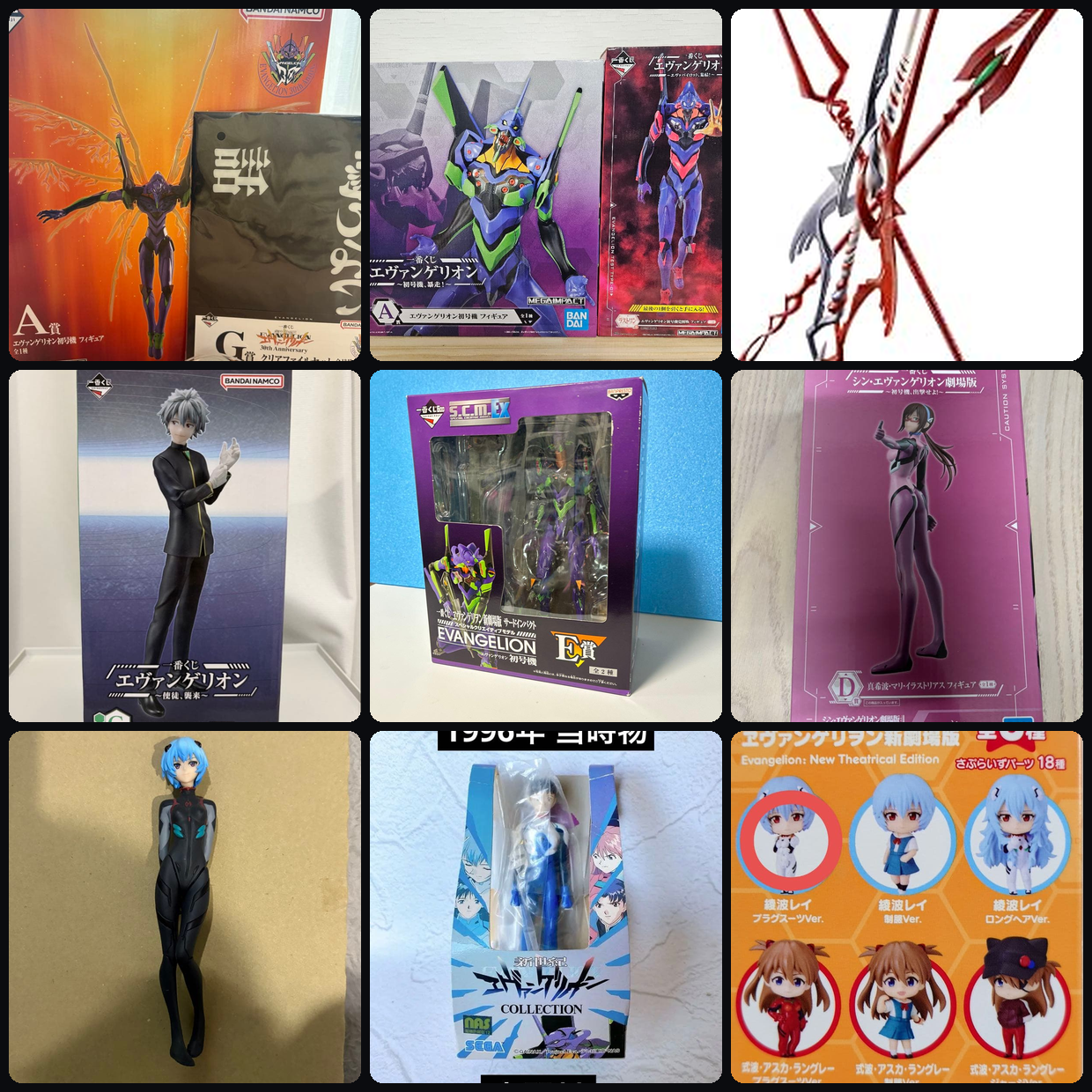
TL;DR
Neon Genesis Evangelion turned thirty in October 2025, and the anniversary programme that followed is almost entirely a Japanese domestic event: a three-day arena show in Yokohama[1], a convenience-store lottery[2], and revival screenings in Japanese cinemas. None of that merchandise has an international storefront. What it does have is a very liquid Japanese resale market, and that is where an overseas fan actually buys it.
- The 30th anniversary kuji went on sale 6 February 2026 at ¥790 per try, in Seven-Eleven, Ito-Yokado, Yume Town and the EVANGELION STORE[2]. You have to be standing in a Japanese shop to play it.
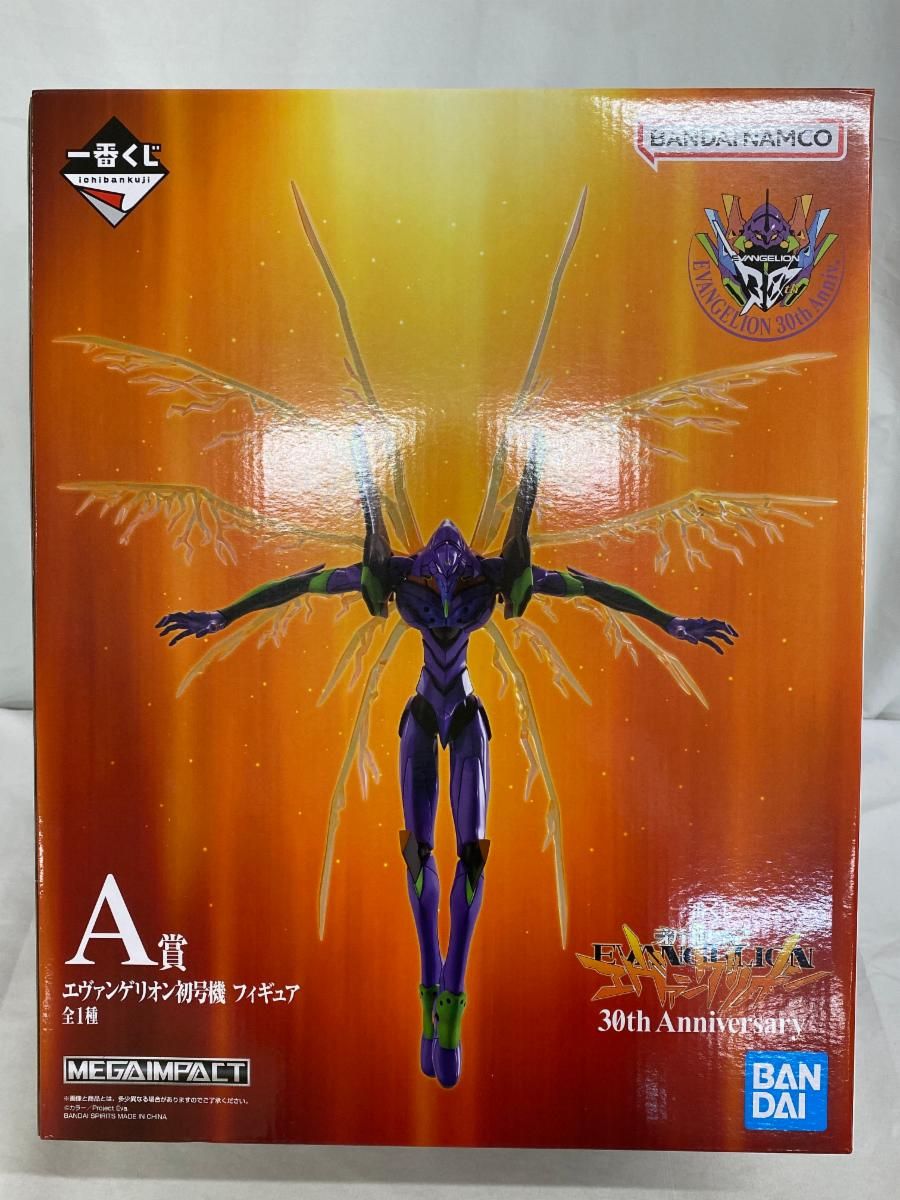
- The A prize is a 43 cm Unit-01 with light wings[2]. It resells today at ¥7,500 — and that is the cheap way to get one, because you cannot buy an A prize directly at any price.
- EVANGELION:30+ runs 21–23 February 2026 at Yokohama Arena[1]. Event goods from shows like this reach the resale market within days and never reach foreign retail at all.
- The floor is startlingly low. Loose figures of Rei start around ¥650. A sealed 1996 Shinji from the original TV-era run is ¥1,100.
- Buy the prize, not the lottery. Kuji maths is covered below, and it is not close.
Timing note for August 2026: the February kuji stock has now been through six months of resale churn, which is the point where prize figures stop being speculative and settle to their real price. Waiting longer mostly costs you selection, not money.
Why Evangelion merchandise is so Japan-locked
Evangelion has never had the kind of global licensing programme that, say, Dragon Ball has. Khara keeps a tight grip on the property, and the anniversary output reflects that: an arena event in Yokohama[1], an EVANGELION STORE that ships inside Japan, cinema revival screenings with attendance-gift stickers, and a convenience-store lottery[2]. Every one of those channels is defined by physical presence in Japan.
The result is that the interesting items — the ones with the anniversary logo on the box — exist in the world only as second-hand Japanese listings. Not because they are rare, but because the distribution never crossed a border in the first place.
Ichiban Kuji, and why you should buy the prize instead of playing
Ichiban Kuji is a paid lottery: you pay a fixed price per ticket and every ticket wins something. The 30th anniversary set costs ¥790 a go and runs from A prize down through G prize, with a Last One prize for whoever draws the final ticket in the box[2].
Here is the part people misread. The A prize is the top tier of the box and there is no way to buy one directly — you buy draws, at ¥790 each, until you hit it or somebody else does. Shops do not restock a box mid-run, and popular sets are frequently sold out on day one. So the real price of “winning” an A prize is an unknown number of ¥790 tickets, bought in person in Japan.
The resale price of that same A prize is ¥7,500, fixed, for the figure you can see in the seller’s photograph. That is roughly nine tickets’ worth of yen for a certainty rather than a chance.


The Last One prize at ¥6,000 makes the point even harder: it goes to exactly one person per box, by definition. There is no version of “going to the shop and buying it.” If you want it, you want a Japanese resale listing. The third card, the Tamashii Nations anniversary spear set at ¥11,919, is the retail-side counterpart — a commemorative accessory set aimed at people who already own the figures it dresses.
The middle tier: prize figures at ¥2,000–¥3,500
Below the headline prizes sits the part of the market most overseas fans should actually be shopping. Kuji B/C/D prizes are full-size, well-sculpted figures that were never sold at retail anywhere, and they change hands in Japan for the price of a cinema ticket.


The Kaworu at ¥2,500 and the Mari at ¥2,222 are both prize-only products. The movie-version Unit-01 at ¥2,100 shows what condition is worth in this category: it is an A prize listed with a noted fault, and it still sits inside the same band rather than at a fraction of it. Japanese sellers price condition honestly and the premium for sealed prize figures is small — which is good news if you intend to display rather than store.
One thing to check before buying a prize figure: Japanese listings distinguish 未開封 (unopened), 美品 (excellent) and 中古 (used) precisely, and prize figures were packed in thin boxes. If the listing says the box is creased but the figure is sealed, that is exactly what it means.
The cheap end, and one genuinely old thing


Three points from these three listings. First, the floor: ¥650 for a loose Rei is less than the postage will be, which makes items like this ideal padding when you are consolidating a parcel. Second, the Nendoroid Surprise Rei at ¥1,600 is a boxed branded figure at prize-figure money.
Third, and most interesting: the sealed Shinji at ¥1,100 is from 1996 — the original television run, not the Rebuild era. Merchandise from that period is thirty years old and was made for a domestic audience of a few hundred thousand people. It exists in Japanese cupboards and essentially nowhere else, and it is priced as an old toy rather than as memorabilia. That gap is the whole argument for shopping the Japanese second-hand market rather than an importer’s shelf.
Reading a Japanese Evangelion listing
| Japanese term | What it means | Why it matters |
|---|---|---|
| 一番くじ | Ichiban Kuji — the paid in-store lottery | Prize-only goods; never sold at retail |
| ラストワン賞 | Last One prize — final ticket in the box | One per box, worldwide only via resale |
| 新世紀 | The 1995 TV series and its era of goods | Marks genuinely vintage merchandise |
| ヱヴァンゲリヲン / シン | Rebuild films (2007–2021) and the final film | Different designs, different figures |
| 初号機 | Unit-01, the purple one | The most-produced and most-collected sculpt |
| 非売品 | Not for sale — campaign or event item | No retail equivalent in any country |
| 当時物 | “From the period” — contemporary to the original release | The 1990s goods, not a modern reissue |
How to buy Evangelion merch from Japan, step by step
- Search in Japanese. エヴァンゲリオン returns many times what “Evangelion” does, and character names are more productive still: 綾波レイ, アスカ, 渚カヲル, 碇シンジ.
- Decide prize or retail first. 一番くじ items and retail figures are separate markets with separate price levels; a single sorted list mixes them and looks random.
- Never chase a kuji from abroad. The lottery is an in-person, Japan-only purchase. Buy the prize on the resale market instead — our guide to how Ichiban Kuji actually works covers the mechanics.
- Check what is in the photo, not the title. Prize figures get relisted with generic titles. Japanese sellers photograph the actual item, including the box damage.
- Consolidate. Figures are light but bulky, so volumetric weight decides the bill — see our breakdown of shipping methods and volumetric weight before you pick a carrier.
- Budget for duty. The United States revoked its US$800 de minimis exemption with effect from 29 August 2025[5], so US-bound parcels are dutiable regardless of value.
On cost generally: our write-up of what Japanese proxy shopping costs in 2026 breaks down where the money goes, and if you are still choosing a service, the buyer’s checklist for picking a Japan proxy is the short version.
The honest verdict
Evangelion is a good category to buy second-hand from Japan and a bad one to buy new from abroad. The anniversary goods were built around Japanese retail geography — a convenience-store lottery and an arena in Yokohama — so an importer either does not have them or has marked them up past the point of sense. Meanwhile the resale market is deep, honestly described, and cheap at the bottom: prize figures at ¥2,000–¥3,500, loose figures under ¥1,000, and thirty-year-old sealed stock for the price of a modern blind box.
The one thing to be disciplined about is the lottery. Do not try to play it from outside Japan, and do not pay lottery-chasing prices for a prize that someone in Japan has already listed at a fixed number.
When you are ready, OneMall buys, inspects and forwards on the Japanese side — or go straight to every live Evangelion listing.
Frequently Asked Questions
Can you buy Evangelion 30th anniversary merchandise outside Japan?
Not through official channels. The anniversary programme runs through Japanese cinemas, the EVANGELION STORE, a convenience-store lottery[2] and a Yokohama arena event[1], none of which sell internationally. The route for overseas fans is the Japanese second-hand market via a proxy.
What is the cheapest way to buy Evangelion figures?
Buy Ichiban Kuji prize figures on the Japanese resale market rather than retail figures. Prize figures were never sold in shops, so they carry no retail price to anchor to, and they trade at roughly ¥2,000–¥3,500 in good condition. Loose figures start under ¥1,000.
How much does the Evangelion 30th anniversary Ichiban Kuji cost?
¥790 per draw, in Japanese shops, from 6 February 2026[2]. That is the price of a single ticket, not of a specific prize — the A prize is seeded about one per box.
Is it cheaper to play the kuji or buy the prize second-hand?
Buying second-hand, unless you are already in Japan and enjoy the gamble. A kuji ticket buys a draw, not a chosen prize, and the A prize is the scarcest tier in the box — so the cost of ending up with one is open-ended. The resale listing above is a fixed ¥7,500 for the item itself.
What does ラストワン賞 mean?
“Last One prize” — an extra figure awarded to whoever draws the final ticket in a kuji box. Exactly one exists per box and it is never sold separately, so resale is the only way to obtain one.
Are old 1990s Evangelion figures worth buying?
They are worth buying if you want them, and they are cheap. Merchandise marked 当時物 (period item) from the 1995–1997 television era was produced for a Japanese audience only, and sealed examples still surface at four-figure yen prices — the Shinji above is ¥1,100.
References
- EVANGELION 30th anniversary official site — EVANGELION:30+; 30th ANNIVERSARY OF EVANGELION, Yokohama Arena, 21–23 February 2026. https://30th.evangelion.jp/fes
- BANDAI SPIRITS, Ichiban Kuji official product page — 一番くじ 新世紀エヴァンゲリオン 30th Anniversary (on sale 6 February 2026, ¥790 per try incl. tax; Seven-Eleven, Ito-Yokado, Yume Town, EVANGELION STORE). https://1kuji.com/products/eva18
- Mercari, official corporate site — the Japanese resale marketplace most of these listings come from. https://about.mercari.com/en/
- Japan Post, international mail services (EMS, airmail, sea mail). https://www.post.japanpost.jp/int/ems/index_en.html
- Federal Register, “Suspending Duty-Free De Minimis Treatment for All Countries” (Executive Order 14324; effective 29 August 2025). https://www.federalregister.gov/documents/2025/08/05/2025-14897/suspending-duty-free-de-minimis-treatment-for-all-countries
Last updated: 2026-09-24.