
 Shopping Guide
 HELP / FAQs



 By onemall
Spotting fake Japanese Pokémon cards takes more than a convincing photo or a quick flashlight check. We recommend comparing several features with the exact Japanese print: the Japanese card back, text, finish, symbols, and cardstock. One matching feature is not enough to settle a purchase.
The five checks below work from photos or a card in hand, with a buying checklist to follow before you pay. The OneMall team recommends resolving conflicting details before purchase, then comparing the received item with the listing before international shipping.
TL;DR
Checking for fake Japanese Pokémon cards takes several comparisons, not a destructive test. Match the release first. Keep the listing and arrival photos so you can compare the item you receive with the one advertised.
Why fake Japanese Pokémon cards are common
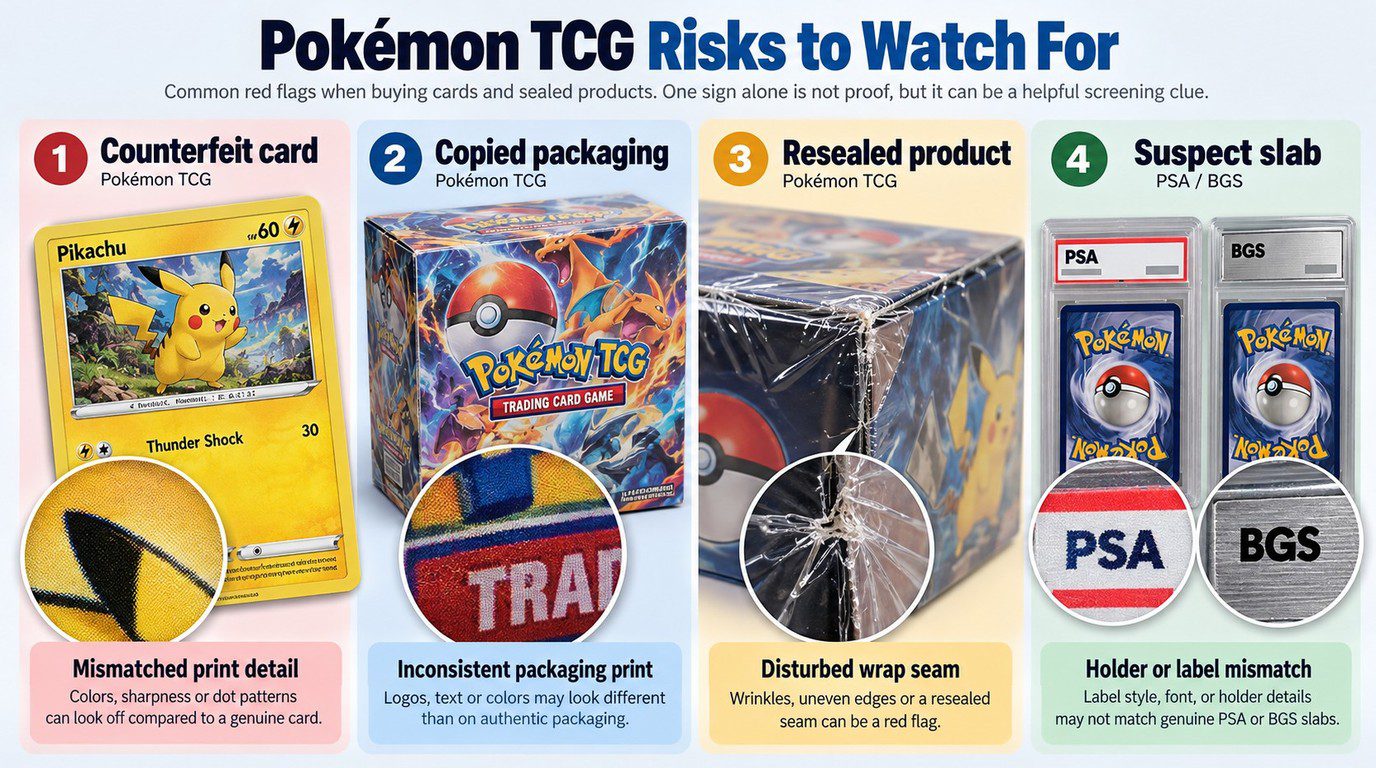
Counterfeit Japanese cards are a buying concern even when the listing looks convincing. The Pokémon Company provides counterfeit-card guidance, but a listing photo alone does not show the physical card’s material or finish. You need more than artwork.
The Pokémon Trading Card Game includes different releases and finishes, which makes the matching print important. Separate the concerns: a counterfeit loose card copies the card itself; counterfeit packaging copies the product’s exterior; a resealed product has been opened and closed again. A suspect graded slab adds a separate holder-and-label check.
How to tell if a Japanese Pokémon card is fake: 5 physical tests
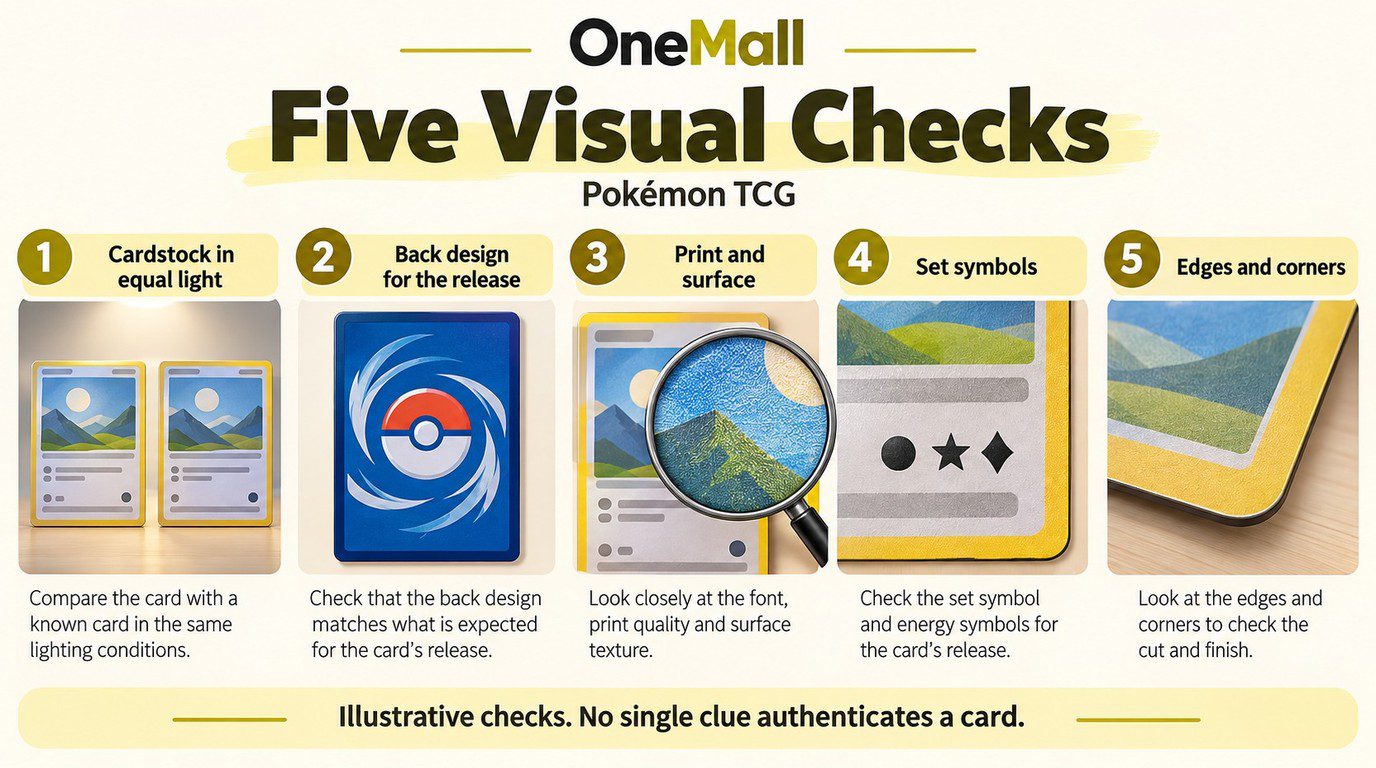
These Japanese Pokémon card checks are non-destructive comparisons with the same Japanese print. Start with the card number and release. Use a clear reference image for printed details and a matching physical reference for material observations; a catalog image identifies the design, not the item in your hand.
1. Light and cardstock: a supporting check
Light shows how the cardstock behaves; it does not provide a universal pass-or-fail result. Light test limitations matter for Japanese cards because the lamp, finish, and comparison card affect the observation. Keep the conditions the same.
Hold the suspect card and a matching reference under the same light, noting an obvious difference in translucency or stock. Compare that observation with the printing and surface checks below. Do not tear, bend, peel, or scrape the card to inspect its layers. A supposed core color is not a substitute for comparing the correct print.
2. Card back: match the Japanese era
The Japanese card back needs to match the card’s release, not an English-card example. The Japanese game chronicle dates a back-design change to July 2001. Use that history to find the appropriate design, rather than treating the date as a blanket rule for promotional cards.
Compare the layout, lettering, image placement, and border with a reference from the same Japanese release. Then inspect color and sharpness. A phone’s lighting or white balance changes the appearance of blue, so request another image before treating a color difference as decisive. Match the design first.
3. Font, texture, and print quality
Printed details and surface finish need separate checks against the exact variant. Compare letter shapes, spacing, artwork, and copyright text with a clear reference. Zoom in on the actual card. Blurry photographs are a reason to request better pictures, not a verdict on the card.
Foil is the reflective effect; texture is the raised surface pattern. Check variant-specific holo texture by looking at the expected pattern and, separately, how the foil reflects at different angles. An illustrated card does not automatically require texture. An apparent typo or unusual color also needs comparison with the exact release before you draw a conclusion.
4. Set, rarity, and energy symbols
Japanese card rarity markings belong to a particular release and print. Compare the set code, card number, printed rarity designation, and energy icons with the matching card. Keep the reference visible. Modern Japanese letter codes are not interchangeable with an English-style circle, diamond, or star checklist.
Read the details as a group: the artwork, number, and designation should describe the same print. Compare the energy icons’ shapes and positions with that reference too. A missing symbol or unfamiliar code calls for a release-specific lookup, rather than an automatic counterfeit label.
5. Weight, thickness, and cut
Weight and cut are supporting observations, not a scale-based verdict. Compare thickness, edge finish, corner shape, and stock with the same print and finish. Handle the card gently. A sleeve or holder also changes what you are weighing.
Inspect the edges from several sides without flexing the card. A rough edge, unusual feel, or off-center border deserves a closer comparison alongside the other features. There is no single gram range that settles the question across Japanese releases. Several material and printed-detail differences are more useful than one isolated measurement.
Quick cheat sheet
Use these non-destructive card checks when reviewing the seller’s photos or the received item. Keep the matching print nearby.
- Cardstock and edges: Compare stock, thickness, corners, and edge finish without bending the card.
- Print and color: Match lettering and artwork under comparable lighting.
- Foil: Compare reflections at different angles with the same variant.
- Texture: Match the expected surface pattern separately from the foil.
- Symbols: Compare the card number, rarity designation, and energy icons together.
- Photo record: Save listing and arrival images for a side-by-side comparison.
Real vs fake comparison table
A real vs fake comparison is most useful when it identifies a specific mismatch. Use the table to decide what needs a closer look.
| Checkpoint | Matching-reference check | Reason to pause |
|---|---|---|
| Japanese back | Same Japanese design and era | Wrong back for that release |
| Text and card identity | Matching number, artwork, text, and layout | Conflicting printed details |
| Texture and foil | Expected surface pattern; matching foil reflections | Finish inconsistent with the same print |
| Rarity and energy icons | Release-specific marks and icon placement | Symbols conflict with the matching card |
| Stock and edges | Same-print stock, thickness, and edge comparison | Several material or cut differences |
We recommend pausing when several details conflict. Ask for clearer photos or a qualified card specialist’s opinion before buying; a low price does not resolve the mismatch.
Step-by-step check before you buy
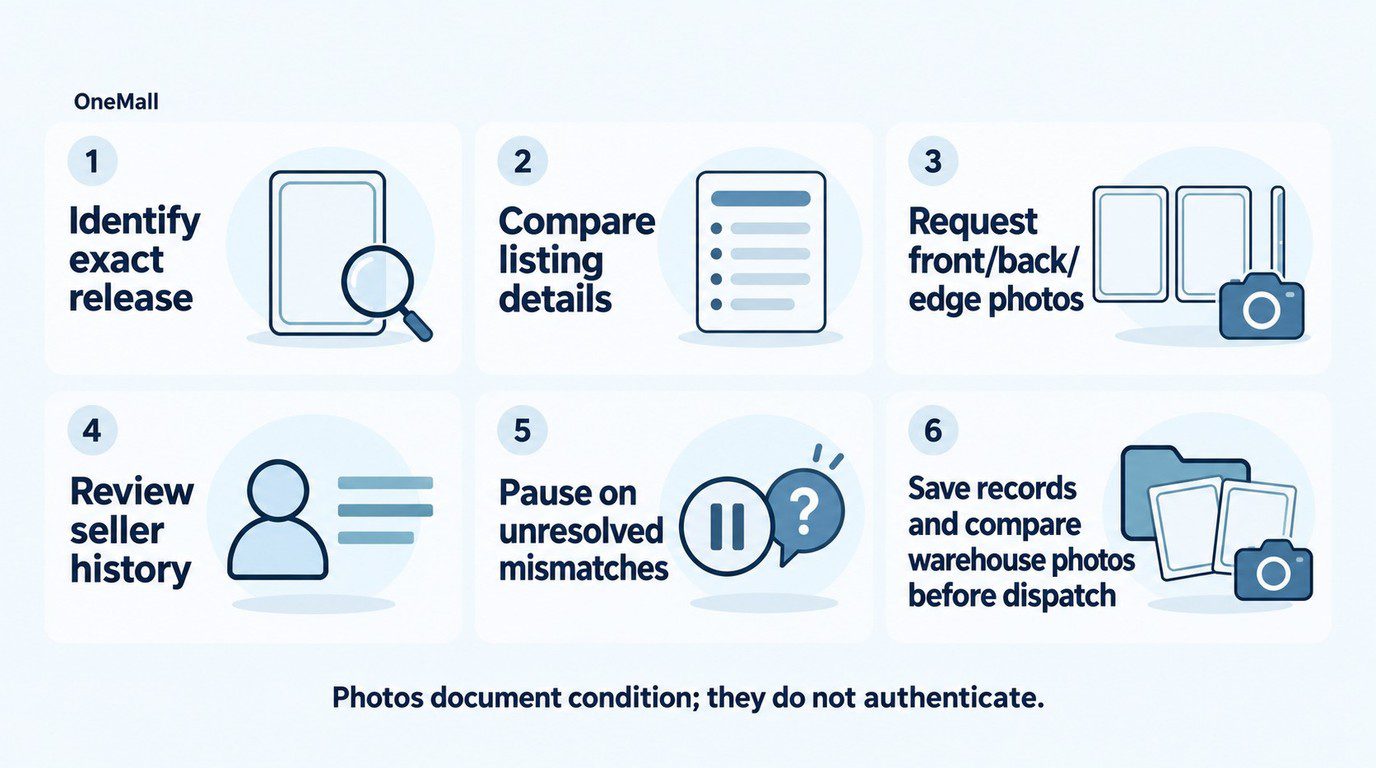
An exact card lookup gives you a reference for the purchase, while saved photos help identify a listing photo mismatch after receipt. Start with the print. Work through the details before committing to the listing.
- Identify the Japanese release. Record the card name, set code, and full card number, including the number after the slash when present. Use those details to locate the matching Japanese print.
- Compare the printed fields. Match the name, HP (hit points), attacks, artwork, rarity designation, and expected finish. Read them together; a similar illustration or a scanner match is not enough.
- Request photos of the actual item. Ask for clear front, back, edge, and tilted-light images. Keep screenshots of the description and condition notes alongside them. Stock artwork does not show the seller’s card.
- Review several features and the seller. Apply the five checks to the matching print, then read seller history and feedback. Look for useful evidence about the item, rather than relying on a high rating alone.
- Resolve conflicting details. Ask a specific question about the mismatch or seek a qualified specialist’s opinion. Pause the purchase if you cannot reconcile the printed details and finish.
- Save the purchase record. Keep the listing, order confirmation, seller messages, and original photos. After receipt, compare warehouse photos with those saved images before arranging international dispatch.
A warehouse photo adds a second comparison point: what arrived versus what was offered. Check recognizable marks, corners, and packaging against the saved listing. Keep the carrier name, such as Japan Post EMS, with the shipment record so item and transport questions stay connected to the correct parcel.
How to lower your risk when buying from Japan
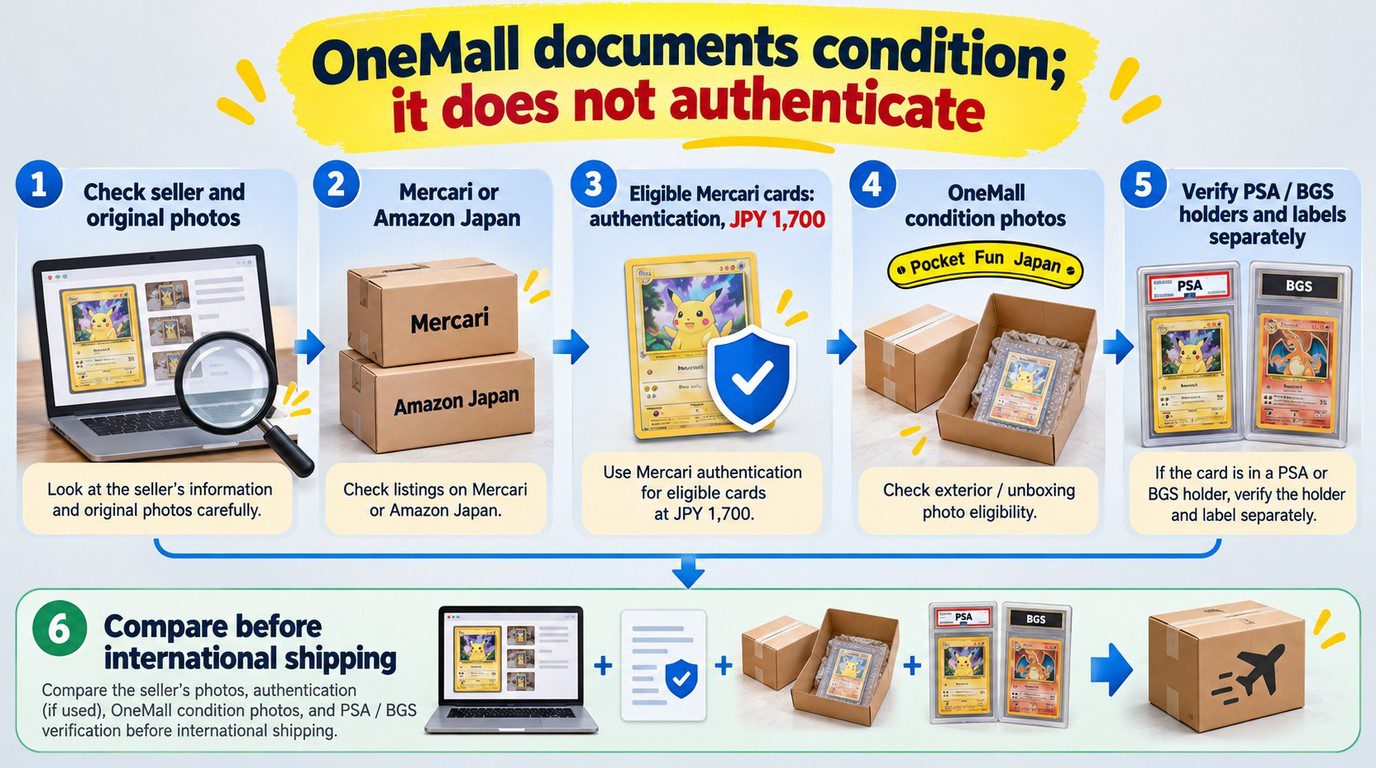
OneMall does not authenticate cards. Use saved listing images and warehouse photos to compare the item, and consider Mercari authentication for an eligible listing. Seller history is part of that decision. These OneMall card checks help you document a purchase before it leaves Japan.
Choose items bought from established Japanese sellers and marketplaces; you judge the listing yourself. Read the seller history on Mercari, request original front, back, and detail photos, and match them to the description. For Amazon Japan listings, identify the seller as well as the product.
PSA and BGS slabs need their own comparison. Match the holder, label, certificate information, and card pictured in the listing; a certificate number alone does not identify the physical item you receive. When you buy Pokémon cards from Japan, request photos that show both the card and its holder.
Optional unboxing photos cost ¥500 or ¥700. Items over ¥20,000 receive free exterior photos; items over ¥30,000 receive free full unboxing photos. The photos document appearance and receipt, so compare them with the listing before international shipping.
Mercari authentication costs ¥1,700 per card where the listing supports it. We arrange submission, and Mercari issues the result; OneMall does not separately certify the card. Choose this option on a supported listing when you want Mercari’s assessment rather than a photo record alone.
Sealed packaging needs a separate review: learning how to spot a fake Japanese booster box includes distinguishing copied packaging from a previously opened, resealed product.
OneMall cannot buy lottery, purchase-limited, or Japanese-ID-verified items, card-shop lottery items, or event and shop promo packs. Choose eligible ordinary marketplace listings instead; a promo item resold as an ordinary eligible marketplace listing follows that purchase route.
Our recommendation is to resolve the card’s identity before paying, then use photos to compare receipt. For a clear, well-documented listing, that creates a usable record; for conflicting details, obtain a specialist opinion before purchase.
In-stock listings
These Japanese Pokémon listings are examples to inspect. Review the product photos, description, and seller details for the item you are considering.


Frequently Asked Questions
A Pokémon card scanner identifies an image; physical checks examine the item. These questions cover the next buying decisions.
Can a scanner app tell whether my card is fake?
A catalog match identifies the card shown, not the material, edges, or surface of the physical item. We recommend using the result to locate the exact Japanese print, then comparing your card with that reference. Recognition alone is not a purchase decision.
Does a missing rarity mark mean my card is fake?
No. Match the card number and printed designation with that specific Japanese release. Requiring a circle, diamond, or star on an unfamiliar print is the wrong comparison; check the matching card before treating a missing mark as suspicious.
Does buying a sealed product eliminate counterfeit risk?
No. Keep the packaging and arrival photos alongside the seller’s listing, then compare what arrived. Shrink wrap and a grading label do different jobs, but neither replaces checking the actual product and seller.
Can OneMall check a card for me?
OneMall does not authenticate cards. We offer unboxing photos at ¥500 or ¥700; items over ¥20,000 get free exterior photos, and items over ¥30,000 get free full unboxing photos. Mercari authentication is ¥1,700 per card on supported listings. Mercari issues the result, with no separate OneMall certification.
What should I do if the delivered card differs from the listing?
Contact OneMall support before international dispatch and identify the differences. Keep the listing, order record, seller messages, packaging, and arrival photos for review. A qualified card specialist is the next step for an identification opinion; photos help show which item and discrepancy you are asking about.
References
The following pages provide counterfeit guidance, Japanese release history, and service context as of October 2026.
- The Pokémon Company’s Trading Card Game site provides general game and product information.
- The Pokémon Company provides Pokémon Support guidance on counterfeit cards.
- The Japanese Pokémon Card Game site records the July 2001 back redesign in its historical chronicle.
- Mercari’s company information explains the marketplace behind its seller listings.
- Amazon Japan hosts product listings whose seller details form part of the purchase review.
- Japan Post describes its EMS shipping service, separate from card inspection.
- OneMall’s trading-card service page explains proxy purchasing and the distinction between the service and the seller.
- OneMall’s card-checking guide discusses cardstock, printing, edges, symbols, and photos before shipment.