
 Shopping Guide
 HELP / FAQs



 By onemall
TL;DR
The matcha itself is the cheap part. The kit around it — the bamboo whisk, the bowl, the
scoop, the little ceramic stand the whisk dries on — is what people overpay for outside Japan,
often by three or four times. Buying that kit inside Japan is straightforward, and the whole
thing fits in a box small enough that shipping does not eat the saving.
- Real prices, checked on 5 September 2026 — a 100-prong bamboo chasen with
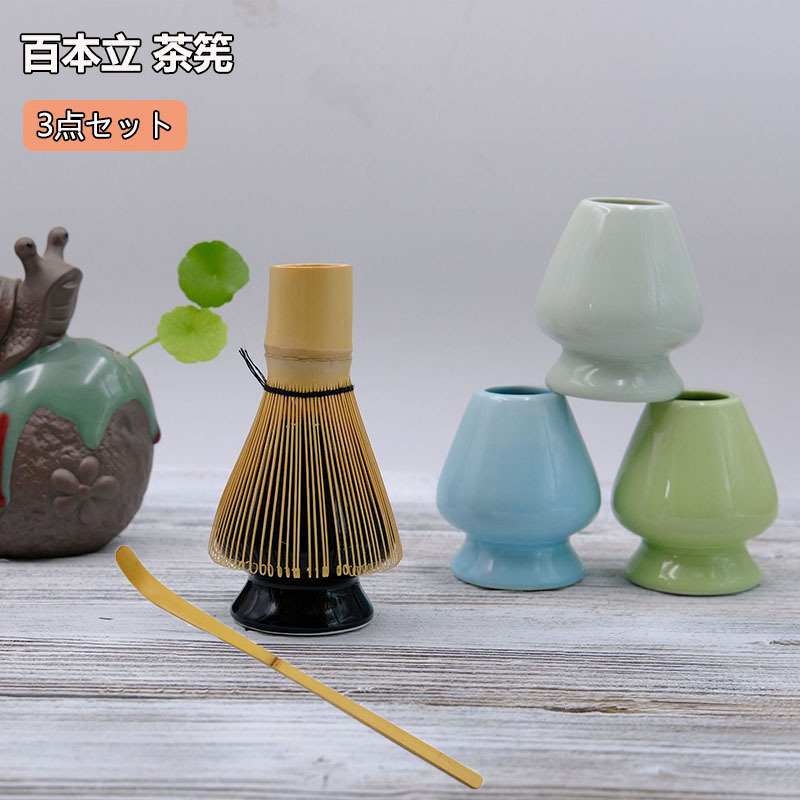
its keeper and a tea scoop at ¥2,980 (US$20.56), a six-piece beginner set
with the bowl and sifter at ¥5,980 (US$41.26), and a patterned bowl sold
with Uji matcha at ¥4,490 (US$30.98).[1] - Every traditional chasen in Japan comes from one town. Takayama in Ikoma,
Nara Prefecture is the country’s only designated production area for tea whisks, recognised as
a traditional craft on 10 May 1975.[2] - Prong count is a use, not a grade. Whisks are split to anywhere from 60 to
240 prongs depending on the school and whether you are whisking thin tea, thick tea or outdoor
tea.[2] The 100-prong (百本立) is the everyday
thin-tea whisk, and it is the one in most beginner sets. - Shipping is the small number here. A bowl-and-whisk parcel (about 1.2 kg)
quoted US$24.55 economy air to the United States, US$24.14 sea to the United Kingdom and
US$18.46 sea to Canada on 5 September 2026. - Buy the ware here, and think about the tea separately. Ware has no import
paperwork attached to it; food does, and the rules belong to your country, not to Japan.
As of September 2026, matcha is in the middle of a global demand spike that has
pushed Western cafe prices up and thinned overseas stock of the good ceremonial grades. What has
not changed is the price of the equipment inside Japan: a bamboo whisk is a domestic kitchen item
there, sold next to the rice bowls, and it is priced like one.
What a Matcha Set Actually Contains
Sets are sold by piece count, and the count is doing real work — it tells you exactly which
jobs you can do without buying anything else.
- 茶筅 chasen (whisk) — the bamboo whisk. Non-optional; a milk
frother does not make the same foam. - 茶筅立て / くせ直し kusenaoshi
(whisk keeper) — the ceramic cone the wet whisk is parked on so the prongs dry back into
shape. This is why three-piece whisk sets exist, and it is the piece people skip and regret. - 茶碗 chawan (bowl) — wide and heavy enough that you can whisk
hard without it sliding. - 茶杓 chashaku (scoop) — a bamboo scoop; two scoops is roughly one
serving. - 茶ふるい furui (sifter) — matcha clumps. A sifter is the difference
between smooth tea and lumpy tea, and it is the piece that pushes a set from three items to six.
Why the Whisk Comes From One Town
Tea whisks look like a commodity and are not. The craft began in Takayama, in what is now
Ikoma City, Nara Prefecture, in the mid-Muromachi period, was kept as a single-heir secret inside
the local lord’s family, and later spread to sixteen retainer households — which is why Takayama
today is the only chasen production area in Japan.[2] The
designation covers the materials as well as the method: the bamboo must be
hachiku, kurochiku or madake, and the binding thread must be
cotton.[2]
The step that decides how the tea tastes is ajikezuri — thinning each prong so it
tapers towards the tip. Craftspeople describe it as the hardest of the eight stages, and it is the
reason two whisks with the same prong count do not whisk the same.[2]
Around 120 whisk types exist, varying by school and by use.[2]
The practical version: a cheap moulded whisk from a general marketplace and a Takayama whisk are
different products with the same name. Neither price tier is a scam — but if the listing does not
say where it was made, assume it was not made there.
What It Costs in Japan Right Now
Pulled and stock-checked on 5 September 2026 through OneMall. These are single
listings, a price reference rather than a permanent link.


| What you are buying | Price in Japan (5 Sep 2026) | What it gets you |
|---|---|---|
| Whisk + keeper + scoop, 3 pc | ¥2,980 (US$20.56) | You already own a wide bowl. Cheapest honest entry. |
| Bowl with matcha included | ¥4,490 (US$30.98) | Gift-shaped: one bowl, one pouch of Uji matcha. |
| Beginner set, 6 pc | ¥5,980 (US$41.26) | Bowl, whisk, scoop, sifter and stand — nothing else needed. |
| Whisk alone, no keeper | from ~¥600 | Works, then splays out of shape. False economy. |
The pattern is the one you would expect from a domestic market: the specialised bamboo piece is
cheap and the ceramic is what moves the total. A six-piece set at US$41 is at or below what a
single imported chasen costs in most Western tea shops.
Getting It Home Without Breaking It
A tea set is a small, light, breakable parcel — the easiest category there is, provided the bowl
is packed as ceramics and not as bubble-wrap-optional homeware. Quotes below are live carrier
quotes taken on 5 September 2026 for two parcel profiles: a bowl-and-whisk set at 1.2 kg in a
25×25×12 cm box, and a whisk on its own at 150 g.
| Destination | Bowl + whisk set (1.2 kg) | Whisk alone (150 g) |
|---|---|---|
| United States | ECMS US$24.55 (10–20 d) / DHL US$36.22 | ECMS US$17.44 / DHL US$31.59 |
| United Kingdom | Sea US$24.14 / EMS US$41.54 | Sea US$19.17 / EMS US$25.56 |
| Germany | Sea US$22.01 / EMS US$35.50 | Sea US$17.75 / EMS US$22.37 |
| Australia | Sea US$22.01 / EMS US$35.50 | Sea US$17.75 / EMS US$22.37 |
| Canada | Sea US$23.43 / EMS US$42.53 | Sea US$18.46 / EMS US$27.69 |
| Singapore | Sea US$18.46 / EMS US$24.85 | EMS US$13.49 / Sea US$14.91 |
Two things fall out of that table. First, Japan Post’s rates move with weight bands rather than
with box size, so padding a ceramic bowl properly usually costs nothing in postage — the 150 g
whisk and the 700 g box hit the same sea-mail band to the UK, Germany and Australia. Second,
there is no Japan Post option to the United States at all right now; US-bound parcels go by ECMS or
DHL, and ECMS is the cheap lane.[3]
The tea itself is a separate decision. Ware carries no food paperwork; matcha does, and the rules
are set by the destination — not by Japan. Japan Post also maintains its own list of items that
cannot travel in international mail.[4] When we tested this on
5 September 2026, several Amazon Japan matcha-powder listings did not open as purchasable pages,
while Rakuten gift sets that bundle Uji matcha with a bowl did. If the tea matters to you, check
the individual listing before you plan around it.
On duties: the United States ended de minimis duty-free treatment for low-value shipments, so a
US$60 tea set can attract duty on arrival.[5] The EU has published
guidance on a temporary flat fee for low-value imports.[6] Japan’s
own side is simple: nothing here is export-controlled.[7]
Step-by-Step: Buying a Japanese Matcha Set From Overseas
- Decide the piece count first. Own a wide bowl already? Buy the three-piece
whisk set. Starting from nothing? Buy the six-piece — buying the sifter separately later costs more
in shipping than it does in tea ware. - Check the whisk description for a prong count. 100-prong
(百本立) for everyday thin tea. Fewer prongs are for thick tea and are harder
work if that is not what you are making. - Confirm the keeper is in the set. If the photo shows only a whisk and a scoop,
add a keeper — it is a few hundred yen and it is what makes the whisk last. - Search the Japanese term, not the English one.
茶道具 / 抹茶セット
brings up the domestic listings; the English word “matcha set” mostly returns export
packaging at export prices. - Consolidate before shipping. A bowl, a whisk and a tin travel as one parcel for
the price of one — and one well-packed box is safer than three thin ones. - Price the freight before you commit. Run the weight and box size through the
shipping
calculator so the total is a number you chose rather than one you discovered.
Frequently Asked Questions
Is a Japanese-made chasen actually worth it over a cheap one?
For daily use, yes — but the reason is mechanical, not romantic. A hand-cut whisk has tapered
prongs that flex; a moulded one has stiff ones that push the powder around instead of aerating it,
and it splays sooner. At around US$20 with the keeper included, the gap between the two is one
cafe latte.
What is the ceramic cone in every matcha set?
A kusenaoshi, or whisk keeper. The whisk goes on it wet and dries back into its curve.
Without it the prongs dry outward, then snap.
How many prongs should my whisk have?
100 for thin tea (usucha), which is what most people at home are making. Whisks are made from
60 to 240 prongs for different schools and purposes, so a lower number is a different tool rather
than a worse one.[2]
Can I put a matcha bowl in the dishwasher?
Rinse the bowl by hand and let the bamboo air-dry. The whisk should never go in a dishwasher or
be left soaking; hot water plus detergent is what turns a chasen into a brush.
Can I have the matcha powder shipped with the set?
Sometimes — bundled gift sets that include Uji matcha buy and ship as one item, while some
standalone food listings are not available to proxy purchase. Food also runs into destination-country
import rules and Japan Post’s own restrictions on what may travel in international
mail.[4] The ware is the part that always ships.
The Short Version
Buy the six-piece set if you are starting from zero, the three-piece whisk set if you already own
a bowl, and do not skip the keeper. Everything in this article was in stock at these prices on
5 September 2026; the
Japanese
ceramics guide covers what to look for in the bowl itself, and the
true-cost
breakdown covers the fee arithmetic.
Live
chasen listings are here.
Last updated: 2026-09-09.
If this is your first order out of a Japanese domestic-only listing, the best Japan proxy service guide covers how the service layer actually works, and the cheapest proxy fee comparison sets out what it costs per item.
For the tea itself — the Uji houses, the matcha makers and the national brands behind the tins — see our Japanese tea brands guide.
References
- OneMall, marketplace used for the tea-ware price observations recorded in this article on 5 September 2026. https://www.onemall.jp/
- Association for the Promotion of Traditional Craft Industries, Takayama Chasen (tea whisks), Nara Prefecture. https://kougeihin.jp/craft/0625/
- Japan Post, EMS rate schedule (all zones). https://www.post.japanpost.jp/int/charge/list/ems_all_en.html
- Japan Post, nonmailable articles in international mail. https://www.post.japanpost.jp/int/use/restriction/index_en.html
- U.S. Customs and Border Protection, guidance on the suspension of de minimis duty-free treatment. https://www.help.cbp.gov/s/article/Article-1919
- European Commission, guidance on the temporary flat fee for low-value imports. https://taxation-customs.ec.europa.eu/news/guidance-and-legal-text-temporary-flat-fee-low-value-imports-which-will-apply-until-1-july-2028-2026-06-08_en
- Japan Customs, export and import information. https://www.customs.go.jp/english/index.htm