
 Shopping Guide
 HELP / FAQs


 By onemall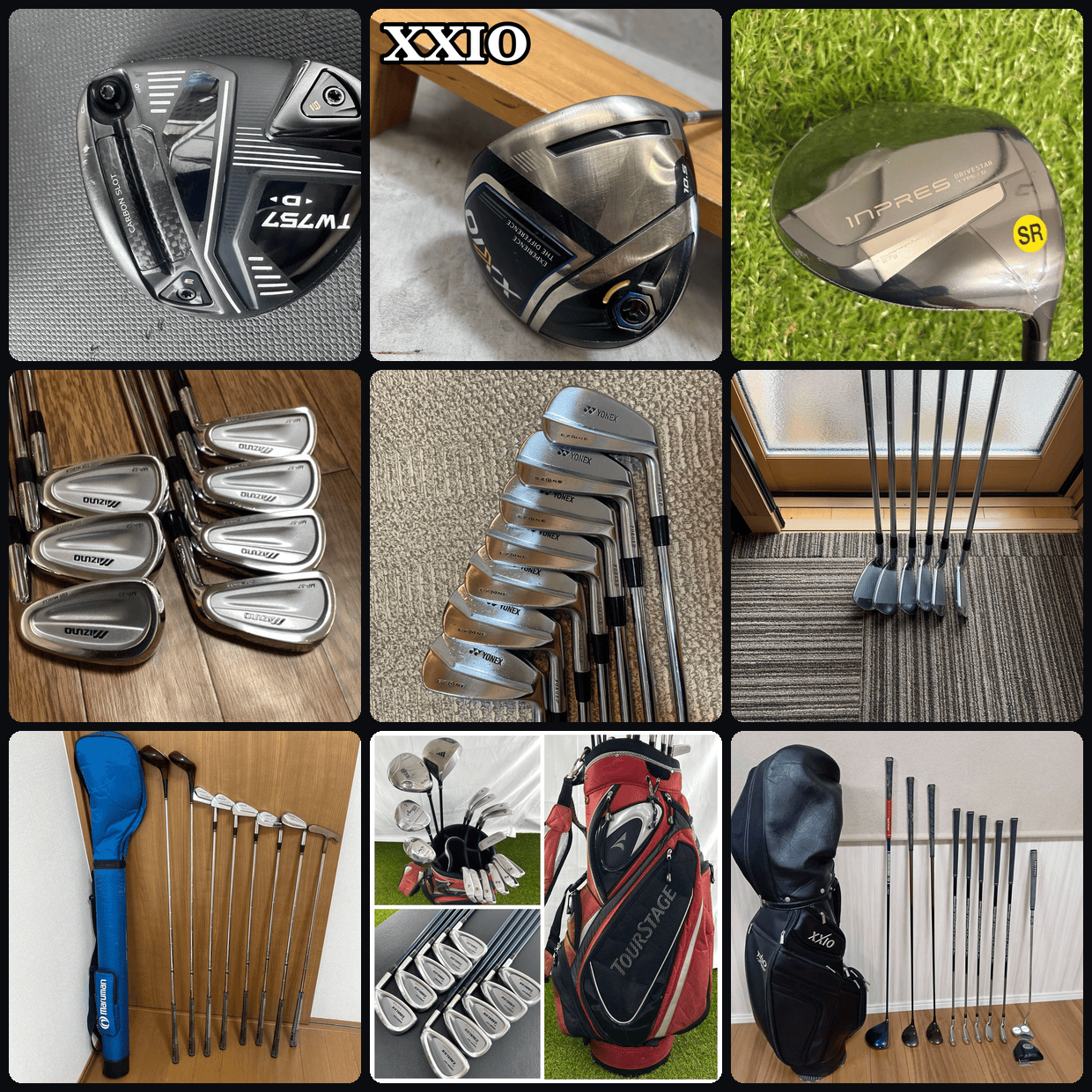
TL;DR
Japan has the most industrialised used-golf-club market on earth — one chain alone runs 455 stores against a shared pool of about 550,000 clubs[1][2]. That is why a tour-grade Japanese driver sells for the price of a mid-range American one. The catch is not the clubs. It is the box: a bagged full set runs straight into the size ceiling on international post, while a single driver sails under it.
- Buy singles and small sets, not bagged sets. EMS to the United States caps a parcel at 30 kg, 1.5 m in length and 2.75 m in length-plus-girth[3]. A boxed driver clears that easily; a golf travel bag typically does not.
- The value is in Japanese-domestic models. The drivers and irons below — HONMA, XXIO, Yamaha, Yonex, ONOFF, Mizuno — run ¥12,350 to ¥24,500 for drivers and ¥19,250 to ¥24,000 for forged iron sets.
- Read the spec line, not the model name. Japanese-market versions of a club are frequently built with different stock shafts, lengths and flexes from the same model sold in the US. Do not assume the “S” on a Japanese listing is the “S” you play.
- Full sets are cheap for a reason. A 14-club XXIO / MIZUNO set is ¥15,000 — about the price of one used driver — but shipping it abroad can cost more than the clubs.
- Grading is standardised. Japanese used-club retail runs on letter grades and disclosed ショット数 (shot counts). Read them; they are honest, and they price the club.
Why Japanese used clubs are cheap
Golf Partner was founded on 30 June 1999, became a wholly owned subsidiary of Xebio in 2009, and now runs a network of 455 shops sharing a single inventory system holding roughly 550,000 used clubs[1][2]. That is a scale of second-hand retail with no counterpart in golf anywhere else, and it does two things to prices.
First, it makes trading in normal. A Japanese golfer upgrading a driver trades the old one at a counter the same afternoon, so clubs enter the used market a year or two old rather than ten. Second, it makes grading a commodity. Condition is expressed in letter grades and, on drivers, sometimes in disclosed shot counts. When condition is legible, buyers stop paying a premium for uncertainty, and used prices fall towards what the club is actually worth.
The individual-seller platforms this article draws from sit alongside that chain and inherit its conventions. That is why the listings below read like inventory rather than like classifieds.
The drivers: Japanese-domestic models
XXIO has been a brand since 2000 and belongs to Sumitomo Rubber Industries, which also owns Dunlop Sports, Srixon and Cleveland[4]. HONMA, Yamaha and Yonex all build clubs primarily for the domestic market. Some of these models never get a Western release; the ones that do are usually built to different stock specifications.
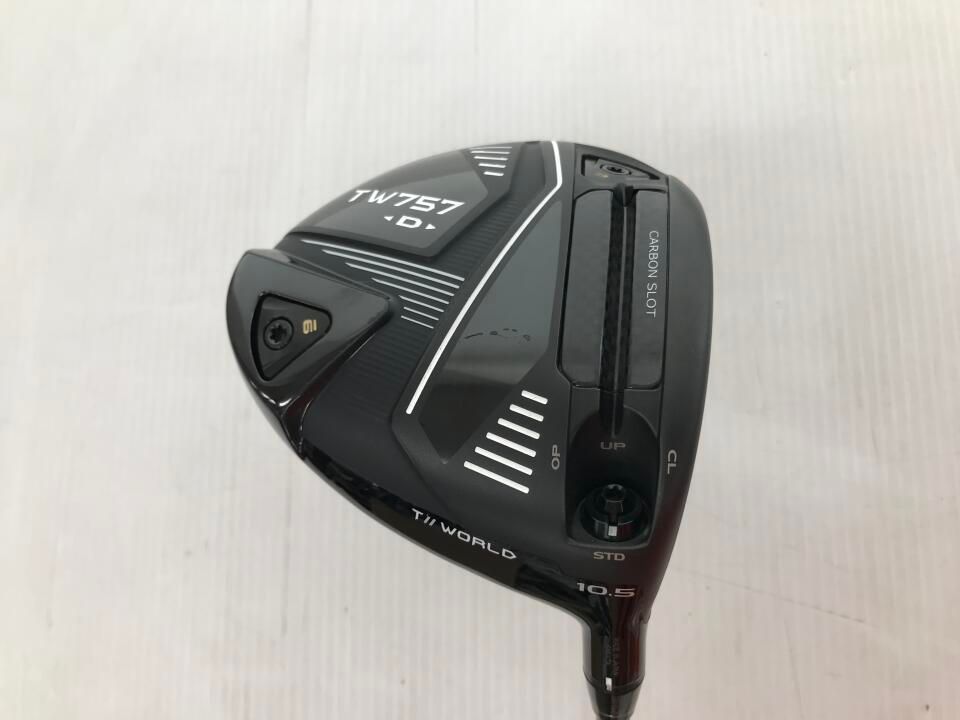
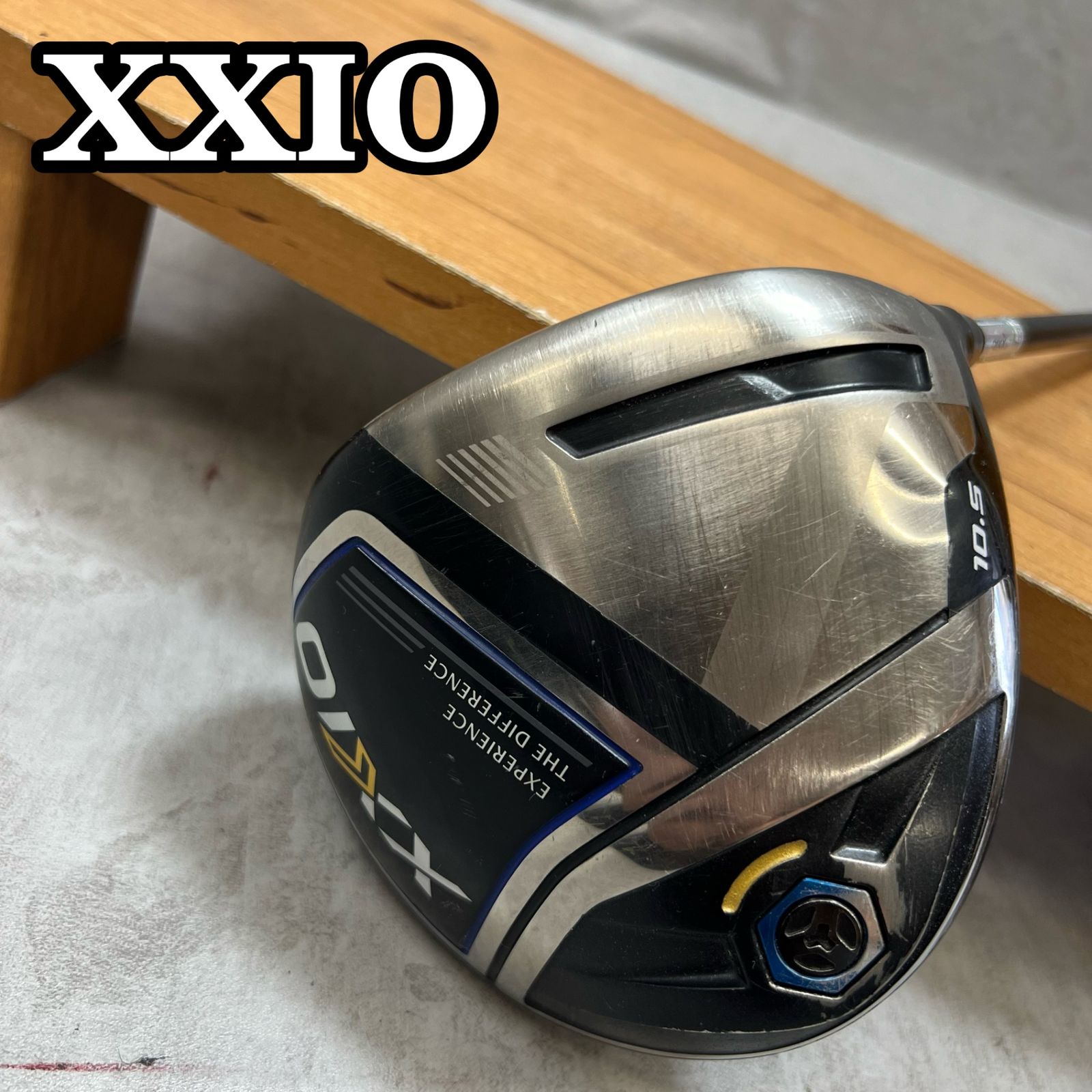

The HONMA TW757 D at ¥12,760 is from HONMA’s tour line. The XXIO 11 at ¥12,350 is the generation that made XXIO the default club for Japanese amateurs. The Yamaha inpres DRIVESTAR at ¥24,500 is listed as new, unused — and Yamaha golf is a good example of the pattern, because Yamaha is a household name worldwide for other things and almost invisible as a golf brand outside Japan.
The spec caveat, stated plainly. Japanese-market and US-market versions of the same club model are often built with different stock shafts, and buyers widely report that Japanese-market builds tend to be lighter and softer for a given flex letter. That is a community observation, not a published manufacturer standard, so treat it as a reason to read the numbers rather than as a rule. The listing will state シャフト (shaft), フレックス (flex), 長さ (length) and ロフト (loft). Those four figures are what you are buying.
The irons, where forging is the point
Japan’s reputation in golf rests on forged irons, and the domestic used market is where they are affordable.
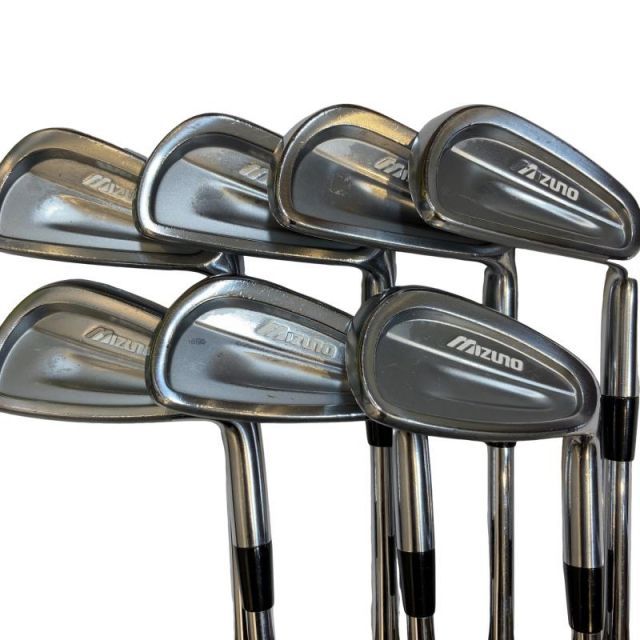
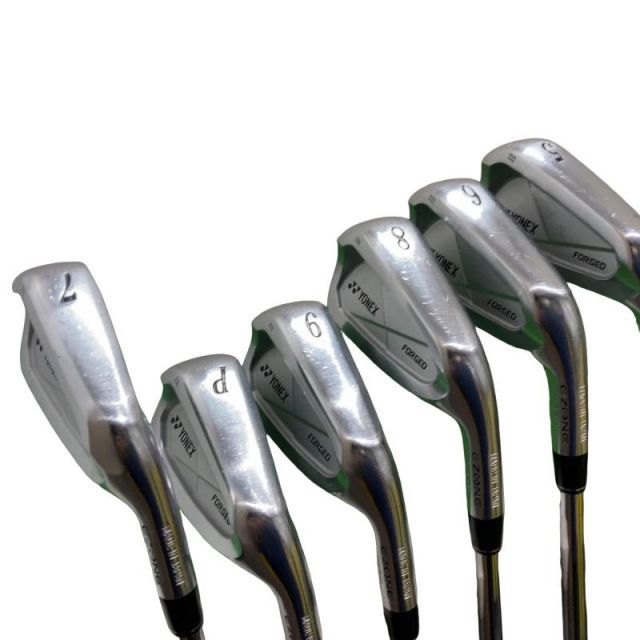

The Mizuno MP-57 set at ¥19,250 is a classic forged players’ iron. The Yonex EZONE Forged CB set at ¥20,380 is a six-club men’s set. The ONOFF FORGED set at ¥24,000 is a domestic-brand forged set of the kind that essentially never reaches an overseas pro shop.
An iron set is also the sweet spot for shipping, which the next section explains: seven heads and seven shafts pack into a box around a metre long, which is comfortably inside the international size limit, and the value-to-volume ratio is far better than a driver’s.
The size limit, which is the real constraint
Japan Post caps EMS to the United States at 30 kg, a maximum length of 1.5 m, and length plus girth of 2.75 m — note that the US ceiling is tighter than the 3 m that applies to most destinations[3]. Work through what that means.
| What you ship | Rough box | Length + girth | Verdict for the US |
|---|---|---|---|
| One driver | 1.25 × 0.20 × 0.15 m | 1.95 m | Comfortably inside |
| Iron set, heads and shafts boxed | 1.00 × 0.30 × 0.20 m | 2.00 m | Comfortably inside |
| Half set, 7–8 clubs boxed | 1.25 × 0.30 × 0.25 m | 2.35 m | Inside, but bulky |
| Full set in a stand bag | 1.30 × 0.40 × 0.35 m | 2.80 m | Over the US limit |
Those box figures are illustrative, not quotations — measure the actual parcel — but the shape of the answer does not change. Single clubs and boxed iron sets are ordinary parcels. A bagged full set is a special-handling shipment, and the correct move is either to ship the clubs out of the bag or to accept a courier quote instead of EMS.

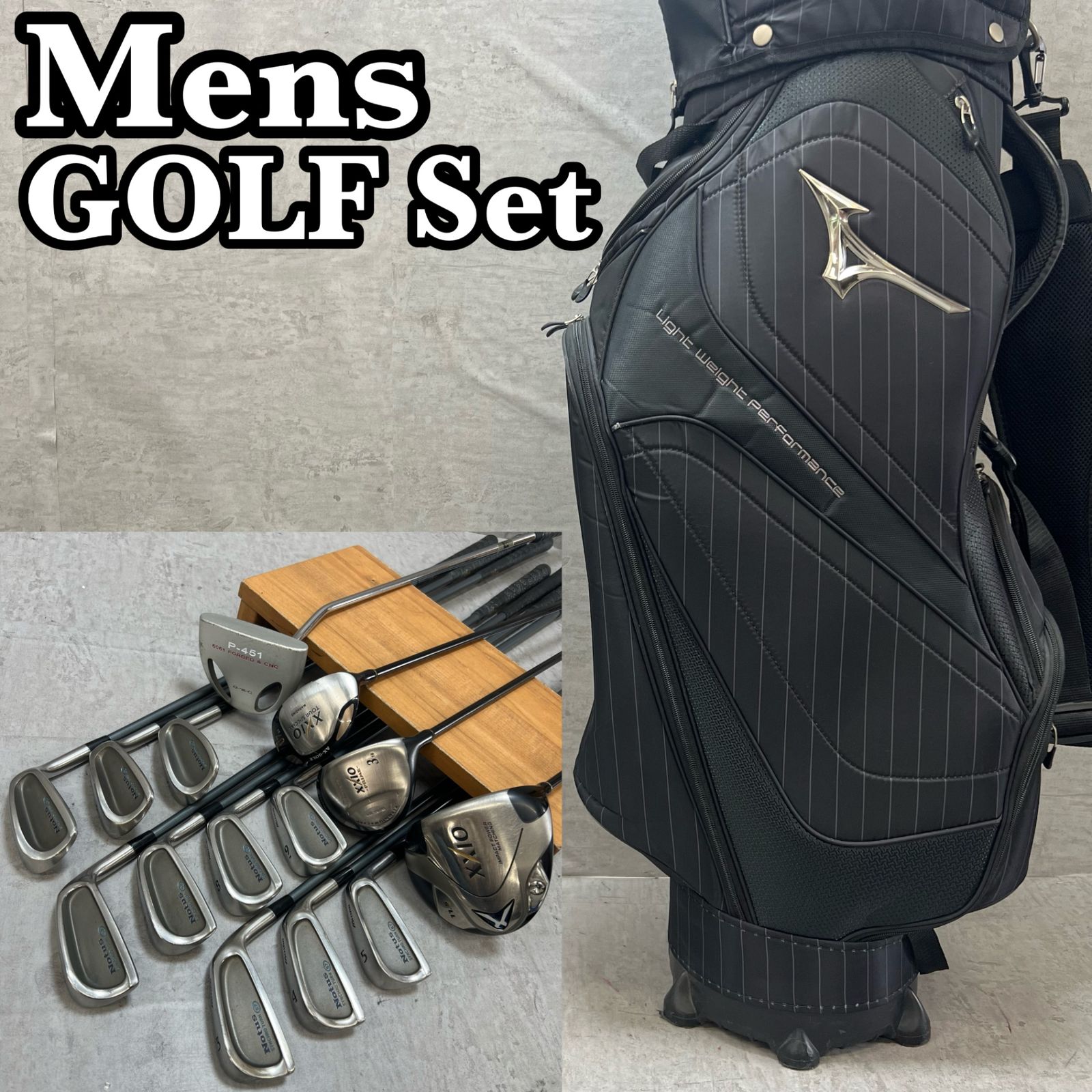

Which is exactly why the cheapest listings on this page are the worst value to import. A Dunlop eight-club set at ¥8,900, a 14-club XXIO / MIZUNO set at ¥15,000 and a 14-club beginner set with a TaylorMade bag at ¥18,000 are genuinely cheap in Japan. Add international freight on a parcel that size and the saving evaporates. Buy these if you are in Japan, or if you are consolidating and the freight is already committed. Do not buy them as a standalone import.
Reading a Japanese golf listing
| Japanese term | What it means | Why it matters |
|---|---|---|
| シャフト | Shaft | The Japanese build often uses a different stock shaft from the US one |
| フレックス (R / SR / S / X) | Flex | Compare the stated shaft model, not the letter alone |
| 長さ | Club length | Japanese builds are often marginally shorter; check before you re-grip |
| ロフト | Loft | Stated in degrees; adjustable heads say 可変 |
| 右利き / レフティー | Right-handed / left-handed | Left-handed stock is thin in Japan and priced accordingly |
| ショット数 | Number of shots hit | Disclosed on lightly used clubs; the honest condition metric |
| ヘッドのみ | Head only, no shaft | Cheap and small to ship, but you are paying a fitter at home |
| 美品 / LGGMあり | Excellent condition / has sky marks | Sky marks are crown scuffs from hitting up on the ball; cosmetic, priced in |
How to buy Japanese golf clubs from abroad, step by step
- Decide what you are actually importing. One premium club or one iron set is a good import. A full bagged set is a freight problem wearing a bargain’s clothing.
- Search the Japanese brand name. ホンマ, ゼクシオ, ヨネックス and オンオフ return the domestic market; the English spellings return a fraction of it.
- Read the four numbers. Shaft model, flex, length, loft. If any of them is missing from the listing, ask before you buy — on used clubs those four decide whether the club fits you at all.
- Check handedness explicitly. 右利き means right-handed and is the default. Left-handed inventory in Japan is scarce, so if a left-handed club is listed at a normal price, that is the listing to move on.
- Ask for it to be shipped out of the bag. If you buy a set that comes with a carry bag, the bag is what breaks the size limit. Shipping clubs boxed and the bag separately (or not at all) is usually cheaper than shipping the assembled thing once.
- Get the parcel measured before you commit to a method. Long parcels are billed on volumetric weight, and the difference between EMS and a courier on a 1.25 m box is large. Our shipping-method comparison sets out how each option prices size.
- Budget duty. The United States revoked its US$800 de minimis exemption with effect from 29 August 2025[5], so a ¥30,000 driver is now a dutiable import.
New to Japanese resale platforms? Our guide to buying from Mercari Japan from overseas covers the mechanics, and what Japanese proxy shopping costs in 2026 covers the fees.
The honest verdict
Japanese golf clubs are worth importing when the club is the point: a forged iron set from a domestic maker, a tour driver two generations old, a model that was never released where you live. In those cases you are buying something that either does not exist at home or costs twice as much there, and the freight is a modest fraction of the total.
They are not worth importing when the price is the point. A ¥10,000 beginner set is cheap in Japan and expensive in your driveway, because you are paying international freight rates on a metre and a half of hollow steel. The clubs are not the constraint in this category. The box is.
When you are ready, OneMall buys, inspects, measures and forwards from the Japanese side — or start with every live Japanese golf club listing.
Frequently Asked Questions
Are Japanese golf clubs cheaper than buying at home?
Used ones usually are, and by a wide margin, because Japan’s second-hand club market is enormous and standardised — one chain alone holds roughly 550,000 clubs across 455 stores[1][2]. Whether the saving survives shipping depends entirely on parcel size, which is why single clubs and boxed iron sets import well and bagged full sets do not.
What is the difference between JDM and US-spec golf clubs?
Mostly the stock build. The same model is frequently sold in Japan with a different stock shaft, and often a marginally different length, from the version sold in the United States. Golfers who buy Japanese-market clubs commonly report lighter and softer builds for a given flex letter, but that is an observed tendency rather than a published standard, so read the shaft model, flex, length and loft on the individual listing instead of assuming.
Can you ship golf clubs internationally from Japan?
Yes. EMS to the United States allows up to 30 kg, a maximum length of 1.5 m and length plus girth of 2.75 m[3], which a boxed driver or iron set fits inside. A full set in a stand bag is typically over that ceiling and needs a courier or needs to be shipped out of the bag.
What does ショット数 mean on a Japanese club listing?
The number of shots the club has hit. Sellers of nearly new clubs disclose it — for example a driver listed with a small shot count is functionally new. It is the most useful condition figure in the whole listing and has no equivalent in most Western used-club markets.
Which Japanese golf brands are hard to buy outside Japan?
ONOFF, Yonex golf, Yamaha golf and much of HONMA’s range are built primarily for the domestic market. XXIO is sold internationally — it has been a Sumitomo Rubber Industries brand since 2000[4] — but its Japanese-market models and specifications differ from the export line.
Should I buy a full set of Japanese clubs?
Only if you are already shipping a consolidated order, or if you are buying it to use in Japan. As a standalone import the freight on a bagged set frequently exceeds the price of the clubs, and the same money spent on one good driver or one forged iron set gets you something you cannot buy at home.
References
- 株式会社ゴルフパートナー, company profile — founded 30 June 1999; wholly owned subsidiary of Xebio since 2009; shared inventory of approximately 550,000 used clubs. https://www.golfpartner.co.jp/corporate/profile/
- Golf Partner store directory — 455 stores in Japan and overseas; 550,000 used clubs in shared stock. https://www.golfpartner.jp/shop/storelist/
- Japan Post, EMS size and weight limits by country — United States: maximum weight 30 kg, maximum length 1.5 m, length plus girth 2.75 m. https://www.post.japanpost.jp/service/send/oversea/list/delivery/ems/size/index_en.html
- Dunlop Sports / Sumitomo Rubber Industries brand pages — XXIO, Srixon and Cleveland Golf are SRI brands; XXIO launched in 2000. https://us.dunlopsports.com/about-us.html
- Federal Register, “Suspending Duty-Free De Minimis Treatment for All Countries” (Executive Order 14324; effective 29 August 2025). https://www.federalregister.gov/documents/2025/08/05/2025-14897/suspending-duty-free-de-minimis-treatment-for-all-countries
Last updated: 2026-09-22.