
 Shopping Guide
 HELP / FAQs


 By onemall
TL;DR
Japan’s three gold-nib houses — Pilot, Sailor and Platinum — sell a wider range of nib grinds at home than they export, and the Japanese domestic second-hand market is where those grinds actually circulate. As of August 2026, a Pilot Custom 74 with a 14K soft-medium nib, a Sailor with a Zoom nib and a Platinum #3776 Century in ultra-extra-fine are all live on Mercari Japan for the price of one new mid-range Western pen. The “cheap” route is buying a Japanese pen from a Western retailer. The cheapest route is buying the Japanese domestic listing through a proxy at the flat ¥300 Mercari fee tier — three live examples below, from $81.42.
Why Japanese Nibs Are a Different Product
The three houses are not simply Japanese versions of European brands. They grind nibs to a different convention and they sell letter grades that most export markets never see.
Sailor’s official 1911 line — named for the company’s founding year, 1911 — lists nib widths as EF, F, MF, M, B, Z and MS on both the Standard (14K nib) and the Large (21K nib).[1] The last two are the interesting ones: Z is Zoom, a nib whose line width changes with writing angle, and MS is a music nib. Sailor also publishes a specialty range built on the Naginata grind — Naginata-Togi, Naginata-Emperor, Naginata-Fude-De-Mannen, Naginata-Concord — plus the Cross-Point, Cross-Music and Cross-Concord nibs, and a larger 21K nib fitted to every King of Pens model in M and B only.[2]
Platinum’s contribution is mechanical rather than tonal. The #3776 Century was, in Platinum’s own description, the first fountain pen to combine a screw-type cap with the company’s Slip & Seal structure, which addresses the ink-drying problem that appears “if the pen is not used for three to six months.”[3] If you own more pens than you can rotate through in a season, that is the single most useful engineering decision on this list.
The sizing rule everyone learns late: Japanese nib grades run finer than European ones of the same letter. A Japanese F is roughly a European EF; a Japanese M writes closer to a European F. If you have only ever used German pens, order one step wider than your instinct — or, if you actually want a hairline, note that Platinum sells an ultra-extra-fine (超極細, UEF) that has no real European equivalent.
Cheap vs Cheapest: Three Live Japanese Listings
These are live Japanese domestic listings at the time of writing — one pen from each house, each with a nib grade that is hard to buy new outside Japan:[4]
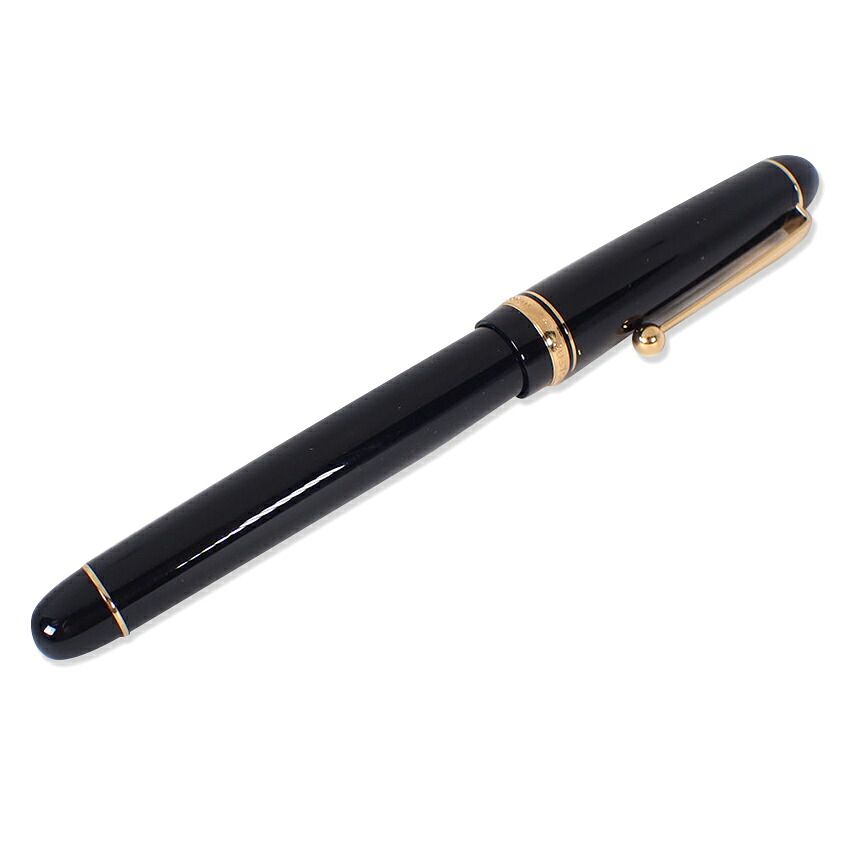
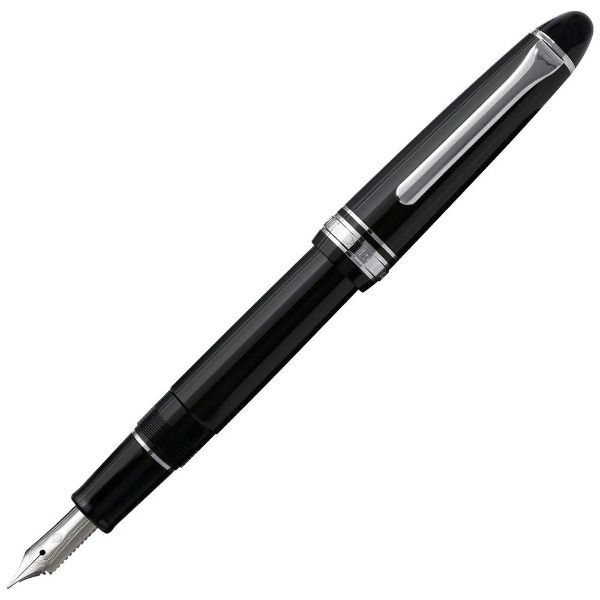

The Custom 74 is the standard recommendation for a first Japanese gold nib, and SM is its soft-medium option — some line variation, without the maintenance demands of a true flex nib. The Sailor Zoom is the widest-range nib of the three: held steeply it writes fine, laid flat it writes broad. The Platinum in UEF is the hairline, and the Slip & Seal cap is what makes a hairline practical, because a dried-out ultra-fine nib is the most annoying object in stationery.
What Actually Costs More Abroad
| Western retailer | Japanese domestic listing via proxy | |
|---|---|---|
| Nib grades offered | Usually EF/F/M/B | The full domestic range, incl. Z, MS, UEF, FA |
| Discontinued models | Gone | Routinely available second-hand |
| Condition options | New only | New, unused-old-stock, and used |
| Service fee | — | ¥300 per item on most marketplaces |
| Inspection | In the box | Photos plus the seller’s description; ask before buying |
| Warranty | Manufacturer, via the retailer | Not transferable in practice |
That last row is the honest trade-off. A second-hand pen from Japan has no support path if the nib is misaligned — which is why the used market rewards buyers who can read a listing.
How to Buy a Japanese Fountain Pen From Overseas: Step by Step
- Search 万年筆 plus the brand in Japanese. パイロット (Pilot), セーラー (Sailor), プラチナ万年筆 (Platinum). Searching “fountain pen” in English on a Japanese marketplace returns almost nothing.
- Add the model, then the nib grade. カスタム74, プロフィット, #3776 センチュリー; then 極細 (EF), 細字 (F), 中細 (MF), 中字 (M), 太字 (B), 超極細 (UEF), ズーム (Z).
- Check the gold mark in the photo. 14K and 21K are stamped on the nib itself, along with the width letter. A listing that shows the nib close up is telling you it has nothing to hide.
- Read the condition vocabulary. 新品未使用 is new and unused, 試筆のみ means inked only for a test, 筆記確認済 means the seller confirmed it writes, 美品 means excellent condition. A pen described as ペン先曲がり (bent nib) or インク詰まり (clogged) is a repair project.
- Ask about the converter. Japanese pens often ship with a cartridge only. コンバーター付 means a converter is included; without one, budget for a CON-40 / CON-70 (Pilot) or the maker’s equivalent, and note that all three houses use proprietary fittings — international standard cartridges do not fit.
- Ship pens together, and ship them empty. Pens are dense and small, so the service fee dominates on a single pen and shipping dominates on none of them. Consolidating two or three pens with ink and paper into one box is the efficient order, and any pen shipped by air should be empty of ink.
A note on “limited” pens. Japanese stationery retailers commission house-exclusive colours — Nagasawa’s Kobe series, Maruzen and Bungubox editions among them — which sell out domestically and then only exist second-hand. If a colour you have seen online is nowhere on the maker’s site, that is usually why, and the domestic market is the only place it will surface.
What Proxy Fees Look Like
| Source | OneMall service fee | Min | Max |
|---|---|---|---|
| Mercari / Mercari Shops | ¥300 per item on most marketplaces | ¥300 | ¥300 |
| Rakuten / Suruga-ya / ZOZOTOWN | ¥300 per item on most marketplaces | ¥300 | ¥300 |
| Yahoo! Auctions (winning bid + tax) | × 3% | ¥200 | ¥300 |
| Any other Japanese shop (LinkBuy) | × 5% | ¥200 | ¥1,000 |
On a ¥17,400 pen, the flat ¥300 Mercari fee is about 1.7% of the price. Competing proxies as of 2026 charge Buyee ¥500 per order, ZenMarket ¥500 per item and ¥800 on Mercari, and Neokyo ¥350 per item, none of which fall as the price rises.
The Bottom Line
Buying a Japanese fountain pen abroad gets you the pen. Buying it from Japan gets you the nib you actually wanted — Zoom, music, soft-medium, ultra-extra-fine, or a discontinued colour that a Kobe stationer commissioned eight years ago. Browse live Japanese fountain pen listings on OneMall, or read the rest of the stationery cluster: the 2026 Japanese Stationery Awards covers what won this year and where to buy it. For the mechanics of proxy shopping, see the Mercari Japan guide, the cheapest Japan proxy services comparison, the buyer’s checklist for choosing a proxy, or the fee breakdown with worked examples.
Frequently Asked Questions
Are Japanese fountain pen nibs really finer than European ones?
Yes, by convention rather than by standard. A Japanese F sits roughly where a European EF does, and a Japanese M near a European F. Order one grade wider than you would at home unless you specifically want a fine line.
What is a Zoom nib?
A nib whose line width varies with the angle you hold the pen at — fine when held steeply, broad when laid flat. Sailor lists it as width “Z” across the 1911 Standard and Large.[1]
What does Platinum’s Slip & Seal actually do?
It seals a screw-cap pen airtight so ink does not dry in the nib during long idle periods — Platinum frames the problem as one that appears when a pen sits unused for three to six months.[3] The #3776 Century was its first screw-cap application.
Is it cheaper to buy a Japanese pen from Japan?
Usually, and more so at the top of the range, because the proxy service fee on Mercari is capped at ¥300 while a Western retailer’s margin is a percentage all the way up. The bigger advantage is selection: nib grades and discontinued models that were never exported.
Do Japanese fountain pens take standard international cartridges?
No. Pilot, Sailor and Platinum each use proprietary cartridges and converters. Check whether a converter is included (コンバーター付) or budget for the maker’s own.
Is a second-hand gold nib risky?
Less than people expect. Gold nibs are durable and a well-kept pen writes indefinitely, but nibs take on the previous owner’s writing angle. Prefer listings with a close-up of the nib and a note that writing was confirmed (筆記確認済), and avoid anything described as bent or clogged unless you can service it.
References
- Sailor Pen, “1911 SERIES” — en.sailor.co.jp/topics/1911-series/: the series is named for Sailor’s founding year, 1911; the 1911 Standard is fitted with a 14K nib and the 1911 Large with a 21K nib; listed nib widths are EF, F, MF, M, B, Z and MS. Accessed 14 August 2026.
- Sailor Pen, “THE NIBS” — en.sailor.co.jp/topics/the-nibs-2/: specialty nib range including Naginata-Togi, Naginata-Emperor, Naginata-Fude-De-Mannen, Naginata-Concord, Cross-Point, Cross-Music and Cross-Concord; the oversized 21K King of Pens nib is offered in M and B and is fitted to all King of Pens models. Accessed 14 August 2026.
- Platinum Pen, “SLIP & SEAL MECHANISM” — platinum-pen.co.jp/en/slipseal/: the #3776 “Century” is described as the first fountain pen with the Slip & Seal structure in a screw-type cap, addressing dried ink where a pen “is not used for three to six months.” Accessed 14 August 2026.
- Live Mercari Japan listings retrieved through OneMall, 14 August 2026. Prices and stock change constantly; the figures shown are as at retrieval.
Last updated: 2026-09-28.