
 Shopping Guide
 HELP / FAQs


 By onemall
TL;DR
There is no single right answer to “how many albums does BTS have” — the number changes depending on whether you count the Korean discography, the separate Japanese one, or both. The Japanese albums are the ones overseas fans usually don’t know exist, and they are cheap to buy second-hand in Japan.
- Five Korean studio albums — Dark & Wild (2014), Wings (2016), Love Yourself: Tear (2018), Map of the Soul: 7 (2020) and BE (2020).[1]
- Four Japanese studio albums — Wake Up (2014), Youth (2016), Face Yourself (2018) and Map of the Soul: 7 ~The Journey~ (2020), released through their Japanese label.[2]
- Plus compilations — BTS, The Best (2021, Japan-only) and the anthology Proof (2022), which is why some counts jump past twenty.
- 日本盤 ≠ 日本仕様盤 — a Japanese edition and a “Japan-spec” import are different products at different prices. Knowing which you’re holding is the whole game.
- Cheapest route — first-press limited editions sit on Mercari Japan for a few dollars; a proxy buys at ¥200–¥300 per item on most marketplaces (as of 2026), stores for 90 days and ships once.
The question gets asked constantly, and most often in Spanish — ¿cuántos álbumes tiene BTS? — where the usual answer, “nine,” quietly ignores an entire second discography. BTS have released Japanese-language albums since 2014 on a Japanese label, with Japan-original tracks, Japanese versions of Korean singles, and packaging variants that were never sold anywhere else.
This guide lays out, as of August 2026, exactly what counts as a BTS album, what the Japanese releases actually contain, how to tell a real Japanese edition from an import, and the cheap versus cheapest way to buy them from Japan.
How Many Albums? It Depends What You Count
Every different answer you’ve seen is using a different definition. Here is the whole picture in one table.
| Category | Count | Titles |
|---|---|---|
| Korean studio albums | 5 | Dark & Wild; Wings; Love Yourself: Tear; Map of the Soul: 7; BE |
| Japanese studio albums | 4 | Wake Up; Youth; Face Yourself; Map of the Soul: 7 ~The Journey~ |
| Japanese compilation | 1 | BTS, The Best (2021) |
| Korean compilations / anthology | 3 | Young Forever (2016); Love Yourself: Answer (2018); Proof (2022) |
| Mini albums & single albums | Many | 2 Cool 4 Skool; O!RUL8,2?; Skool Luv Affair; HYYH pt.1 & pt.2; Love Yourself: Her; Map of the Soul: Persona… |
So: nine studio albums if you count both languages, five if you only count Korean, and well over twenty “albums” if you fold in mini albums, compilations and the Japanese repackages. None of those answers is wrong — they’re answers to different questions.
The Japanese releases are not translations bolted onto the same record. Wake Up and Youth carry Japan-original tracks alongside Japanese-language versions of Korean singles, and they were issued through the group’s Japanese label with their own catalogue numbers and chart runs on the Oricon albums chart.[2][3][7]
日本盤 vs 日本仕様盤: The Distinction That Decides the Price
This is the single most useful thing to know before buying BTS CDs in Japan, and it is almost never explained in English.
- 日本盤 (Japanese edition) — a release manufactured for the Japanese market by the Japanese label. Japanese catalogue number, Japanese-language liner notes, often Japanese-language recordings, and edition variants (初回限定盤A/B/C, 通常盤) with different bonus discs and photobooks.
- 日本仕様盤 (Japan-spec edition) — the Korean release, imported and repackaged for Japanese retail with a Japanese obi strip, a translated booklet and a Japanese barcode. The music is the Korean version.
Both are legitimate official products. They are not interchangeable, and a listing that says 日本仕様盤 is not the Japanese-language album — a distinction worth checking before you pay for what you think is a rare Japanese release.
Three more Japanese terms that move the price:
- 初回限定盤 (first-press limited edition) — pressed once, in versions A, B and sometimes C, each with a different DVD/Blu-ray, photobook and photocard set. When it’s gone, it’s second-hand only.
- 通常盤 (regular edition) — the standard, repressed edition. Cheapest and easiest to find.
- 帯 (obi) — the printed paper strip wrapped around the case spine. Japanese collectors care about it, so 帯付き (with obi) listings sell higher than the same disc without one. If you’re buying to keep, check the photos.
Why Japan Is the Cheap Source for BTS Albums
Japan is one of the largest physical music markets left, and its second-hand infrastructure is enormous. Limited editions that sold out on release day circulate constantly at a fraction of resale-site prices, because in Japan a used CD is just a used CD. RIAJ certification data shows the scale of the Japanese pressings involved,[4] which is exactly why supply is deep.
Two warnings before you buy. First, the bonus discs in Japanese limited editions are Japanese-market discs: DVDs are region 2 and Blu-rays are region A, so check your player before assuming you can watch them. Second, photocards are randomly inserted, so a 開封済 (opened) listing may or may not still contain them — read the description, and if it matters, ask.
Three live examples on Mercari Japan[8] at the time of writing, one from each category discussed above:


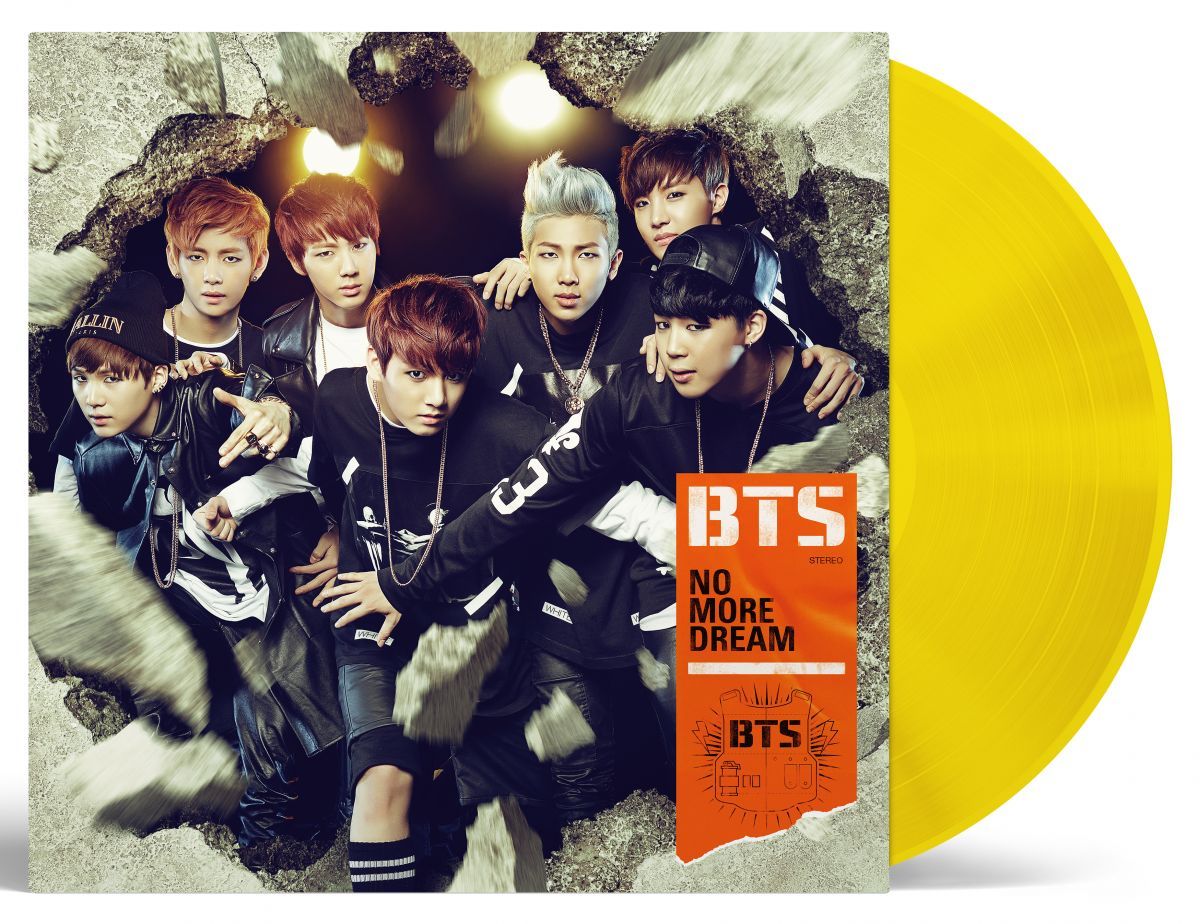
Live listings at the time of writing; Japanese second-hand stock moves fast.
How to Buy BTS Albums from Japan: The Full SOP
This is the sequence, start to finish, using OneMall as the example proxy.
- Step 1 — Decide which edition you want. Japanese-language album (日本盤), Korean album with Japanese packaging (日本仕様盤), or a specific limited version. This determines your search string, not your budget.
- Step 2 — Search in Japanese. 「BTS 日本盤」「BTS 初回限定盤」「防弾少年団 アルバム」— note that 防弾少年団 is the group’s Japanese name and returns listings that “BTS” alone misses entirely.
- Step 3 — Read the condition and completeness line. 未開封 = sealed, 開封済 = opened, 帯付き = obi included, 特典なし = bonus items missing. On CDs, “complete” matters more than “mint”.
- Step 4 — Check the disc region. Bundled DVDs are region 2 and Blu-rays region A. If you can’t play them, buy the 通常盤 and save the money.
- Step 5 — Order through the proxy. Pay stage one: item price plus the service fee — on Mercari that’s a flat ¥300, whatever the item costs (as of 2026).
- Step 6 — Let it rest in the warehouse. Purchases sit in 90 days of free storage after arrival (30 days after consolidation). CDs are light and flat — the ideal thing to accumulate before shipping.
- Step 7 — Consolidate. Combine everything into one parcel. The first 6 orders combine free; each additional order is ¥100, so consolidating 10 orders costs ¥400. Six CDs in one box is dramatically cheaper than six separate parcels.
- Step 8 — Pay stage two and pick a carrier. EMS, DHL, ECMS or Sea Mail, priced on the greater of actual or volumetric weight.[5] CDs are dense and small, so actual weight usually wins — see our Japan-to-USA shipping guide for real numbers.
What It Costs in 2026
Service fees are per order and depend on the platform the item lives on:
| Platform | Service fee | Min | Max |
|---|---|---|---|
| Mercari / Rakuma | ¥300 per item on most marketplaces | ¥300 | ¥300 |
| Yahoo! Auctions | (winning bid + tax) × 3% | ¥200 | ¥300 |
| Amazon Japan | ¥300 per item on most marketplaces | ¥300 | ¥300 |
| Rakuten / Suruga-ya / ZOZOTOWN | ¥300 per item on most marketplaces | ¥300 | ¥300 |
| Any other Japanese shop (LinkBuy) | price × 5% | ¥200 | ¥1,000 |
Two import realities to price in. The United States revoked its $800 de minimis exemption on 29 August 2025, so US-bound parcels are dutiable regardless of value.[6] And Japan Post’s suspension of US-bound mail ended on 14 April 2026, so EMS and Sea Mail are running again with published per-destination rates.[5]
The Bottom Line
Count the Korean albums and you get five. Count both discographies and you get nine. Count everything with a catalogue number and you’re past twenty. The more useful question is which ones you can still buy — and the answer is that Japan’s second-hand market has the limited editions that sold out everywhere else, at prices that read like typos. OneMall buys on Mercari, Yahoo! Auctions, Amazon Japan and Rakuten from one account, holds purchases for 90 days, inspects before shipping, and can order from any other Japanese shop through LinkBuy. Collecting photocards too? Our K-pop photocard guide covers that market. New to proxies? Read the cheapest proxy fee comparison and the best-proxy buyer’s guide first. Ready? Search live BTS listings on OneMall.
Frequently Asked Questions
How many albums does BTS have in total?
Nine studio albums across both languages — five Korean and four Japanese[1][2] — plus compilations including BTS, The Best (2021) and Proof (2022), and a long list of mini and single albums. Counts above twenty are folding all of those together.
Are the Japanese albums just translations of the Korean ones?
No. They contain Japanese-language versions of Korean singles alongside Japan-original tracks, released through the group’s Japanese label with their own catalogue numbers and chart runs.[2][3]
What is the difference between 日本盤 and 日本仕様盤?
日本盤 is a Japanese-market release manufactured by the Japanese label, usually with Japanese-language recordings and edition variants. 日本仕様盤 is the Korean release repackaged for Japanese retail with an obi strip and translated booklet — the music is the Korean version. Different products, different prices.
Will the bonus DVD or Blu-ray play at home?
Only if your player handles it. Japanese DVDs are region 2 and Blu-rays are region A. If your setup can’t, buy the 通常盤 (regular edition) — you get the same music for less.
Is buying BTS CDs from Japan actually cheaper?
For out-of-print limited editions, dramatically so — Japanese second-hand supply is deep and priced as ordinary used stock.[4] The saving depends entirely on consolidating: ship six CDs in one parcel, not six parcels.
References
- HYBE, official corporate site (BTS label group). https://hybecorp.com/
- Universal Music Japan, official BTS artist page (Japanese discography). https://www.universal-music.co.jp/bts/
- BTS Japan, official site. https://bts-official.jp/
- Recording Industry Association of Japan (RIAJ), English portal and certification data. https://www.riaj.or.jp/e/
- Japan Post, EMS international service and rate tables. https://www.post.japanpost.jp/service/send/oversea/list/delivery/ems/index_en.html
- International Trade Administration, de minimis value guidance. https://www.trade.gov/de-minimis-value
- Oricon, official Japanese music chart. https://www.oricon.co.jp/
- Mercari Japan, official marketplace. https://jp.mercari.com/
Last updated: 2026-09-28.