 Shopping Guide
 HELP / FAQs



 By onemall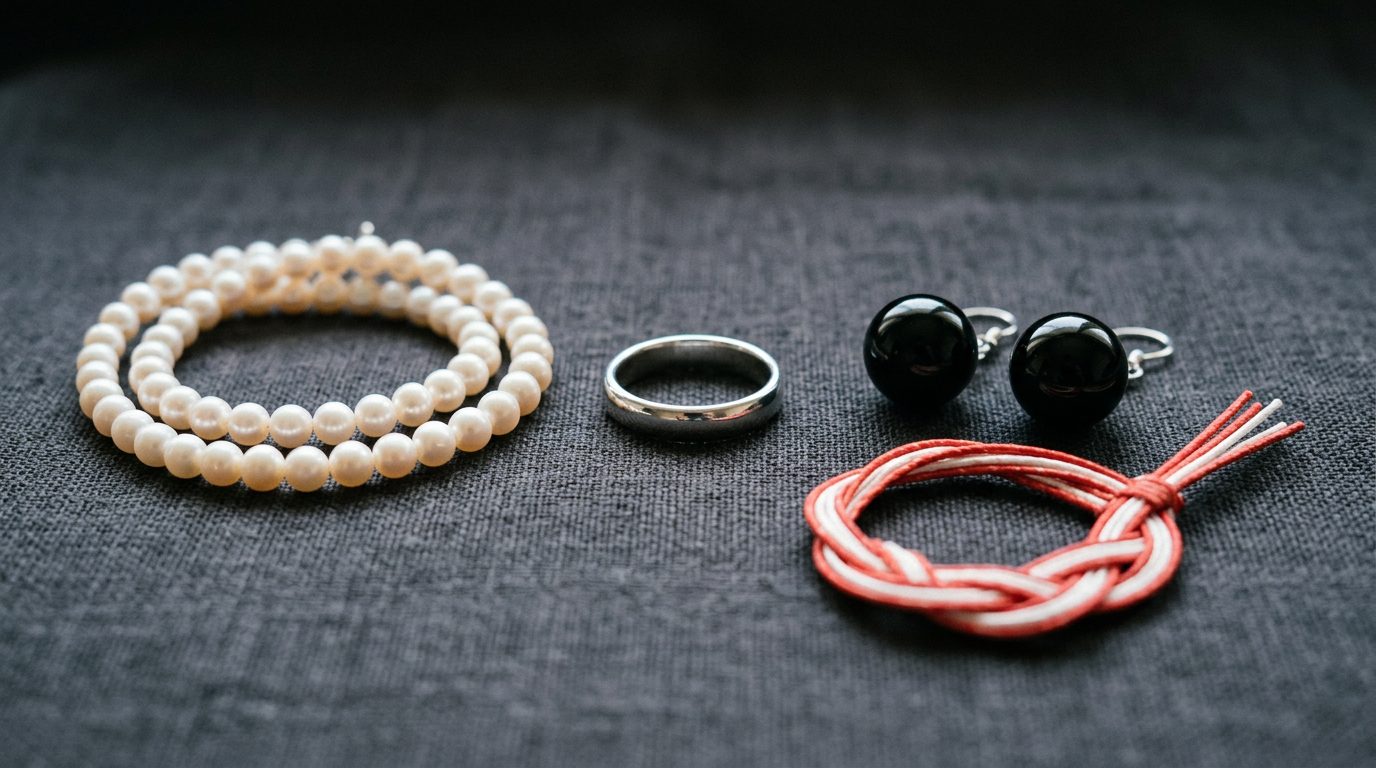
TL;DR
As of September 2026, Japanese jewellery splits into four separate worlds that barely overlap: pearls (MIKIMOTO, TASAKI and the Ise-Shima and Kobe trade behind them), high jewellery (NIWAKA, GIMEL, Tanaka Kikinzoku/GINZA TANAKA), the mid-market gift brands everyone in Japan actually wears (4°C, CANAL 4°C, agete, STAR JEWELRY, Vendome Aoyama, ete), and silver — the Native-American-influenced Tokyo scene led by goro’s and Tady & King.
- Japan’s one world-defining contribution is the cultured pearl. MIKIMOTO dates itself from 1893[1]; TASAKI started culturing and processing pearls in Kobe in January 1954[2].
- The mid-market is where the volume is. A CANAL 4°C silver necklace is under ¥10,000 in Japan; the same piece is a special order abroad, if it exists at all.
- Silver is a subculture, not a category. goro’s is sold by queueing at one Harajuku shop; everything else about it happens on the Japanese secondary market.
- “Traditional Japanese jewellery” mostly is not metal. Mizuhiki paper cord, urushi lacquer beads, kanzashi hair ornaments and Inden deerskin are the real traditional accessory crafts.
- Ring sizes do not match. Japanese ring sizes are a numbered scale (号), not US numbers — check our Japanese ring size to US chart before you buy anything with a size on it.
Japanese pearls: the part of this industry that changed the world
MIKIMOTO styles itself “The Originator of Cultured Pearls. Since 1893.”[1] That single innovation — growing a pearl on purpose instead of finding one — is why Japan, a country with no significant precious-stone deposits, has a world-class jewellery industry at all.
TASAKI is the other pillar. Its founder Shunsaku Tasaki began pearl culturing and processing in Kobe in January 1954; the company was incorporated as Tasaki Shinju in December 1959, opened a pearl farm off the Kujukushima islands in Nagasaki in October 1979, and started polishing its own diamond rough in May 1988, completing its Jewelry Building — a combined diamond-polishing and jewellery atelier — in November 1989[2]. Its most quoted technical achievement is the world’s first artificial spat collection of the mabe pearl oyster, in September 1970[2].
What the pearl vocabulary actually means
| Term | What it means | Buying note |
|---|---|---|
| Akoya (あこや) | The classic small, round, high-lustre Japanese saltwater pearl, 2–10 mm | The default for a Japanese pearl necklace or stud earring |
| Hanadama (花珠) | A top grading for Akoya strands, certified by a Japanese lab | Ask for the certificate; the word alone is not a guarantee |
| Keshi (ケシ) | Small non-nucleated pearls formed as a by-product | Irregular, cheap, and the most wearable everyday option |
| Mabe | Half-spherical blister pearl | TASAKI’s 1970 breakthrough[2]; big look, low price |
| Biwa / freshwater | Freshwater pearls historically from Lake Biwa | Cheapest tier; almost all “freshwater” stock today is Chinese |
| Muchoushoku (無調色) | “Untreated colour” | A real premium marker on Japanese listings — most Akoya is colour-treated |


Japanese high jewellery brands
| Brand | Base | What they make | Why it matters |
|---|---|---|---|
| MIKIMOTO | Tokyo (Ginza) | Cultured pearls, high jewellery, bridal | The company that invented the cultured pearl and dates itself from 1893[1]. The Ginza flagship is the reference point for Akoya quality worldwide. |
| TASAKI | Kobe | Pearls, danburite and diamond high jewellery | Founded January 1954 by Shunsaku Tasaki as a pearl-culturing and processing business in Kobe[2]. It succeeded in the world’s first artificial spat collection of the mabe pearl oyster in September 1970[2] and has cut its own diamonds in-house since May 1988[2]. |
| NIWAKA | Kyoto | High jewellery and bridal, Japanese-motif design | A Kyoto jeweller whose collections are named for Japanese scenes — Hanaurara, Yaegasumi, Kyokomichi — and whose bridal rings each carry an individual name[3]. |
| GINZA TANAKA / Tanaka Kikinzoku | Tokyo (Ginza) | Pure gold and platinum jewellery, bullion, coin jewellery | The retail arm of Japan’s precious-metals house. From 21 November 2025 the shops were renamed from GINZA TANAKA to Tanaka Kikinzoku[4]; it sells jewellery and investment metal from the same counter. |
| GIMEL | Tokyo | One-off high jewellery | Kaoru Kay Akihara’s house; nature-motif pieces that appear at international auction rather than in shops. |
| Wako | Tokyo (Ginza) | Jewellery, watches, the Ginza clock tower | The department store as jeweller — conservative, extremely Japanese, and a landmark. |
NIWAKA is worth singling out because it is the clearest case of Japanese design language in fine jewellery: a Kyoto house whose collection names — Hanaurara, Yaegasumi, Kyokomichi, Kuon, Karahana, Umeutage — are scenes and seasons rather than product codes, and whose bridal rings are individually named[3].
Tanaka Kikinzoku (until 21 November 2025 trading as GINZA TANAKA[4]) is the odd one out and the most Japanese: the same counter sells a pure-gold pendant and a bullion bar, and it treats jewellery explicitly as both ornament and asset[4]. Its recent releases include pure-platinum 2 g coin-bar pendant tops[4].
The mid-market brands Japanese people actually wear
| Brand | What it is |
|---|---|
| 4°C | The default gift brand; F.D.C. Products runs 4°C, CANAL 4°C, EAU DOUCE 4°C, cofl by 4°C, 4°C HOMME+, RUGIADA and KAKERA[5] |
| CANAL 4°C | The younger, cheaper 4°C line — the silver-and-CZ pieces most people actually own |
| STAR JEWELRY | Yokohama-born, star motifs, strong bridal and K10 lines |
| agete | K10 gold, small stones, the “everyday gold” look that defined 2010s Japanese style |
| Vendome Aoyama | Classic department-store jewellery, strong on pearls and bridal |
| ete | Trend-led, affordable K10, heavy collaboration output |
| AHKAH | Delicate diamond and gold layering pieces |
| Tiffany-adjacent domestic labels: NOJESS, ARTIDA OUD, Cocoshnik | Department-store and select-shop brands rarely exported |
| THE KISS | Pair rings and couple jewellery — a distinctly Japanese category |
| U-TREASURE | Anime and game collaboration fine jewellery, made to order |
4°C is the reference point. The operating company, F.D.C. Products, runs 4°C alongside CANAL 4°C, EAU DOUCE 4°C, cofl by 4°C, 4°C HOMME+, RUGIADA and KAKERA, plus a separate bridal line with a permanent guarantee[5]. In practice: 4°C is the gift you give, CANAL 4°C is the one you buy for yourself, and both are far cheaper inside Japan than through any export channel.
Japanese silver jewelry brands
The silver scene is a genuinely separate industry with its own shops, its own queue culture and its own fakes problem: goro’s, Tady & King, First Arrow’s, Larry Smith, Yamamoto Kojiro (山本幸四郎), ARTEMIS Classic, Lion Heart, Justin Davis, DEAL DESIGN, GARNI, Vivienne-adjacent domestic silver houses.
goro’s is the origin point — Yoshihito “Goro” Takahashi learned silversmithing and leatherwork from Native American craftsmen and built a Harajuku shop with no online sales and a lottery-style queue. That combination produces the two things you need to know as a buyer: everything real is traded second-hand inside Japan, and the counterfeit rate is high. Tady & King, First Arrow’s and Larry Smith are the other three houses in the same lineage, all Tokyo-based, all with far better availability.
If you just want well-made plain silver rather than a subculture, Japanese SILVER925 workshop pieces are excellent value — look for 日本製 (made in Japan) in the listing title, as in the band in the card set above.
Traditional Japanese jewellery and accessory crafts
| Craft | What it is |
|---|---|
| Mizuhiki (水引) | Twisted, starched paper cord tied into knots — originally for gift wrapping, now earrings, hairpieces and brooches |
| Urushi (漆) lacquer beads | Wajima, Aizu and Kishu lacquer applied over wooden or resin cores; extremely light to wear |
| Kanzashi (簍) | Hair ornaments — tsumami-zaiku silk flowers, tortoiseshell-style combs, bira-bira dangles |
| Tsuishu / Kamakura-bori | Carved lacquer brooches from Sendai and Kamakura |
| Inden (印传) | Lacquer-printed deerskin from Kofu — usually bags and purses, also straps and small accessories |
| Jade and coral | Itoigawa jade and Kochi coral are the two Japanese gem materials with real domestic tradition |
| Kiriko cut glass | Edo and Satsuma kiriko turned into pendants and earrings |
These are the answer to “traditional Japanese necklace” and “Japanese jewellery historical” searches. Historically, Japan is unusual: after the Kofun period, personal jewellery largely disappeared from Japanese dress for a thousand years — kimono has no need for a necklace, and status was shown through textile, the obi, hair ornaments and lacquer. That is why the traditional crafts are hair ornaments, cords and lacquer rather than rings and pendants, and why Japanese fine jewellery as a retail category is essentially a 20th-century, post-pearl invention.
Urushi lacquer bead earrings are the easiest of these to actually wear day to day: Wajima-made 6–10 mm lacquer beads are hand-coated, feather-light and cost a fraction of what a comparable stone piece would. Related: how to buy authentic Japanese silk covers the same “traditional craft, domestic-only distribution” problem.
Where to buy: Okachimachi, department stores, and the used market
| Channel | What it is | Ships abroad? |
|---|---|---|
| Okachimachi / Ueno, Tokyo | Japan’s jewellery district — wholesalers, casters, stone dealers, pearl strings | Trade-facing, domestic |
| Ginza | MIKIMOTO, Wako, Tanaka Kikinzoku, NIWAKA flagship | Boutique, Japan-only stock lines |
| Department stores | Isetan, Takashimaya, Daimaru concessions for agete, ete, Vendome | Domestic |
| Rakuten and Amazon Japan shops | New pearls, silver, urushi and mizuhiki from small ateliers | Domestic-only checkout for most sellers |
| Mercari and Yahoo! Auctions | The used market — where goro’s, discontinued 4°C and estate pearls live | Domestic only |
| Japan Jewellery Fair | The trade show at Tokyo Big Sight | Trade only |
Every one of those rows ends the same way, which is why a proxy exists. Start with our comparison of the best Japan proxy services and the fee-by-fee cheapest-proxy breakdown.
How to buy Japanese jewellery from Japan: the 6-step SOP
- Fix your size first. Japanese rings use the 号 scale, not US numbers — a Japanese 13号 is roughly a US 6.5. Our Japanese ring size conversion chart has the full table in millimetres.
- Search in Japanese. Pearl necklace is あこや真珠 ネックレス, earrings are ピアス (pierced) or イヤリング (clip-on), silver ring is シルバーリング, and “made in Japan” is 日本製. This one habit doubles or triples your result count.
- Read the metal stamp in the listing. K18, K10, Pt900, SV925 (or S925) are stated in almost every honest Japanese listing. No stamp mentioned on a “gold” item means plated until proven otherwise.
- For pearls, ask for the certificate photo. Hanadama and untreated-colour claims should come with a lab card. Mercari sellers will photograph it on request.
- For brand silver, assume fakes exist. goro’s especially. Buy through a proxy that photographs the item on arrival, and prefer listings with the original box, tag and purchase record.
- Ship small and insured. Jewellery is the one category where the item is worth far more than the freight — take the tracked, insured option, declare it accurately, and check your own country’s duty threshold before you buy.
Contemporary Japanese jewellery designers
Beyond the retail chains there is a designer tier that barely exports at all, and it is what people are looking for when they search for the best, cool, cute or contemporary Japanese jewelry designers rather than a brand: SHIHARA, HUM, JANUKA, e.m., MARIHA, Enasoluna, ARTIDA OUD, Cocoshnik, NOJESS and, at the very top, GIMEL. Most sell through Tokyo select shops and department-store concessions, with online stock that ships domestically only. These are also the names to search for dainty, minimal and handmade-feeling pieces — and for genuinely handmade work, the Japanese craft marketplaces minne and Creema are full of independent makers who never appear on any brand list.
Japanese jewellery motifs, and what they mean
Motif searches are a cluster of their own: sakura (cherry blossom), the crane (longevity), the dragon, the oni or hannya demon mask, the maple leaf, koi, the lucky cat, and kanji or character engraving. Two specifically Japanese categories are worth naming:
- Damascene (象ガン, Kyoto zogan) — gold and silver inlaid into blackened steel, made in Kyoto since the sword-fitting era and sold as butterfly, crane and pagoda brooches, pendants and cufflinks. Amita and Komai are the historic names.
- Mokume-gane (木目金) — layered mixed metals forged to a wood-grain pattern, invented for sword fittings and now the signature Japanese wedding-band technique. The related traditional alloys are shakudo (gold-copper, patinated blue-black) and shibuichi (silver-copper, grey).
The other genuinely Japanese souvenir piece is the 5-yen coin necklace — the holed brass coin, whose name go-en is a pun on “good fortune / connection”, mounted as a pendant. Cheap, and everywhere.
Engagement, wedding and men’s jewellery
Japanese bridal is a distinct retail category with its own brands: NIWAKA, I-PRIMO, Ginza Diamond Shiraishi, Ken & Dana, THE KISS for pair rings, plus the bridal lines of 4°C[5], STAR JEWELRY and Vendome Aoyama. Two conventions differ from the West: engagement rings are frequently pearl rather than diamond, and pair rings — matching non-bridal rings for couples — are a mainstream product category rather than a novelty.
Men’s Japanese jewellery is mostly the silver scene above, plus engraved dog-tag and plate necklaces, chain necklaces in SV925 and K18, and the Chrome-Hearts-adjacent domestic labels (DEAL DESIGN, Justin Davis, Lion Heart, GARNI). Custom and engraved pieces are widely offered by Japanese ateliers, usually as made-to-order listings.
Chains, charms and the pieces with Japanese names
Three things you will only meet in a Japanese listing:
- Kihei (喜平) chain — the flattened, twisted curb chain that is the default Japanese gold chain for both men and women. Sold by weight in K18 yellow or white gold, it is the single most-traded gold jewellery form in Japan and is what most “Japanese gold chain necklace” results are.
- Kamon (家紻) jewellery — family-crest motifs cut into pendants, rings and cufflinks. Made to order by Japanese ateliers, and a genuinely personal souvenir.
- Kintsugi jewellery — broken ceramic repaired with gold lacquer and mounted as pendants and earrings, made by potters and lacquer studios rather than jewellers.
Alongside those, the everyday categories: bracelets and bangles, charms and charm holders, anklets, ear cuffs, white gold and platinum settings, kids’ and girls’ first-jewellery lines from 4°C and Vendome, and the gothic and visual-kei silver that Japanese street brands make for the Harajuku market. Brand official websites and their reviews sit behind Japanese-language checkout in almost every case, which is why the practical route stays the same: find it on a Japanese site, buy it through a proxy.
Vintage, antique and second-hand Japanese jewellery
The Japanese second-hand market is unusually good for jewellery for one structural reason: Japanese sellers describe condition and hallmarks carefully, and domestic resale is culturally normal. What you will find: vintage damascene and Toshikane porcelain pieces, 1970s–90s Mikimoto and Tasaki estate pearls, discontinued 4°C and agete, and lacquer jewellery boxes — black lacquer, mother-of-pearl inlay, music-box and armoire styles — which are a whole category by themselves on Mercari and Yahoo! Auctions.
Two practical notes. Japanese listings state metal markings as K18, K10, Pt900, Pt950, SV925 or S925; a listing with no marking mentioned is plated until proven otherwise. And Japanese gold jewellery is often priced per gram against the daily bullion price — Tanaka Kikinzoku publishes that price and sells jewellery and metal side by side[4].
Cheap and souvenir jewellery, and the tax question
At the bottom of the market: Daiso, Seria and 3COINS sell perfectly wearable costume jewellery for ¥110–¥330, and Don Quijote carries the same tier plus mystery jewellery jars. Souvenir jewellery — sakura pendants, 5-yen coin necklaces, mizuhiki earrings — sits in temple shops and station gift halls.
On tax: shops in Japan can sell tax-free to visiting tourists, which removes the 10% consumption tax at the counter — but that scheme is for people physically in Japan with a foreign passport, and it does not apply when a proxy buys on your behalf, because the purchase is a domestic one. What matters for a proxy order is the opposite direction: your own country’s import duty and VAT threshold on jewellery, which is often lower than for other goods. Declare the real value; jewellery is the category customs looks at most closely.
Amulets, symbols and the necklaces with meaning
A large share of “Japanese necklace” searches are about meaning rather than metal. The pieces that actually exist: omamori amulet pendants (the temple charm, miniaturised for wear), juzu prayer-bead bracelets, vertical kanji name pendants, wave (seigaiha), crane, samurai-crest and protection motifs, and lockets. Japanese shippo (七宝) cloisonné enamel is the traditional coloured-enamel jewellery technique, and mother-of-pearl (raden) inlay is its lacquer-side equivalent.
On gold purity, Japanese listings are explicit: K24 is pure gold, K18 is 75%, K10 is 41.7% — and pure-gold K24 jewellery is far more common in Japan than in Western markets because it is bought partly as an asset[4]. Accessories around the jewellery itself — pouches, stands, displays, chests and travel cases — are their own gift category in Japan, usually in lacquer, paulownia wood or kiri boxes.
The pearl vocabulary has one more layer worth knowing: Japanese pearl oysters are farmed by named producers in Mie (Ise-Shima), Ehime and Nagasaki, and listings from those pearl farmers often quote the farm and the harvest year. Knotting — silk thread knotted between each pearl — is standard on good Japanese strands and is a genuine quality signal.
Where Japanese jewellery is actually made: Kofu, Osaka and the trade bodies
The manufacturing answer is Yamanashi Prefecture. Kofu grew up around local rock-crystal deposits and became Japan’s jewellery workshop — cutting, casting and setting for brands that carry Tokyo addresses. Tokyo’s Okachimachi is the wholesale and dealer quarter, and Osaka has its own jewellery trade district around Higashi-Shinsaibashi and Tanimachi. The trade sits under the Japan Jewellery Association, and it trains at dedicated jewellery craft schools such as HIKO MIZUNO College of Jewelry in Tokyo. If a listing says a piece is a Japanese factory or manufacturer product, Kofu is usually where it was actually made.
Japan also has a jewellery-only shopping TV channel, GSTV, which is a real and large retail channel domestically and a good indicator of what the mass Japanese market buys: coloured stones, pearls and K18 chain.
The luxury tier, women’s lines and the collaborations
Ranked purely by price, the most expensive and most luxury Japanese jewelry brands are GIMEL, MIKIMOTO’s high jewellery, TASAKI’s Atelier collections and NIWAKA’s top pieces — single items well into seven figures in yen. Below them, the high-end but attainable tier is Tanaka Kikinzoku for pure gold, Wako, and the department-store fine-jewellery floors. Most of what Japanese women actually wear day to day, though, is the K10 and silver tier: agete, CANAL 4°C, ete, NOJESS and Vendome Aoyama, where a piece is ¥8,000–¥40,000.
Foreign houses — Chanel, Dior, Cartier, Tiffany, Pandora, Swarovski — all trade in Japan, and Japan-exclusive editions do exist, but you pay Japanese retail plus the export step, so they are rarely worth a proxy order. The exception is collaborations: Japanese jewellers do character collabs that never leave the country, such as Pokémon Center × STAR JEWELRY pieces, Disney Store Japan jewellery, U-TREASURE’s anime fine jewellery and MIKIMOTO’s Comme des Garçons capsule[1]. Those are genuinely Japan-only and they are what the proxy route is for.
One material worth naming properly: Japanese jadeite from Itoigawa in Niigata is the country’s national stone, and jadeite — not nephrite — is what Japanese jade listings mean.
FAQ
What is the most famous Japanese jewellery brand?
MIKIMOTO, without much competition — it dates itself from 1893 and is the name attached to the cultured pearl itself[1]. TASAKI is the strongest challenger internationally, and 4°C is by far the most widely owned inside Japan.
Are Japanese pearls better than other pearls?
Japanese Akoya pearls are small, round and famously high in lustre; that is what the Japanese industry optimised for. Bigger pearls come from elsewhere — South Sea from Australia and Indonesia, Tahitian from French Polynesia. “Better” depends on which of those you want.
Where is the jewellery district in Tokyo?
Okachimachi, between Ueno and Akihabara. It is the wholesale and workshop quarter — casters, stone dealers and pearl stringers — while Ginza is the retail flagship district.
Is Japanese jewellery cheaper in Japan?
For domestic brands, substantially — agete, CANAL 4°C, STAR JEWELRY and small-atelier silver have little export distribution, so the alternative is a reseller’s markup. For international houses sold in Japan there is no advantage.
What counts as traditional Japanese jewellery?
Mizuhiki paper cord, urushi lacquer beads, kanzashi hair ornaments, Inden lacquered deerskin, Itoigawa jade and Kochi coral. Rings and necklaces as everyday Japanese dress are a modern import; the traditional forms sit in the hair, on the obi and on the cord.
Related reading
- Japanese ring size to US — the conversion chart to read before ordering
- Japanese guitar brands, Japanese skincare brands and Japanese streetwear brands — the other brand maps in this series
- Authentic Japanese silk — another craft category with domestic-only distribution
- Best Japanese Umbrella Brands (2026): Rain, Folding & UV
- Japanese Camera Brands: Every Maker, Past and Present (2026)
- The 7 Major Japanese Insulated Cup Brands Compared
- Japanese Makeup Brands (2026): 45 Labels by Tier Explained
- All Japanese Brands & Products guides
Last updated: 19 September 2026. Brand facts checked against company pages on 10 September 2026; prices from live Japanese listings on 15 September 2026.
Mikimoto and Tasaki sit alongside the fashion houses, watchmakers, leather and pen makers in our Japanese luxury brands guide.
References
- MIKIMOTO — official site, “The Originator of Cultured Pearls. Since 1893.” mikimoto.com
- TASAKI — corporate history (沿革). tasaki.co.jp
- NIWAKA — official site, collections and bridal. niwaka.com
- Tanaka Kikinzoku Retailing (formerly GINZA TANAKA) — corporate site and news. ginzatanaka.co.jp
- F.D.C. Products (4°C Jewellery) — company and brand information. fdcp.co.jp