 Shopping Guide
 HELP / FAQs



 By onemall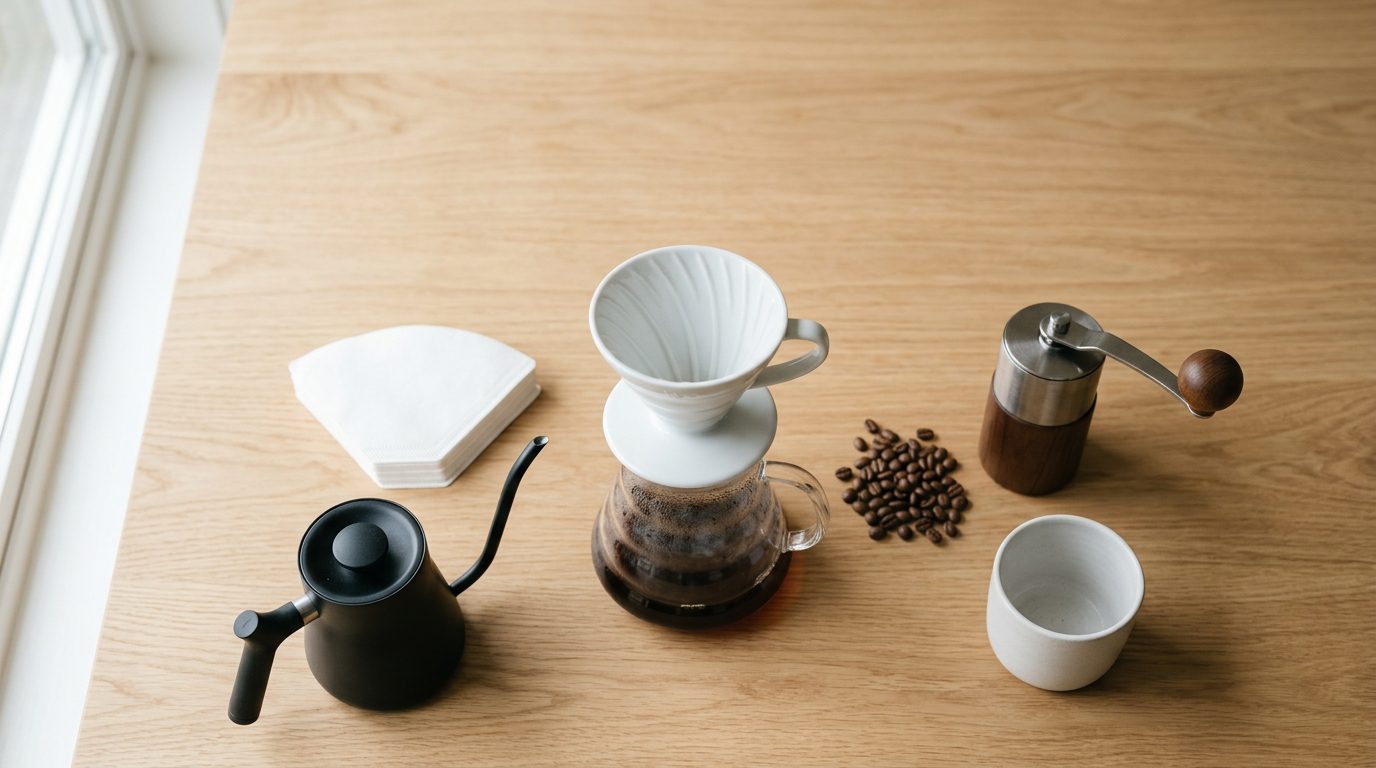
TL;DR
Japanese pour-over gear is cheaper in Japan than anywhere it is exported to, and the domestic market carries model numbers, colours and paper filters that never reach overseas distributors. The catch is not customs — it is voltage and glass. Buy the manual equipment, avoid anything with a plug, and think hard before shipping a glass server.
- Real prices, checked on 2 September 2026 — a Hario V60 dripper (1–2 cup) at ¥700 (US$4.83), Kalita KWF-155 wave filters, 50 sheets, at ¥286 (US$1.97), a Hario V60 Drip Kettle Air at ¥1,124 (US$7.76).[7]
- The same kettle, same model number, was ¥1,980 from an official shop listing the same day — a 76% spread on identical hardware. Compare before you buy.
- Japanese electrics are 100 V. Electric kettles, grinders and brewers work at reduced performance or not at all abroad. Manual gear has no such problem.
- Paper filters are the best consolidation filler in Japanese shopping — flat, light, cheap, and unavailable in Japanese sizes in most countries.
- Ceramic and glass break in transit. The plastic V60 is the version that survives the post, and it brews the same.
As of September 2026, the interesting thing about Japanese coffee equipment is not that it is exported badly — Hario and Kalita both sell internationally — but that the Japanese domestic catalogue is wider and much cheaper. Sizes, filter counts, colourways and accessory parts that overseas retailers never list are ordinary shelf stock in Japan, and the secondhand market for barely-used gear is enormous, because Japan’s home-brewing boom produced a lot of people who bought a full kit and used it twice.
What Is Actually Worth Importing
Drippers
The V60 cone and the Kalita Wave flat-bottom are the two shapes that define Japanese pour-over. Both are sold worldwide, but the Japanese-market versions carry the domestic model numbers and the full colour range, and secondhand units are everywhere. On 2 September 2026 a used Hario V60 for one to two cups was ¥700 and a new, unused V60 was ¥1,200 — below the price of a new one in most export markets.
Paper filters
This is the quiet reason to buy from Japan at all. Kalita KWF-155 wave filters, 50 sheets, were ¥286 on 2 September 2026 — and the wave filter is a size that is chronically hard to find outside Japan.[6] Filters are flat, weigh almost nothing, and fit into the empty spaces of a parcel you are already sending. If you own the equipment, buying a year of filters in one order is the single highest-value thing in this category.
Kettles, but only the manual ones
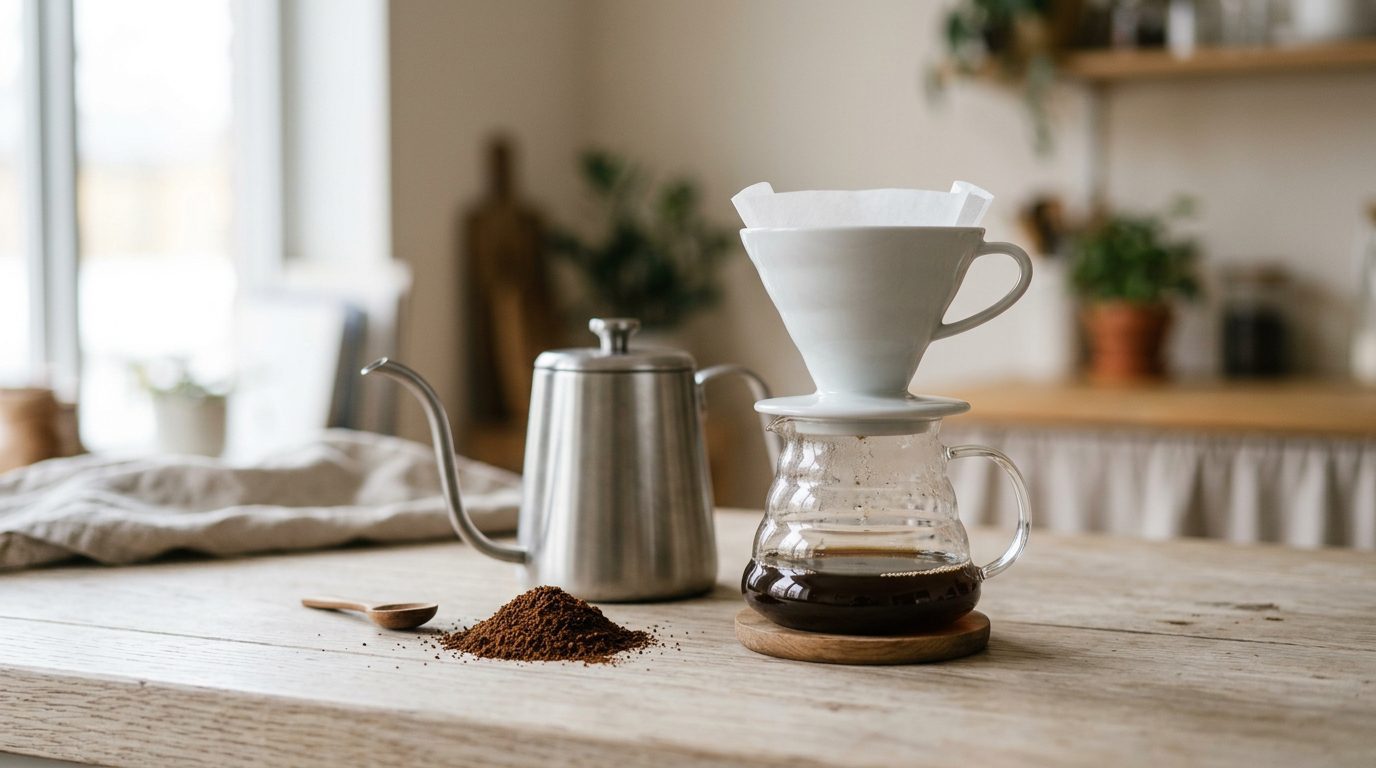
A gooseneck pour-over kettle with no electronics works identically anywhere in the world. The Hario V60 Drip Kettle Air (VKA-35-TB, 350 ml) was listing at ¥1,124 from one Rakuten seller and ¥1,980 from an official-shop listing on the same day — the same model number, a 76% price difference, which is the argument for searching rather than buying the first result.
Hand grinders
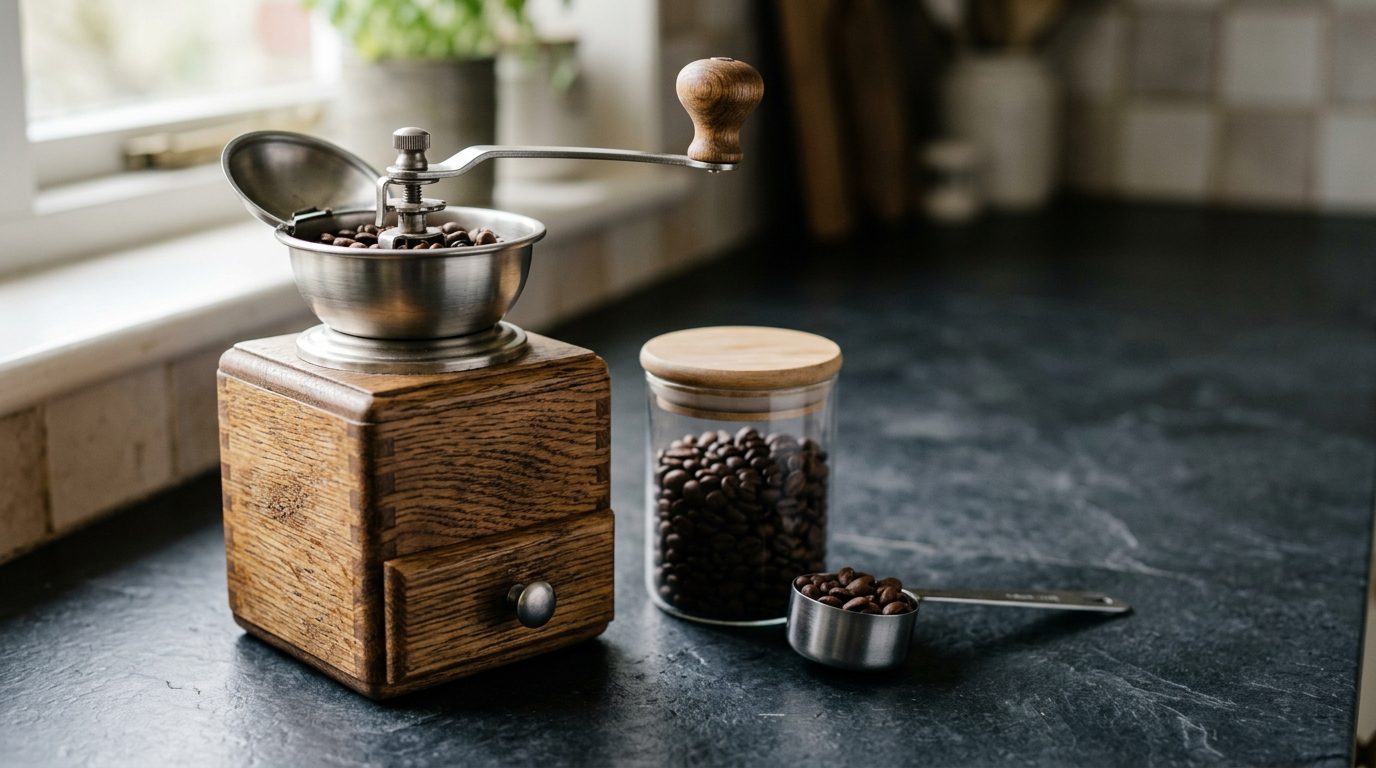
Japanese ceramic-burr hand mills are the export-market bargain that is still cheaper at home. A Hario ceramic slim mill (MSS-1TB) was ¥1,927 on Amazon Japan on 2 September 2026, and a Hario column-type hand mill (CMR-502C) ¥2,700. Manual, no plug, nothing to go wrong at a border.
What to leave behind
Electric grinders, electric kettles, drip machines, and anything with a heating element. See the next section for why.
The 100 V Problem
Japan’s domestic mains supply is 100 V — lower than the 110–120 V of North America and far below the 220–240 V of Europe, the UK and Australia.[1] The frequency also splits within Japan itself, at 50 Hz in the east and 60 Hz in the west.
For coffee equipment this plays out in three ways:
| Equipment | On 120 V (US/Canada) | On 230 V (EU/UK/AU) |
|---|---|---|
| Manual dripper, filters, server, scoop | Fine — no electrics | Fine — no electrics |
| Hand grinder | Fine | Fine |
| Electric kettle, heating element | Runs hot and fast; shortens element life | Destroys it, usually immediately |
| Electric grinder, drip machine | Motor runs over speed; timers drift | Destroys it |
| Anything with a display or a board | Unpredictable | Destroys it |
A step-down transformer solves the voltage but has to be rated well above the appliance’s wattage, and a 1,000 W kettle needs a transformer that costs more than the kettle. The honest advice for this category is the simple one: import the manual gear, buy the electric gear locally. You lose nothing, because the part of Japanese coffee equipment that is actually distinctive — the dripper geometry, the filter, the kettle spout — has no plug on it.
Glass, Ceramic and What Survives the Post
The second failure mode is breakage. A proxy service repacks your items into one parcel, but repacking is not the same as engineering a crate, and international parcels are handled roughly and stacked under weight.
- Plastic V60 — ships perfectly. Cheap, unbreakable, and thermally the most forgiving of the three materials.
- Ceramic dripper — ships with care. Sturdy but chips at the rim; ask for extra padding and put it in the middle of the parcel.
- Glass dripper or server — think twice. A range server is thin borosilicate glass. It can be shipped, but it wants to be surrounded by soft goods on all six faces, and it is the item most likely to arrive as a story rather than a server.
- Metal (stainless, copper) — ships perfectly, but weighs. A copper Kalita Wave is beautiful and dense; it is also the one item here where actual weight, not volume, drives the bill.
How to Buy Japanese Coffee Gear: Step by Step
- Step 1 — Search in Japanese with the model number.
ハリオ V60,カリタ ウェーブ, or the exact code (KWF-155,VKA-35-TB,MSS-1TB). This search covers Amazon Japan, Rakuten, Mercari and Yahoo Flea Market at once. - Step 2 — Compare across marketplaces before you commit. The identical kettle model was ¥1,124 and ¥1,980 on the same day. This is a category where the spread on new stock is enormous.
- Step 3 — Filter out anything with a power cord. If the listing photo shows a plug, it is a 100 V appliance.
- Step 4 — Buy the filters at the same time. Wave filters and V60 papers are the cheapest thing in the parcel and the hardest to buy at home. Buy a year’s worth.
- Step 5 — Order through the proxy. The service fee is displayed on each listing page — ¥300 on every listing checked for this article on 2 September 2026 — and it is charged per item, so a set sold as one listing carries one fee where three separate listings carry three.
- Step 6 — Consolidate and pad deliberately. The first six orders consolidate free, then ¥100 each. Ask for the ceramic and glass items to be padded; put the filters around them, which is both free padding and the thing you came for.
- Step 7 — Price the box, not the gear. Shipping is charged on the greater of actual and volumetric weight, packaging included.[2] Run the real dimensions through the shipping calculator.
The used-market angle
Japan’s secondhand market for coffee equipment is unusually good, and the reason is cultural: gear is described precisely, flaws are photographed, and “used twice” is a genuine condition rather than a sales line. Look for 未使用 (unused), 美品 (excellent condition) and 〇回使用 (used N times). A ¥700 V60 in excellent condition is functionally a new dripper; ceramics and plastics do not wear.
Customs and Shipping Rules
Coffee equipment is unrestricted in international mail — no batteries, no liquids, no aerosols.[3] Coffee beans are a different question and depend entirely on your destination’s agricultural import rules, so treat gear and beans as separate purchases. On duties, the United States revoked its US$800 de minimis exemption on 29 August 2025, making US-bound parcels dutiable at any value[4], and the EU applies a temporary flat fee to low-value imports.[5] Kitchenware declares cleanly; declare it as kitchenware.
Frequently Asked Questions
Is Japanese coffee gear actually cheaper bought from Japan?
For manual equipment and filters, yes, substantially — a used V60 at ¥700 and 50 wave filters at ¥286 on 2 September 2026 are well under export-market pricing. The saving is real but it is per-item, so it only survives the shipping cost if you buy several things at once.
Can I use a Japanese electric kettle in my country?
Not sensibly. Japanese appliances are built for 100 V mains.[1] On 230 V they fail immediately; on 120 V they run over-voltage and age fast. A step-down transformer rated for a kettle’s wattage costs more than the kettle. Import the manual gear instead.
What is the cheapest way to buy a V60 from Japan?
Buy a used plastic or ceramic one, add a year of paper filters to the same parcel, keep the order count at six or under so consolidation is free, and send it with something else you were buying anyway. Shipping a single dripper on its own is never the cheapest route — the parcel, not the dripper, is what you are paying for.
Will a glass coffee server survive international shipping?
Often, but not reliably. Thin borosilicate is the most fragile thing in this category. If you want the matching server, accept the risk knowingly, ask for heavy padding, and place it centrally in the parcel — or buy the server locally and import only the dripper and filters.
Are Japanese paper filters different from the export ones?
The sizes and pack counts differ by market, and the Kalita wave sizes in particular are hard to source outside Japan. This is why filters, not hardware, are frequently the best-value item in a Japanese coffee order.
The Bottom Line
Buy the parts of Japanese coffee culture that have no plug: the dripper, the manual kettle, the hand mill, and as many filters as you can fit around them. Compare listings before you buy — the same kettle was selling at a 76% spread on the same day — and consolidate so the parcel earns its shipping. Search live Japanese coffee gear on OneMall, and if you are still choosing a service, our cheapest Japan proxy comparison and the true-cost breakdown cover the fee maths.
Last updated: 2026-09-09.
If this is your first order out of a Japanese domestic-only listing, the best Japan proxy service guide covers how the service layer actually works, and the cheapest proxy fee comparison sets out per-item and per-order costs side by side.
Related guides
References
- TEPCO, corporate information on Japan’s electricity supply. https://www.tepco.co.jp/en/
- Japan Post, EMS rate schedule (all zones), which sets out how chargeable weight is determined. https://www.post.japanpost.jp/int/charge/list/ems_all_en.html
- Japan Post, nonmailable articles in international mail. https://www.post.japanpost.jp/int/use/restriction/index_en.html
- U.S. Customs and Border Protection, guidance on the suspension of de minimis duty-free treatment. https://www.help.cbp.gov/s/article/Article-1919
- European Commission, guidance on the temporary flat fee for low-value imports. https://taxation-customs.ec.europa.eu/news/guidance-and-legal-text-temporary-flat-fee-low-value-imports-which-will-apply-until-1-july-2028-2026-06-08_en
- Kalita, manufacturer of the Wave series drippers and KWF filters referenced above. https://www.kalita.co.jp/
- OneMall, marketplace used for the coffee-gear price observations recorded in this article on 2 September 2026. https://www.onemall.jp/