
 Shopping Guide
 HELP / FAQs



 By onemall
You do not have to visit Japan to collect Japanese capsule toys. Loose capsules, complete gacha sets and discontinued series are all listed on Japanese resale platforms, and a proxy service can buy them for you and ship them abroad. This guide explains where to look, why shipping is where most of the cost hides, and how to keep a gacha collection affordable from the US.
TL;DR
As of November 2026, overseas collectors can buy Japanese capsule toys (gacha) from Japanese resale platforms through a proxy, without visiting Japan. The core lesson: capsule toys are cheap to buy but expensive to ship, so consolidation and free storage are what make importing gacha economical.
- Look for loose capsules on Mercari Japan[1] and complete sets on Yahoo! Auctions[2].
- Avoid shipping a single capsule on its own; combine purchases into one parcel.
- Use 90 days of free storage after arrival (30 days after consolidation) to collect a full box before sending.
- US buyers now pay duties on all parcels since the $800 de minimis exemption ended 29 August 2025[3].
When Importing Japanese Capsule Toys Is Worth It
| Scenario | Rule of thumb | Why |
|---|---|---|
| Single low-priced capsule | Only buy it if it can join a parcel you are already consolidating | Shipping one alone can cost more than the toy |
| Complete set, especially discontinued | Usually worth comparing with US resale prices | Shipping is spread across several pieces |
| Higher-value sealed set | Compare the landed cost with US resellers before you buy | The price gap can be large, but duties apply |
| Per-item shipping | Falls as more items share one box | One parcel is charged once on its chargeable weight |
Buying Japanese capsule toys from overseas is not hard. The risk is losing money by treating gacha like normal merchandise. Capsule toys behave differently in shipping, storage, and consolidation, and a parcel holding only a few capsules can cost more to send than the toys are worth.
This guide is not about how fun gacha is. It covers the practical side of collecting Japanese capsule toys from the US using a proxy such as OneMall: what to buy, when to ship, and the rules that keep costs rational.
What a Gacha Budget Actually Buys
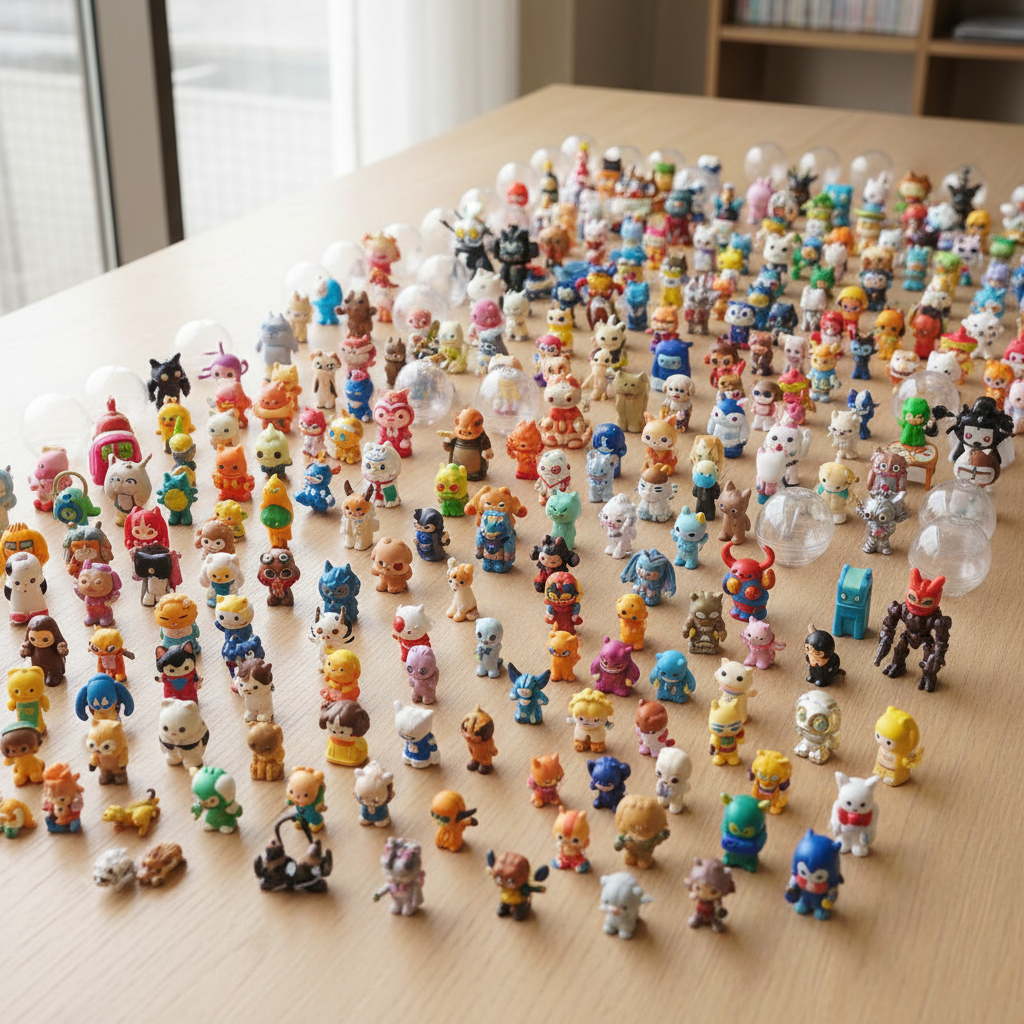
Gacha purchases on resale platforms fall into three groups: loose single capsules, complete or near-complete sets, and sealed sets from discontinued series. Loose capsules cost less to buy but carry a higher shipping cost per piece. Complete sets cost more up front but spread shipping across several pieces.
Discontinued series from makers such as Bandai and Kitan Club are where secondhand prices climb, because the only supply left is what collectors resell. Before buying a full set, check whether the listing includes every piece in the lineup and whether the pieces are still sealed.
Why Capsule Toys Are a Shipping Trap
Capsule toys are small, but they are not weightless. Plastic adds up fast, especially when sellers ship each item in its own padded envelope or small box.
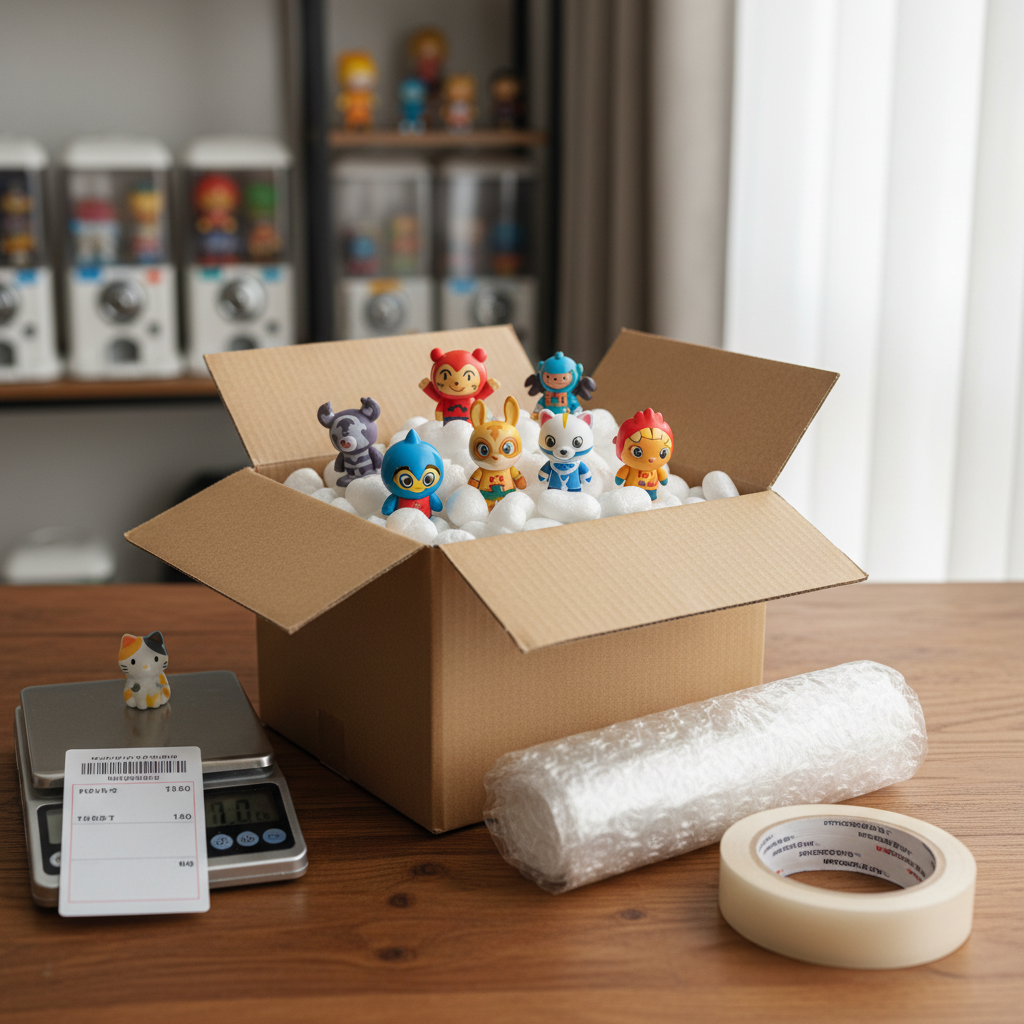
International shipping is charged on chargeable weight: the greater of the actual weight and the volumetric weight (length × width × height in cm ÷ 5,000) of the outer box the warehouse uses. A few capsules in a box with lots of filler can be billed at a higher weight than they actually are, so it pays to ship gacha only when you have enough to fill a box.
For US addresses, the shipping options are ECMS, Japan Post EMS (DDP) and DHL. Compare the quotes for your parcel before you pay; the cheaper method depends on the weight and size of the box.
How to Use a Proxy for Gacha (and Why Image Search Matters)
Capsule toys are a mess on resale platforms. Titles are inconsistent, sellers don’t always know the series names, and many listings are just photos with “ガチャ” in the title. An AI image search on the proxy’s site helps when the series name is unclear, especially for older Bandai and Kitan Club series where exact naming matters.
Search across platforms, too. Loose items are common on Mercari, while full sets often surface on Yahoo Auctions. On Yahoo Auctions, the proxy’s Scheduled Bidding places your bid automatically in the last 7 minutes before the auction ends, so an auction ending late at night US time does not need you awake.
The 90 days of free storage after arrival (30 days after consolidation) is what makes the strategy work. Hold purchases at the warehouse until you have enough for a full box, then consolidate: the first 6 orders consolidate free, then ¥100 per additional order. Without storage, collecting gacha internationally becomes pure friction.
The Limits: When a Proxy Isn’t the Right Tool
A proxy does not make gacha cheap on its own. If you are buying one or two capsules, especially modern series still sold in Japan, a US reseller can work out cheaper even at a markup.
Another limit is inspection. The proxy does not authenticate items or guarantee their quality. Capsule toys often arrive unassembled or still sealed in bags, so a factory flaw such as a paint defect or a missing part may only show once you open them. If you want to see condition before international shipping, add optional unboxing photos (¥500 or ¥700); for Mercari, Rakuma and Yahoo Flea Market orders, a wrong or missing item check is ¥200.
Over-consolidation can also backfire. A bigger, heavier box can raise the chargeable weight more than it saves. Check the quote before you ship, and split the parcel if two boxes come out cheaper.
A Cost Reality Check: When Gacha Is Worth Importing
Add up the landed cost before you buy: item price, the service fee of ¥300 per item on most marketplaces (from ¥200 per item on Yahoo Auctions and LinkBuy), any Japanese domestic shipping the seller charges, the item’s share of international shipping, and US duties.
On a low-priced capsule, the service fee alone can be close to the item price, so loose singles cost proportionally more to import than complete sets. A single capsule is only worth buying if it joins a parcel you are already consolidating. Discontinued complete sets are where importing is more likely to make sense, after you compare the landed cost with US resale prices.
“Almost complete” sets are the riskiest buys. The last missing piece can be hard to find and can cost more than the rest of the set.
Keeping Domestic Shipping Down
Each seller ships its own order to the warehouse, so buying loose pieces from many different sellers means many separate domestic shipments. Buying several pieces from the same seller, or a complete set in one listing, keeps this cost down.
Practical Rules for Starting a Gacha Collection
Buy sets first and singles later, not the other way around. Plan fewer, fuller shipments instead of many small ones. And don’t treat a cheap capsule as basically free: international shipping does not care how cute something is.
Building a gacha collection from the US is doable, and it can be fun. But it only works if you treat it like logistics, not luck. A proxy like OneMall is useful because it lets you control timing, weight, and consolidation. Without that control, capsule toys stop being cheap very fast.
Frequently Asked Questions
Where can I buy Japanese capsule toys online from the US?
Japanese resale platforms such as Mercari Japan and Yahoo! Auctions list loose capsules and complete sets. Neither ships abroad from individual sellers in the usual way, so many overseas buyers use a proxy; US buyers can also buy Mercari listings directly in the Mercari Global App, launched in the US in June 2026[5].
Why are capsule toys a shipping trap?
They’re small but not weightless, and sellers often ship each item in its own padded box. International shipping is charged on the greater of actual and volumetric weight, so consolidating several purchases into one well-filled box lowers the shipping cost per piece.
What does OneMall cost to use?
The service fee is ¥300 per item on most marketplaces and from ¥200 per item on Yahoo Auctions and LinkBuy. The first 6 orders consolidate free, then ¥100 per additional order, plus 90 days of free storage after arrival (30 days after consolidation) — which is what makes consolidation-based gacha collecting practical.
Will the warehouse check inside sealed capsules?
Items are not authenticated, and their quality is not guaranteed. Optional unboxing photos show what arrived, but a factory flaw inside a sealed capsule or bag may only show once you open it.
Do US buyers pay import duties now?
Yes. The US $800 de minimis exemption ended on 29 August 2025[3], so US-bound parcels are dutiable regardless of value. Japan Post resumed accepting US-bound mail on 14 April 2026[4].
Related guides
References
- Mercari Japan
- Yahoo! Auctions Japan
- Federal Register – Notice of Implementation of Executive Order 14324 (Suspending Duty-Free De Minimis Treatment)
- Japan Post – News: service updates (US-bound mail)
- Mercari, Inc. – Mercari Global App in the United States (press release, June 18, 2026; checked November 11, 2026)
Last updated: 2026-11-11.
Latest articles
- Zelda 40th Anniversary Switch 2 From Japan (2026): What You Can Import
- How to Buy from Amazon Japan and Ship Overseas in 2026 (Step-by-Step)
- Amazon Japan International Shipping: 4 Methods Compared
- Does Amazon Japan Ship to USA? Costs & How to Buy (2026)
- Azone Dolls Guide 2026: Buy EX☆Cute Dolls from Japan
- Umamusume: Pretty Derby Guide & How to Buy in Japan
- Dragonball Super Guide & Merch from Japan
- Anime Couple Merch: Valentine’s Day Gift Ideas