
 Shopping Guide
 HELP / FAQs


 By onemall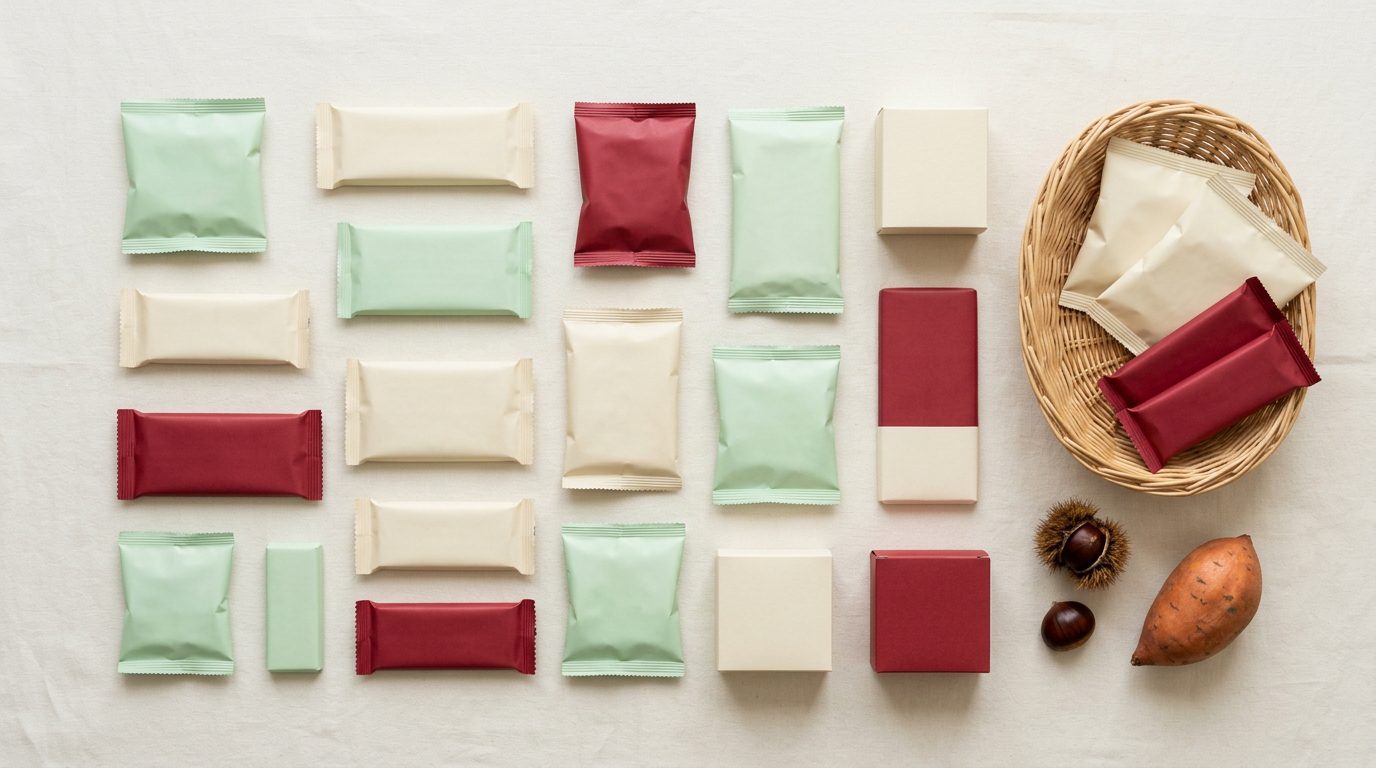
TL;DR
Shelf-stable Japanese snacks ship internationally without much trouble; anything chilled, frozen, fresh, or containing meat or dairy usually does not. Multi-flavor assortment boxes on Amazon Japan ran roughly ¥980–¥2,380 as of 31 August 2026, and buying a few of them through a proxy in one consolidated parcel is the cheapest way to get regional flavors that never leave Japan.
- Buy assortments, not single bags — a 9-box regional Pretz set was ¥1,385 and a 12-type Calbee/Meiji/Koikeya box ¥2,380 on 31 August 2026.
- Regional Kit Kat flavors are the classic Japan-only buy — assortment packs listed from about ¥980.
- ECMS does not accept food or supplements under US FDA rules, so pick EMS, DHL or sea mail for snack parcels.
- The EU bans personal imports of meat and dairy products from non-EU countries — that rules out a lot of Japanese savoury snacks.[1]
- Snacks are bulky, not heavy — you will be billed on volumetric weight, so pack them around something dense.
As of August 2026, the Japanese snack aisle is the most under-bought category in proxy shopping, and the reason is a myth: that food “cannot be shipped.” Most of it can. What actually blocks a parcel is a short list — refrigeration, meat, dairy, alcohol — and once you know that list, the autumn konbini shelf is as accessible as any figure or trading card.
What You Can Actually Buy That Never Leaves Japan
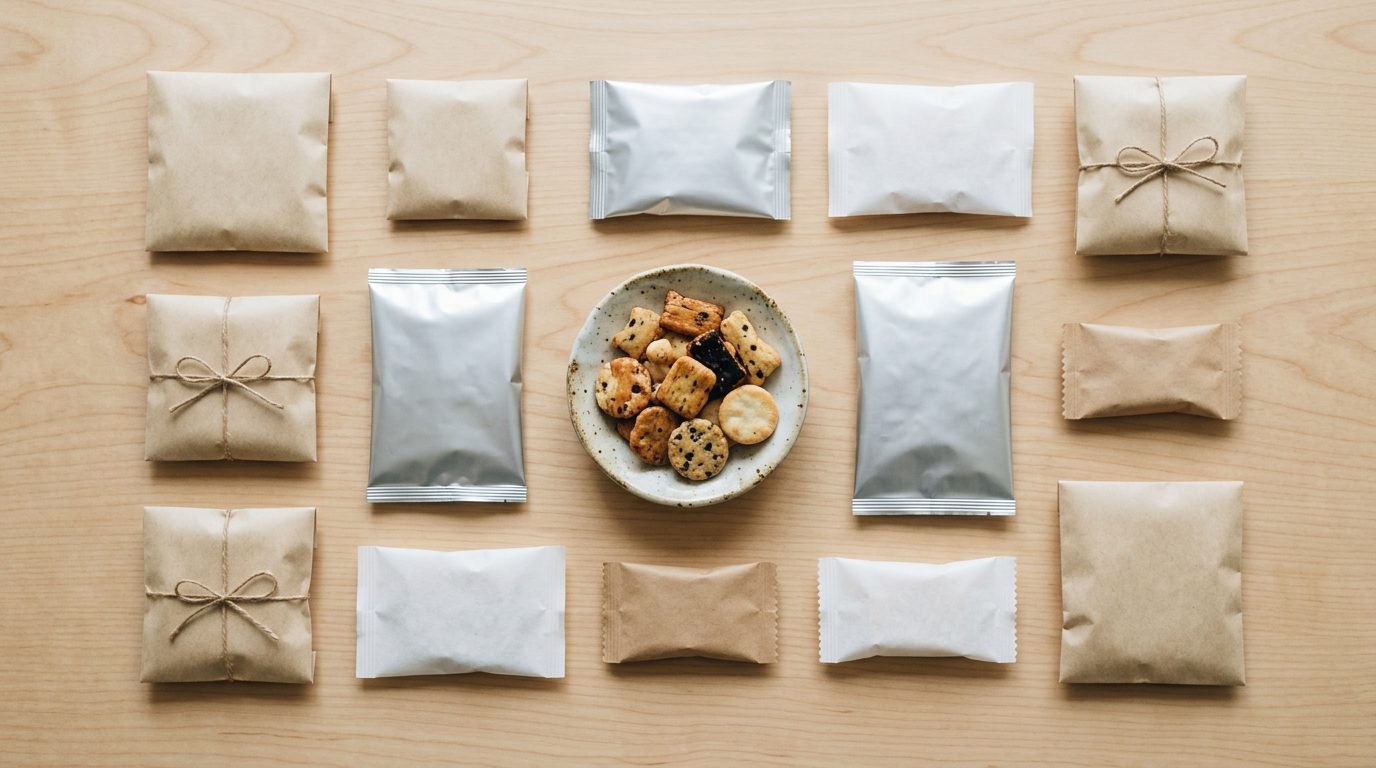
Japanese snack manufacturing runs on limited runs. Flavors rotate by season and by prefecture, and the regional editions sold in airports, station shops and tourist areas are produced specifically for domestic souvenir channels. They do not enter export catalogues.
Regional and seasonal Kit Kat
Nestlé Japan’s regional Kit Kat line is the most recognisable example: wasabi from Shizuoka, matcha from Kyoto, sake, Hokkaido azuki, and a rotating cast of prefecture-specific editions, sold as souvenir boxes rather than convenience-store singles. On Amazon Japan on 31 August 2026, mixed assortment boxes were listing from about ¥980, with larger share packs around ¥2,090.[2]
Autumn konbini exclusives
From September, Japanese convenience stores rotate into chestnut (kuri), sweet potato (satsumaimo), roasted matcha and Halloween-packaged editions of otherwise ordinary snacks. These sell for a few hundred yen each and disappear after roughly six to eight weeks. Practically, this means the autumn window is short: buy in October, not in December.
Regional assortment boxes
The best value per parcel is the multi-brand souvenir box. Real listings on 31 August 2026 included a 9-box regional Pretz set at ¥1,385, a 50-piece Kyushu assortment at ¥980, and a 12-type Calbee, Meiji and Koikeya assortment at ¥2,380.[2] One box gives you a dozen flavors and one order, which matters when consolidation is counted in orders.
What Ships and What Does Not
This is the part worth getting right before you order, because a rejected item wastes both the purchase and the domestic shipping.
| Category | Ships internationally? | Why |
|---|---|---|
| Sealed dry snacks, biscuits, candy, chocolate | Yes | Shelf-stable, commercially packaged, ingredients printed |
| Instant noodles (non-meat) | Usually | Check the sachet — many contain pork or beef extract |
| Tea, drink powders, seasonings | Yes | Dry goods, widely accepted |
| Anything containing meat or dairy | Often no | EU bans personal imports of meat and dairy from non-EU countries[1] |
| Chilled, frozen or fresh items | No | Cross-border mail has no cold chain |
| Alcohol and alcohol-filled confectionery | No | Restricted or prohibited in international mail[3] |
| Liquids in glass, aerosols | No | Dangerous-goods and packaging rules[4] |
Two operational rules matter on top of the legal ones. First, food and health supplements are not accepted via ECMS because of US FDA requirements — if your parcel contains snacks, choose EMS, DHL or sea mail instead. Second, check the best-before date (賞味期限) in the listing photo. Sea mail can take well over a month, which is fine for a biscuit with eight months left and pointless for something with six weeks.
Japan Post publishes the authoritative list of what cannot be sent by international mail at all, plus the country-by-country conditions that decide the rest.[4] Your destination’s own import rules are the second half of the answer: US Customs and Border Protection governs what arrives in the US[5], and Japan Customs governs what leaves Japan.[6]
How to Buy Japanese Snacks From Japan: Step by Step
- Step 1 — Search in Japanese. Use
お菓子 詰め合わせ(snack assortment),ご当地(regional), or期間限定(limited-time). This search on OneMall covers Amazon Japan, Rakuten, Mercari and Yahoo Flea Market at once. - Step 2 — Read the ingredient line for meat and dairy. Look for
乳製品(dairy products),肉エキス(meat extract) and豆乳(soy milk, which is fine) in savoury products. If in doubt, choose a sweet. - Step 3 — Prefer assortment boxes over singles. Fewer orders, more variety, better volumetric efficiency.
- Step 4 — Order through the proxy. The first payment covers the item price plus the service fee — a ¥300 per item on most marketplaces on Amazon Japan and Rakuten alike.
- Step 5 — Consolidate, and pack snacks around something dense. The first 6 orders consolidate free, then ¥100 each. Snack boxes are mostly air, so combining them with a heavier item uses space you are already paying for.
- Step 6 — Choose a shipping method that accepts food. EMS, DHL or sea mail — not ECMS. Check the real cost against actual and volumetric weight in the shipping calculator.
The volumetric weight trap
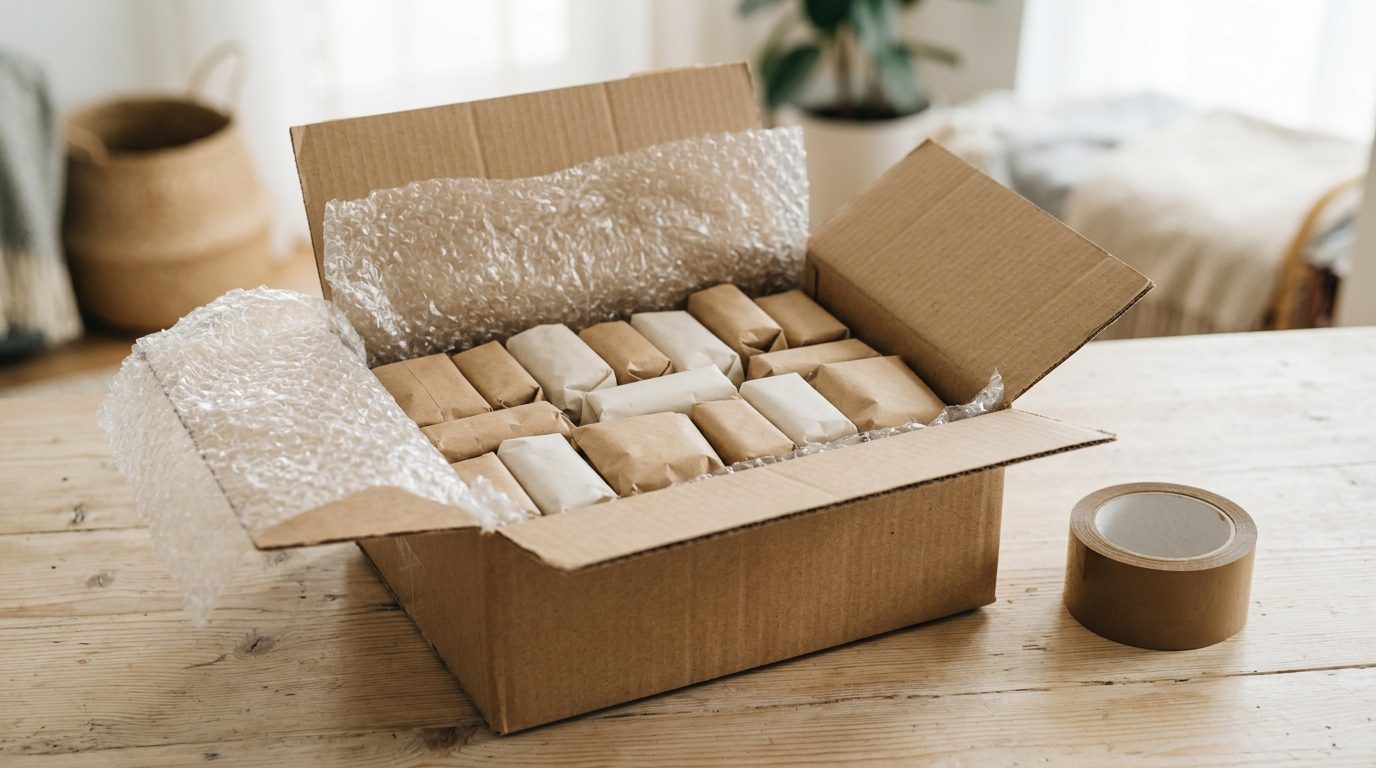
Snacks are the clearest case of a parcel that is billed on size rather than mass. Shipping is calculated on the greater of actual weight and volumetric weight, including packaging material.[7] A carton of crisp-style snacks can weigh 900 g and price like three kilograms. Two defences: buy the flat, densely packed formats (biscuit tins, boxed assortments, chocolate) over inflated bags, and add snacks to a parcel that already contains something heavy so you consume space you have already paid for. This is the single biggest lever on snack shipping cost, and it is why buying snacks alone is usually a bad deal while buying snacks alongside a figure order is a good one.
Where to Buy: Platform by Platform
| Platform | Best for | OneMall service fee |
|---|---|---|
| Amazon Japan | Assortment boxes, national brands, fast dispatch | ¥300 per item on most marketplaces |
| Rakuten | Regional souvenir shops and specialist confectioners | ¥300 per item on most marketplaces |
| Mercari / Rakuma | Discontinued and sold-out limited flavors | ¥300 per item on most marketplaces |
| Yahoo Auctions Japan | Bulk lots and clearance | 3% of bid plus tax, ¥200 minimum |
For the shops that never appear on any marketplace — prefecture-run souvenir sites, single-factory confectioners — Universal Shopping on OneMall will buy from any Japanese store. That is genuinely where the flavors you cannot find anywhere else live.
Customs and Duties on Food
Snacks are low-value, which historically meant they slipped under duty thresholds. That is less true than it was. The United States revoked its US$800 de minimis duty-free exemption on 29 August 2025, so US-bound parcels are dutiable regardless of value.[5] The EU applies a temporary flat fee arrangement to low-value imports.[8] Declare food honestly as food — misdeclaring it as something else is the fastest route to having the whole parcel held.
See also: for a snack gift box and what else to send for the holidays, read our Christmas gifts from Japan guide — gift ideas by recipient, what ships to the US and when to order.
Frequently Asked Questions
Can I really ship Japanese snacks internationally?
Yes, if they are commercially packaged and shelf-stable. Sealed candy, biscuits, chocolate, dry snacks, tea and most instant noodles travel fine. Fresh, chilled, frozen, meat-containing and dairy-containing items generally do not, and alcohol is restricted outright.[1][3]
What is the cheapest way to buy Japanese snacks from Japan?
Buy multi-flavor assortment boxes rather than individual bags, keep the order count at six or under so consolidation is free, and add the snacks to a parcel that already contains a denser item. Sea mail is the cheapest method if the best-before dates allow the transit time.
Why was my food parcel refused on ECMS?
ECMS does not accept food or health supplement products because of US FDA requirements. Choose EMS, DHL or sea mail for any parcel containing snacks.
Are regional Kit Kat flavors worth buying?
As a gift or a novelty, yes — they are genuinely Japan-only and the assortment boxes were listing from around ¥980 on 31 August 2026.[2] As an everyday purchase, less so, because you are paying international shipping on a chocolate bar. Bundle them with something else.
How long do Japanese snacks last in transit?
Check the 賞味期限 best-before date in the listing. Dry snacks typically carry four to eight months, which is comfortable for EMS and usually adequate for sea mail. Seasonal konbini editions often carry shorter dates, so ship those by air.
The Bottom Line
Japanese snacks are not hard to ship — they are just easy to ship badly. Skip the chilled and the meat-based, buy assortment boxes instead of singles, avoid ECMS, and put the boxes in a parcel that already has weight in it. Search live Japanese snack listings on OneMall, use the 90 days of free storage after arrival (30 days after consolidation) to build one parcel across the autumn limited-flavor window, and ship it once.
Last updated: 2026-09-28.
References
- European Union, Your Europe: taking animal products, food or plants with you. https://europa.eu/youreurope/citizens/travel/carry/meat-dairy-animal/index_en.htm
- Amazon Japan, marketplace used for the snack price observations in this article. https://www.amazon.co.jp/
- Japan Post, items that cannot be sent by EMS. https://www.post.japanpost.jp/int/question/108_en.html
- Japan Post, nonmailable articles in international mail. https://www.post.japanpost.jp/int/use/restriction/index_en.html
- U.S. Customs and Border Protection, guidance on the suspension of de minimis duty-free treatment. https://www.help.cbp.gov/s/article/Article-1919
- Japan Customs, export and import information. https://www.customs.go.jp/english/index.htm
- Japan Post, EMS rate schedule (all zones). https://www.post.japanpost.jp/int/charge/list/ems_all_en.html
- European Commission, guidance on the temporary flat fee for low-value imports. https://taxation-customs.ec.europa.eu/news/guidance-and-legal-text-temporary-flat-fee-low-value-imports-which-will-apply-until-1-july-2028-2026-06-08_en