
 Shopping Guide
 HELP / FAQs


 By onemall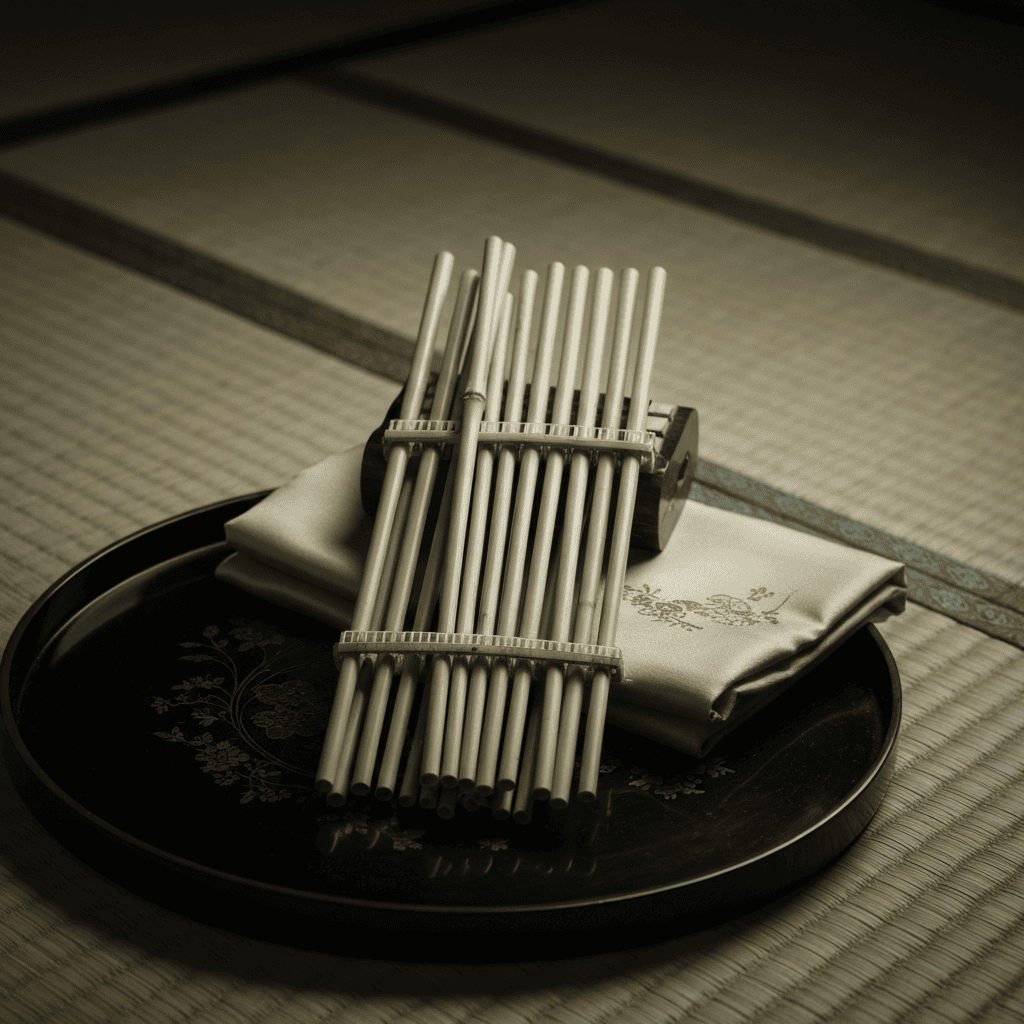
TL;DR
The shō is the 17-pipe bamboo mouth organ at the heart of Japanese gagaku court music. It sounds on both the inhale and the exhale, needs a heater to drive off breath condensation, and is essentially never sold retail outside Japan — which makes Japanese second-hand marketplaces, bought through a proxy, the cheapest realistic way to own one.
- What it is — a free-reed mouth organ of 17 bamboo pipes used in gagaku, Japan’s imperial court music, which UNESCO inscribed on its Representative List of the Intangible Cultural Heritage of Humanity.[1]
- The heater is not optional — condensation stops the reeds from speaking, so players warm the instrument between pieces; an electric warmer is part of the kit, not an accessory.
- Real price range — at the time of writing, a tuned playable instrument ran roughly $900–$2,000 on Japanese resale, with warmers around $90–$120 and notation books near $12.
- Buy “調律済み” — tuned and ready to play. An untuned or decorative shō is a repair project, and reed tuning is specialist work.
- Cheapest route — a proxy buys on Mercari or Yahoo! Auctions at ¥200–¥300 per order (as of 2026), stores it free for 90 days, and ships instrument, heater and scores together in one parcel.
Here’s the 2026 hook: the shō has quietly escaped the court. Its sustained tone clusters turn up in ambient records, film scores and contemporary concert music, and a generation of overseas players now wants one — while the instrument itself remains a hand-built, small-workshop object that no Japanese maker ships abroad on demand.
This guide explains, as of August 2026, what the shō instrument actually is, what a complete starter kit costs, what to check before you buy a second-hand one, and the cheap versus cheapest way to get it from a Japanese seller to your door.
What Is the Shō Instrument?
The shō (笙) is a mouth organ made of slender bamboo pipes set in a lacquered wind chamber, each pipe fitted with a metal free reed. Seventeen pipes stand in the chamber; fifteen of them speak, and two are traditionally silent, kept for the symmetry of the shape — a bundle of pipes usually likened to a phoenix folding its wings.
It came to Japan from the Chinese sheng during the Nara period and settled into gagaku, the court repertoire performed for well over a millennium and still maintained today by the Music Department of the Imperial Household Agency.[2] In an ensemble, the shō does not carry melody. It plays aitake — fixed tone clusters of five or six notes that shift slowly from one to the next, holding a shimmering harmonic field above the ryūteki flute and the hichiriki reed pipe. Because it sounds on both the in-breath and the out-breath, that field never has to stop.
If you have heard something you couldn’t place in a Japanese film score, a temple recording or an ambient album, it was probably this. The National Theatre’s gagaku programmes are the standard introduction to how the instrument functions in context.[3]
The Part Everyone Forgets: The Heater
Every shō player owns a warmer. Breath moisture collects inside the pipes and the reeds stop responding, so the instrument is held over gentle heat — traditionally a small charcoal brazier, in practice today an electric warmer built specifically for the purpose — before and between pieces.
This is why a shō listing at a suspiciously good price is often not the bargain it looks like: the working kit is the instrument, a warmer, a bag or case, and notation. Budget for all four. Japanese sellers list warmers separately, usually as 鳳笙用電気コンロ, in the 300W–600W range.
What a Complete Shō Kit Actually Costs
Prices below are real Japanese second-hand listings at the time of writing, which is the most honest guide available — new instruments are made in small workshops and quoted on request rather than published.
| Item | Japanese search term | Typical second-hand price | Notes |
|---|---|---|---|
| Shō, tuned and playable | 笙 調律済み | $900–$2,000 | The whole purchase decision; insist on “調律済み” |
| Electric warmer | 鳳笙用 電気コンロ | $85–$125 | Essential, not optional; 100V Japanese mains |
| Notation / scores | 雅楽 鳳笙譜 | $10–$15 | Traditional notation, not Western staves |
| Storage bag | 笙の布袋 | $20–$30 | Protects the lacquer and the pipe alignment |
| Beginner gagaku set (other winds) | 雅楽 入門セット | $25–$35 | Plastic ryūteki sets are the usual starting point |
Live Japanese listings you can grab through OneMall right now
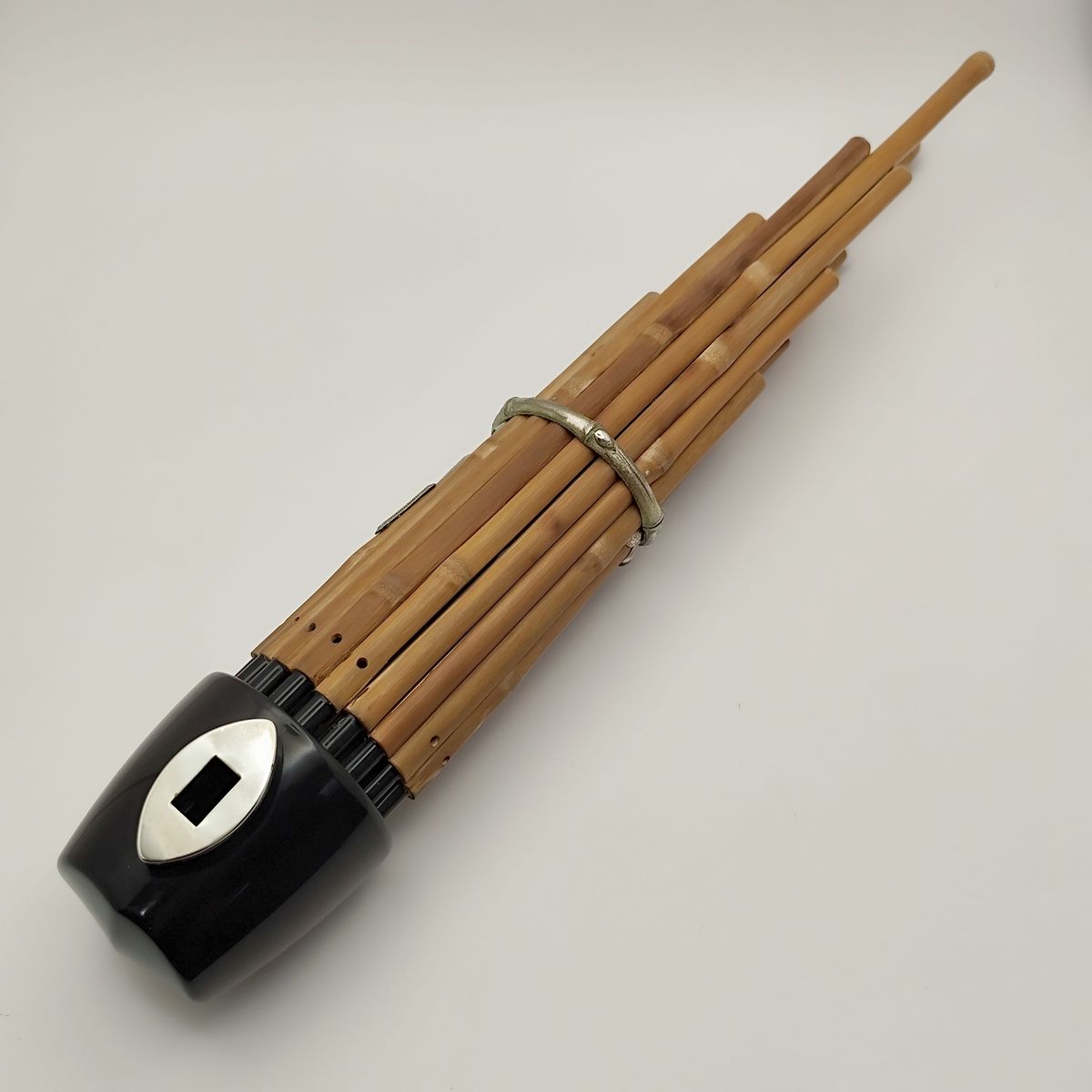


Live listings at the time of writing; Japanese second-hand stock moves fast.
How to Buy a Shō from Japan: The Full SOP
- Step 1 — Search in Japanese. 「笙」alone is noisy; 「笙 雅楽」and 「鳳笙」are the terms that return instruments. Add 「調律済み」for tuned, 「即吹けます」for ready-to-play. Only have a photo from a concert? AI Image Search will match the listing.
- Step 2 — Read the seller’s description like a musician. 調律済み = tuned, 要調整 = needs adjustment, 観賞用 = display only, 未確認 = seller has not tested it. A display-only shō is furniture.
- Step 3 — Ask for photos of the reeds and pipe bases. Corrosion or a cracked wind chamber is a specialist repair, and gagaku reed tuning is not general woodwind work.
- Step 4 — Buy the warmer in the same window. Warmers are cheap and common on Japanese resale, and shipping one on its own later costs more than the item.
- Step 5 — Order through the proxy. Pay stage one — item price plus service fee: a flat ¥300 on Mercari, whatever the item costs (as of 2026).[4]
- Step 6 — Add unboxing photos. On a lacquered antique-style instrument, photographs taken in the Japanese warehouse are your only pre-shipping condition record.
- Step 7 — Consolidate. Instrument, warmer, bag and scores are separate orders from separate sellers. The first 6 orders combine free; each additional order is ¥100 (10 orders = ¥400), and everything holds in 90 days of free storage while you assemble the kit.
- Step 8 — Choose the carrier carefully. A shō is light but bulky and fragile, so the parcel prices on volumetric weight. EMS or DHL with tracking beats Sea Mail here — months in a humid container is not what a bamboo instrument wants.
Import, Voltage and Humidity: Three Things to Get Right
The electric warmer is built for Japan’s 100V mains; run it through an appropriate converter rather than assuming it will behave on 120V or 230V. On the import side, the United States revoked its $800 de minimis exemption on 29 August 2025, so a US-bound instrument is dutiable regardless of value[5] — and if your destination restricts untreated bamboo or wooden goods, check that before you buy, alongside the Japanese export side.[6] Japan Post resumed US-bound service on 14 April 2026, with EMS rates published by destination.[7]
Once it arrives, the instrument’s enemy is dryness, not travel: bamboo and lacquer crack in low humidity. Store it in its bag, away from radiators, and warm it before you play rather than after.
The Bottom Line
No Japanese workshop is going to ship you a shō because you asked nicely in English — but Japanese sellers list them regularly, and a proxy turns that domestic-only market into a normal online purchase. OneMall buys on Mercari, Yahoo! Auctions, Rakuten and Amazon Japan from one account, and can order from any specialist Japanese instrument shop through LinkBuy when the seller isn’t on a marketplace at all. Everything sits in 90 days of free storage until the kit is complete, then ships home in one consolidated, inspected parcel. Buying other Japanese instruments too? Our Digimart guide covers Japan’s used-instrument marketplace, and the Japanese guitar guide covers the same ground for strings. New to all this? Start with the proxy buyer’s checklist. Ready? Search live shō listings on OneMall.
Frequently Asked Questions
How many pipes does a shō have, and do they all sound?
Seventeen bamboo pipes, of which fifteen have working reeds. The remaining two are silent and kept for the instrument’s symmetry — a shape traditionally read as a phoenix at rest.
Why do shō players heat the instrument?
Breath condenses inside the pipes and damps the metal free reeds, so the instrument is warmed over a small charcoal brazier or, far more commonly today, an electric warmer before and between pieces. Without it, notes drop out mid-performance.
Can a beginner learn the shō outside Japan?
Yes, though notation and tuition are the harder half. Gagaku is documented and taught in Japan by the Imperial Household Agency’s musicians and at national theatre programmes,[2][3] and traditional notation books are cheap and easy to buy second-hand — the instrument is the expensive part.
What’s the cheapest way to buy a shō from Japan?
Buy the instrument and its accessories from Japanese second-hand marketplaces through a proxy, hold them in free storage until you have everything, then ship once. Service fees are a flat ¥300 per Mercari order (as of 2026), and consolidating the first 6 orders costs nothing.
Is a cheap shō listing worth taking a chance on?
Only if the seller states it is tuned and playable. Listings marked 観賞用 (for display) or 要調整 (needs adjustment) are repair projects, and shō reed work is a specialist craft with very few practitioners outside Japan.
References
- UNESCO, Intangible Cultural Heritage — Gagaku. https://ich.unesco.org/en/RL/gagaku-00265
- Imperial Household Agency of Japan, Gagaku (court music). https://www.kunaicho.go.jp/e-culture/gagaku.html
- Japan Arts Council, National Theatre (traditional performing arts programmes). https://www.ntj.jac.go.jp/en/
- Mercari, official marketplace site. https://www.mercari.com/
- U.S. Customs and Border Protection, import basics and duty guidance. https://www.cbp.gov/trade/basic-import-export
- Japan Customs, English portal. https://www.customs.go.jp/english/
- Japan Post, EMS international service and rate tables. https://www.post.japanpost.jp/int/ems/index_en.html
Last updated: 2026-09-19.