
 Shopping Guide
 HELP / FAQs


 By onemall
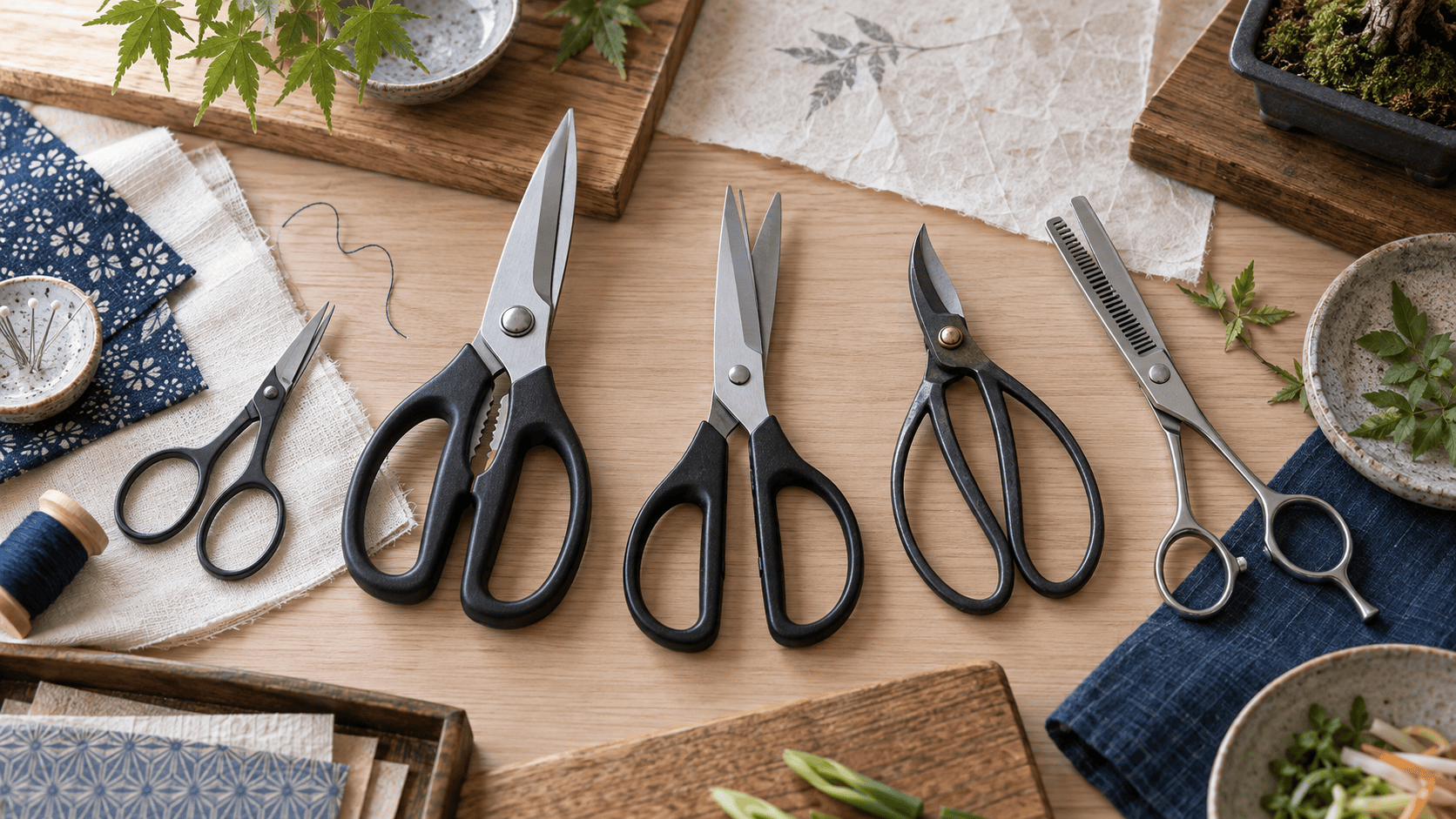
Best Japanese Scissors Brands (2026): Sewing, Kitchen, Hair, Craft and Garden Shears
TL;DR
The best Japanese scissors brand depends on the material and the cut. KAI and ALLEX cover broad household and craft needs; Shozaburo is a classic tailoring name; Chikamasa and ARS focus on plants; Silky serves office and needlework users; KASHO, Hikari, Mizutani and Joewell target professional hair cutting. Buy by exact model, blade geometry, handedness and serviceability—not by country name alone.
- Best broad starting points: KAI and ALLEX.
- Fabric: compare Shozaburo, KAI and Silky by length and hand.
- Kitchen: prioritize cleaning, corrosion care and whether blades separate.
- Salon: do not choose expensive shears without checking fit and an authorized sharpening route.
As of September 25, 2026, “Japanese scissors” covers several unrelated tool markets. A forged tailor’s shear, removable kitchen pair, bonsai shear and convex-edge salon scissor should not share one ranking. Seki maker Hayashi Cutlery says it has worked with blades for more than 60 years and lists household, office, food-processing and medical cutting tools.[1] That range illustrates why intended use must come first.
Best Japanese Scissors Brands by Use
| Brand or maker | Best known for | Buying note |
|---|---|---|
| KAI / KASHO | Kitchen, craft, sewing and professional hair shears | Choose the product family first; KASHO is the salon-focused line. |
| Shozaburo | Traditional tailoring and fabric shears | Heavy forged forms suit long fabric cuts; confirm size and handedness. |
| ALLEX (Hayashi Cutlery) | Office, craft, non-stick and specialist scissors | Seki-based maker with recognizable all-metal and modern utility designs. |
| Silky (Marusho Industry) | Office, craft, embroidery and household scissors | Not the similarly named saw brand; search scissors with the model number. |
| Chikamasa | Gardening, floristry, grape, bonsai and craft shears | Match blade coating and spring/handle design to sap, stems or fine work. |
| ARS | Pruning, floral and harvesting tools | Check maximum cutting diameter; pruning shears are not kitchen scissors. |
| Tajika Haruo Ironworks | Hand-forged household and tailoring scissors | Small-production craft appeal; inspect pivot, tips and blade alignment. |
| Mimatsu | Kitchen and removable-blade household shears | Useful when full cleaning matters; confirm reassembly and dishwasher guidance. |
| Green Bell | Grooming, nail and nose-hair scissors | Buy the exact grooming geometry rather than a generic small pair. |
| Hikari / Mizutani / Joewell | Professional hair-cutting and thinning shears | Fit, offset, steel, tooth count and authorized servicing matter. |
This brand map covers the query cluster behind best Japanese scissors brands, Japanese shear brands, Japanese scissor company, Japanese hairdressing scissors brands and Japanese sewing scissors. It is not a claim that every model is made in Japan. Read the country-of-origin field on the exact listing, because a Japanese parent brand may use multiple factories or product tiers.
Japanese Scissors Types and Search Terms
| Use | Japanese search terms | What to compare |
|---|---|---|
| Sewing and tailoring | 裁ちばさみ / 洋裁鋏 | Long clean cut, weight, blade length, right/left-hand version |
| Embroidery and thread | 糸切りばさみ / 握り鋏 | Fine tip, light action, protective cap |
| Kitchen and poultry | キッチンばさみ / 料理ばさみ | Food-safe care, removable blades, serration, corrosion resistance |
| Office and craft | 事務用はさみ / クラフトはさみ | Adhesive resistance, tip shape, cardboard rating |
| Bonsai and gardening | 剪定鋏 / 芽切鋏 / 園芸鋏 | Stem capacity, spring, sap resistance, lock |
| Hair cutting | 理美容鋏 / カットシザー | Blade length, handle offset, convex/bevel edge, service route |
| Thinning/texturizing | セニングシザー | Tooth count and removal ratio; do not infer from appearance |
| Left handed | 左利き はさみ | A true reversed blade geometry, not only symmetric handles |
Japanese scissors are hasami (はさみ or 鋏). The English word “shears” usually signals longer blades, heavier work or a professional category, but sellers use the terms inconsistently. Add the task in Japanese: 裁ちばさみ for fabric, キッチンばさみ for food preparation, 剪定鋏 for pruning, and 理美容鋏 for salon tools.
Best Japanese Sewing and Tailoring Scissors
Shozaburo tailoring shears are the traditional reference point many shoppers encounter, while KAI and Silky offer modern alternatives across price levels. For the best Japanese fabric scissors, compare total length, cutting length, weight and the shape of both finger bows. A heavy pair can track through long cloth cuts but tire a small hand. Keep fabric scissors away from paper, wire and packaging so the edge remains consistent.
For embroidery, sashiko and thread trimming, smaller Japanese sewing scissors or thread snips are easier to control. Search 糸切りばさみ, 握り鋏 and 刺繍ばさみ. A sharp exposed point needs a sheath. Left-handed users should verify that the blades—not merely the handles—are reversed, so the cutting line remains visible.
Best Japanese Kitchen Scissors and Shears
The best Japanese kitchen scissors are easy to clean and appropriate for the food being cut. Removable blades expose the pivot for washing, but only if the maker intends them to separate. Serrations help grip skin and slippery packaging; they also require specialist sharpening. Do not use food scissors for metal, garden stems or bones beyond the stated capacity.
KAI and Mimatsu are useful search anchors, alongside Japanese-made kitchen shears from regional cutlery makers. Check stainless grade claims, pivot construction, dishwasher instructions and whether bottle-openers or nut-crackers create awkward dirt traps. “Japanese steel” is not the same claim as “made in Japan.”
Japanese Hair Cutting, Barber and Thinning Scissors
Professional hair scissors are the most specification-sensitive category. KAI’s KASHO literature describes professional shears built from different stainless alloys.[2] Other searched Japanese hair scissors brands include Hikari, Mizutani and Joewell. Compare 5.0, 5.5, 6.0 and 7.0-inch sizes, straight versus offset handles, finger-rest design, convex versus bevel edges, and local servicing.
For Japanese thinning scissors, tooth count and advertised removal ratio affect the result. A 30-tooth model is not automatically interchangeable with a 40-tooth texturizer. Counterfeit risk and altered used blades are practical concerns, so favor identified sellers, serial/model information and clear pivot and edge photos; OneMall does not independently authenticate listings.
Japanese Bonsai, Gardening and Floral Shears
Chikamasa lists horticulture and agriculture scissors, while its company profile dates the business to 1910 and describes manufacturing across garden, floral, craft and office blades.[3][4] ARS is another common Japanese pruning search. For bonsai, distinguish long-handle trimming scissors from bypass pruning shears and bud shears. Blade coating, spring strength and a one-hand lock can matter more than decorative finish.
Clean sap promptly, dry carbon-steel edges, and use the maker’s recommended oil. Never force a stem larger than the stated capacity. A chipped pruning edge and a loose salon pivot need different repair specialists.
How to Judge Japanese Scissors Quality
- Define the material: cloth, thread, food, paper, hair or live stem.
- Check geometry: blade length, tip, serration, edge style and true left-hand construction.
- Inspect the pivot: ask for closed-tip alignment and both blade faces on used pairs.
- Plan maintenance: confirm cleaning, oiling and a suitable sharpener before buying.
- Verify origin: treat brand, steel origin and assembly country as separate facts.
- Check destination rules: sharp tools may face carrier or customs restrictions; eligibility depends on the item and destination.
How to Buy Japanese Scissors from Japan
Search the brand plus model number, then add the Japanese use term. Compare active and sold listings, included cases, edge condition and return terms. OneMall can purchase eligible listings from supported Japanese marketplaces or accept an eligible Japanese store URL through LinkBuy. Items requiring a lottery, purchase limit, Japanese identity verification or merchant account cannot be purchased.
Service fees are ¥300 per item on most marketplaces; from ¥200 per item on Yahoo Auctions and LinkBuy. The first six orders consolidate free; each additional order costs ¥100. Storage is free for 90 days after arrival (30 days after consolidation). Payment is by Visa, Mastercard or PayPal in USD. Final eligibility and shipping options depend on the exact blade and destination rules.
Start with Japanese scissors listings, or compare the best Japan proxy services and proxy costs by landed cost.
Frequently Asked Questions
What are Japanese scissors called?
Hasami is written はさみ or 鋏. Add the task term because a generic search mixes household, kitchen, sewing, garden and salon tools.
Are Japanese scissors made of Japanese steel?
Some are, but neither the brand name nor “Japanese steel” proves assembly origin. Read the exact model specification and packaging.
What are the best Japanese hair scissors?
There is no universal best pair. KASHO, Hikari, Mizutani and Joewell are useful professional starting points, but hand fit, size, edge, service and technique decide suitability.
Can Japanese scissors be sharpened?
Usually, but convex salon edges, serrations and specialized garden tools need the appropriate technician. Poor grinding can permanently change geometry.
Last updated: 2026-09-25.
References
- Hayashi Cutlery / ALLEX company profile. https://www.allex-japan.com/company
- KAI KASHO professional shears. https://www.kai-group.com/contents_file/global/n_pdf/biz/en_kasho.pdf
- Chikamasa international site. https://www.chikamasa.com/
- Chikamasa company profile. https://www.chikamasa.co.jp/html/profile.html