
 Shopping Guide
 HELP / FAQs


 By onemall
You’ve found a 2,000 yen item, but the parcel quote came back higher than you expected. If a quote looks high, check the box before the scale. Here is how carriers and proxies turn a box into a shipping price, with live quotes that show the effect in dollars, so you can keep shipping from Japan predictable.
TL;DR
As of October 2026, parcels from Japan are billed on chargeable weight: the greater of actual weight and volumetric weight. At OneMall, volumetric weight is length × width × height in centimetres ÷ 5,000, measured on the outer box the warehouse ships, so a light item in an oversized box can cost more than a heavy one in a small box.
- Chargeable weight = whichever is greater: actual weight or volumetric weight.
- Volumetric weight (kg) = L × W × H (cm) ÷ 5,000 — a 50 × 40 × 15 cm box counts as 6 kg.
- On 2026-10-10, the same 1 kg item quoted $22.78 by ECMS to the US in a 20 × 15 × 15 cm box and $61.14 in a 50 × 40 × 15 cm box.
- Three small parcels packed into one box quoted $26.74 by ECMS instead of $57.70 shipped separately; the first 6 orders consolidate free, then ¥100 per additional order.
Actual weight vs. volumetric weight
When you think of shipping costs, you probably think of a scale. Heavier equals more expensive — but that is only half the story. Carriers care about two things: weight and space.
- Actual weight: what the parcel weighs on a scale, packaging included. If your box of books weighs 5 kg, the actual weight is 5 kg.
- Volumetric weight (or dimensional weight): how much space the parcel takes up, converted into kilograms from the box’s length, width and height. A large, light box still fills cargo space, so it is billed as if it were heavier.[1]
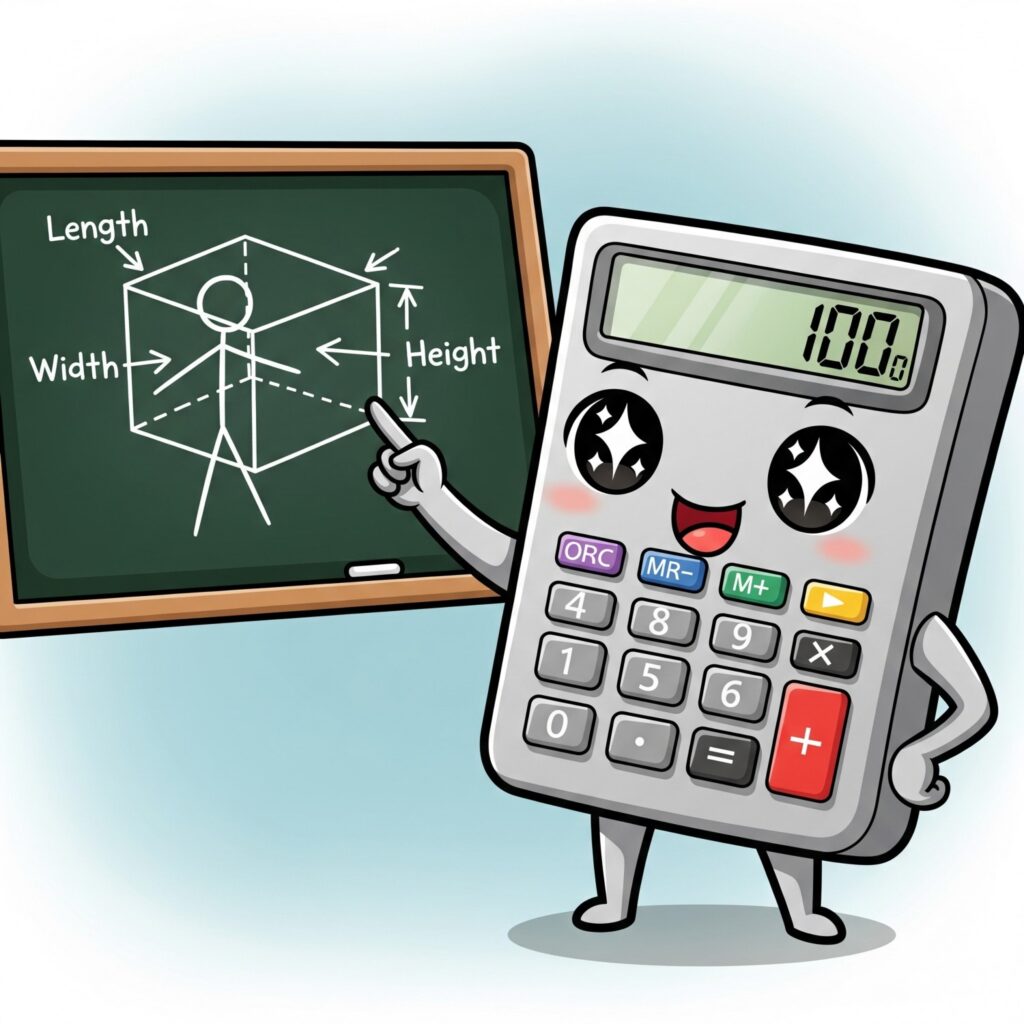
Why does this matter? You are charged for whichever is greater. A huge, mostly empty box is a budget killer — you are paying to ship air.
How to calculate volumetric weight
- Step 1 — Measure the outer box in centimetres: length, width and height. Use the box the parcel will actually ship in, not the product itself.
- Step 2 — Multiply the three sides together.
- Step 3 — Divide by 5,000 to get volumetric weight in kilograms.
- Step 4 — Compare it with the actual weight. The larger number is your chargeable weight.
| Parcel | Actual weight | Outer box | Volumetric weight | You are charged on |
|---|---|---|---|---|
| Box of manga (small, dense) | 5 kg | 30 × 22 × 15 cm | 1.98 kg | 5 kg (actual) |
| Giant plushie (large, light) | 1 kg | 50 × 40 × 15 cm | 6 kg | 6 kg (volumetric) |
Worked examples using the L × W × H ÷ 5,000 formula.
The same rule in US units
US carriers apply the same principle in inches and pounds. For USPS Priority Mail, parcels larger than one cubic foot pay on actual or dimensional weight, whichever is greater, with cubic inches divided by 139 to get pounds.[1] Converted to metric units, 139 cubic inches per pound is about 5,020 cubic centimetres per kilogram[2] — close to the 5,000 used here.
Common items from Japan: example box sizes
The box, not the product, sets volumetric weight. These example boxes show how quickly bulky items climb:
| Item | Example outer box | Volumetric weight |
|---|---|---|
| Sneakers in their shoebox | 35 × 25 × 13 cm | 2.28 kg |
| Boxed 1/7 scale figure | 40 × 30 × 25 cm | 6.00 kg |
| Set of 10 manga volumes | 20 × 15 × 20 cm | 1.20 kg |
| 40 cm plush toy | 45 × 35 × 25 cm | 7.88 kg |
Example box sizes for illustration; the warehouse measures the box it actually ships. If the item weighs less than its volumetric figure, the volumetric figure is what you pay for: bulky, light items such as plush toys and boxed figures tend to be billed on volume, while dense items such as books tend to be billed on actual weight.
What a bigger box costs: live US quotes
Here is the same idea in dollars, from OneMall’s shipping calculator for a United States address.
| Parcel | Volumetric weight | ECMS (10–20 days) | DHL (3–7 days) |
|---|---|---|---|
| 1 kg item, 20 × 15 × 15 cm box | 0.9 kg | $22.78 | $38.19 |
| 1 kg item, 50 × 40 × 15 cm box | 6.0 kg | $61.14 | $96.05 |
| 3 × 500 g parcels shipped separately, 15 × 10 × 10 cm each | 0.3 kg each | $57.70 | $109.78 |
| The same 3 items consolidated, 30 × 25 × 10 cm | 1.5 kg | $26.74 | $43.33 |
Quotes read 2026-10-10 at 08:09 UTC. Transit times are the carrier’s estimated average after dispatch, not a delivery promise.
How to keep volumetric weight down
- Consolidate small orders. One tight box beats several small ones. With OneMall the first 6 orders consolidate free, then ¥100 per additional order.
- Check the packaging before you buy. Bulky retail packaging adds volume, so factor the box size into the price of large, light items.
- Pick the method after you know the chargeable weight. On the US lane, OneMall offers ECMS (10–20 days, estimated average) and DHL (3–7 days, estimated average).
Shipping is only one line of the bill. For service fees and the full cost of a proxy order, see our cheapest Japan proxy fee comparison; for carrier trade-offs, our ECMS vs DHL comparison.
Duties are separate from shipping
Volumetric weight sets the shipping price, not the import duty. For US addresses, since August 29, 2025, parcels of any value go through customs and pay applicable duties, taxes and fees — the $800 de minimis exemption no longer applies.[3][4] The duty depends on what the item is and where it was made — its tariff classification[5] and country of origin — not on the size of the box.
Frequently Asked Questions
What is volumetric weight?
Volumetric (dimensional) weight measures how much space a parcel occupies, calculated from its length, width and height. Carriers use it because a large but light box still takes up cargo room.
Am I charged on actual or volumetric weight?
Whichever is greater. A dense box of books is usually billed on actual weight; a big, light plushie is billed on volumetric weight.
How do I calculate volumetric weight for a box from Japan?
Multiply the outer box’s length, width and height in centimetres and divide by 5,000 to get kilograms. A 30 × 25 × 10 cm box works out to 1.5 kg.
What does OneMall charge besides shipping?
The service fee is ¥300 per item on most marketplaces and from ¥200 per item on Yahoo Auctions and LinkBuy. The first 6 orders consolidate free, then ¥100 per additional order, and items are stored free for 90 days after arrival (30 days after consolidation). You can start an order here.
How can I lower my shipping cost?
Consolidate orders into one tight box, factor bulky packaging into the price before you buy, and choose the shipping method that matches your urgency once you know the chargeable weight.
Last updated: 2026-10-10.
References
- USPS Postal Explorer — Domestic Mail Manual 123, Priority Mail: Dimensional Weight Price for Low-Density Parcels. pe.usps.com
- NIST — Guide to the SI, Appendix B.8: Factors for Units Listed Alphabetically. nist.gov
- The White House — Executive Order 14324, Suspending Duty-Free De Minimis Treatment for All Countries (July 30, 2025). whitehouse.gov
- Federal Register — Notice of Implementation of Executive Order 14324 (September 2, 2025). federalregister.gov
- U.S. International Trade Commission — Harmonized Tariff Schedule of the United States. hts.usitc.gov