
 Shopping Guide
 HELP / FAQs



 By onemall
Last updated: 2026-10-27.
TL;DR
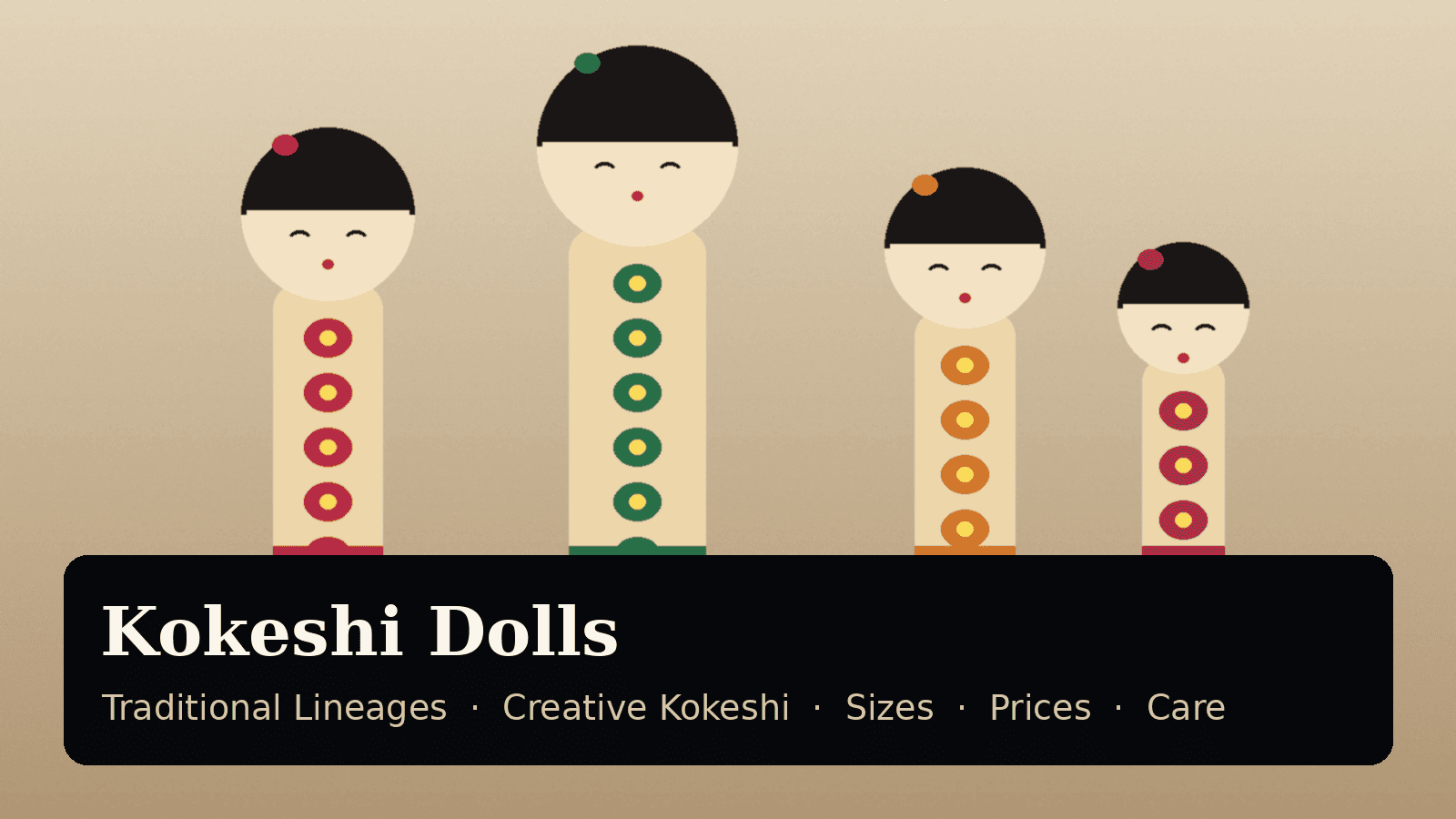
Kokeshi (こけし) are Japanese wooden dolls — a turned cylinder body and a round head, painted with a face and flowers, and no arms or legs. They began in the Edo period as toys and souvenirs made by woodturners at hot-spring towns in Tohoku, northern Japan. Traditional kokeshi belong to about 11–12 regional lineages (Naruko, Togatta, Yajiro, Tsuchiyu and others); creative kokeshi are freely designed post-war pieces such as Usaburo’s. A new 15 cm traditional Naruko kokeshi starts at about ¥1,540 from the maker.
- For a gift: a creative kokeshi (Usaburo, character collaborations) or a small Naruko doll.
- For collecting: pick a lineage and look for signed pieces by named artisans.
- Care: no water, no direct sun, stable humidity.
As of October 2026, this guide covers what kokeshi dolls are, their meaning and history, the “child-erasing” myth, all twelve traditional types, creative kokeshi, sizes and prices, whether vintage kokeshi are valuable, signatures, where to buy kokeshi in Japan, how to care for them, and how to buy kokeshi dolls from Japan.
What Is a Kokeshi Doll?
What are Japanese wooden dolls called? The limbless, painted wooden doll is a kokeshi (こけし, kokeshi pronunciation: koh-keh-shee, with even stress); spoken Japanese also says kokeshi ningyō (kokeshi ningyo, こけし人形, “kokeshi doll”). In English it is simply translated as “wooden doll”; in kanji the Kōjien dictionary writes it 子芥子. Kokeshi began as children’s toys unique to the Tohoku region and are now display pieces and souvenirs found all over Japan.[8] The word is normally written in hiragana: the spelling こけし was standardized by collectors and artisans in 1940, replacing local names such as kogesu, kiboko and deko.[2][1]
How they are made: the woodturner (kijishi) cuts and dries the wood, rough-turns and finish-turns the body and head on a lathe (rokuro), paints the face and patterns, and fits the head to the body.[3] In Naruko the neck is made slightly larger than the hole in the body and forced in with friction while the lathe spins — which is why a Naruko head squeaks when you turn it — and the doll is finished with wax.[4] The Naruko maker Matsuda Kōbō says one artisan does every step, from choosing the wood to the final finish.[5]
Wood: the designated Miyagi traditional kokeshi use mizuki (dogwood), itaya maple and urihada maple.[3] Naruko artisans mainly use mizuki, cut in autumn and dried for a year;[4] enju (Japanese pagoda tree), a darker wood seen as lucky, and cherry are also used.[5] Creative makers such as Usaburo also work in keyaki (zelkova).[6]
Kokeshi Meaning, Significance and History
Sources date the start differently. The Japan Kokeshi Museum in Naruko places it around 1804–1830, when woodturners who made bowls and trays began turning dolls as hot-spring souvenirs, and notes records showing kokeshi were already being made in 1811.[2] Kokeshi Trip, a Japan Tourism Agency project site, says kokeshi are said to date from 1716–1736, made in the farming off-season, and that recently found Edo-period documents point to Sakunami rather than Togatta as the birthplace.[7] Either way: Edo period, Tohoku onsen towns, toys for children.
What do kokeshi symbolize? The museum cites an 1862 record that writes the word こふけし and reads it as 子授けし (“granting a child”), and says the patterns on the head come from celebration dolls — so kokeshi are celebratory dolls wishing children healthy growth.[2] Osaki City describes the same belief.[4] Today they are given as gifts, birth and wedding mementos and souvenirs; that symbolism — health, growth, celebration — is why kokeshi art and designs favor flowers such as chrysanthemums, cherry and plum.
Girls, boys and families: traditional kokeshi almost always depict a girl; boy and male kokeshi, couples and family sets are mostly creative kokeshi and wedding pairs, and kimono-clad geisha kokeshi are a souvenir style. Kokeshi artists differ in face, design and painting style even within one lineage, so collectors follow individual artisans as much as styles.
The “child-erasing” myth
You will find claims online that kokeshi comes from ko-keshi (子消し, “erasing children”) and that the dolls commemorate infanticide. Kokeshi Trip states plainly that this has no basis and that there is no such historical fact.[7] The etymologies it does give are a children’s hairstyle that looked like a poppy seed head (keshi) or an old word for wooden doll; the Kōjien dictionary’s spelling 子芥子 points to the poppy-seed-pod head too.[7][2] The horror and urban-legend angle you see in videos and games is fiction.
Types of Kokeshi: The Traditional Lineages
Traditional kokeshi (伝統こけし) keep the fixed forms of a regional lineage (系統, keitō), handed down parent to child and master to apprentice.[8] The usual count is 11 (the Japan Kokeshi Museum and Osaki City);[4] the Nishida Memorial Museum in Fukushima counts 12, treating Nakanosawa separately, and Kokeshi Trip notes Nakanosawa has been recognized as its own lineage since its 100th anniversary in 2022.[8][7]
| Lineage | Prefecture | How to recognize it |
|---|---|---|
| Naruko (鳴子) | Miyagi | The head is fitted into the body and squeaks when turned; chrysanthemum patterns on the body |
| Togatta (遠刈田) | Miyagi | Large head with red radiating hair ornaments (tegara) or a black bob |
| Yajiro (弥治郎) | Miyagi | Multicolored lathe-line rings on the crown, like a beret |
| Sakunami (作並) | Miyagi | Thin body that narrows at the bottom, said to suit a child’s grip; “crab chrysanthemum” pattern |
| Zao Takayu (蔵王) | Yamagata | Branched off from Togatta; thick, straight body with layered chrysanthemums |
| Yamagata (山形) | Yamagata | Thin straight body, small head, cherry and plum motifs, split nose |
| Hijiori (肘折) | Yamagata | Thick body with a stepped shoulder; Naruko-like shape with Togatta-style painting; smiling face |
| Tsuchiyu (土湯) | Fukushima | Black “snake-eye” ring on the crown; the head also squeaks |
| Nakanosawa (中ノ沢) | Fukushima | Big red-rimmed eyes, nicknamed “tako-bōzu” (octopus head) |
| Kijiyama (木地山) | Akita | Shallot-shaped head with a red ribbon; striped kimono with a plum-blossom apron |
| Nanbu (南部) | Iwate | Loose head that wobbles like a bobble head; grew out of the unpainted “kinakina” teething toy |
| Tsugaru (津軽) | Aomori | Neputa-festival-style peony and daruma motifs |
Features as described by the Nishida Memorial Museum and Kokeshi Trip.[8][7] Naruko, Togatta and Tsuchiyu are called the three birthplaces of traditional kokeshi.[7]
Miyagi traditional kokeshi
Miyagi traditional kokeshi (宮城伝統こけし) were designated a national traditional craft on June 22, 1981, covering five types: Naruko, Togatta, Yajiro, Sakunami and Hijiori (Hijiori-style kokeshi are also made in Miyagi, though Hijiori Onsen itself is in Yamagata).[3]
Creative Kokeshi (Sōsaku Kokeshi)
Post-war new-type (新型) and creative (創作) kokeshi are freely designed, as opposed to the lineage forms.[8] The best-known maker is Usaburo Kokeshi (卯三郎こけし) in Shintō village, Gunma: founder Okamoto Usaburō (born 1917) began making kokeshi in 1950 and added carving and wood-burning to brush painting, which gave Usaburo dolls their sculpted look; his work Kantsubaki was bought by Emperor Shōwa. In 1979 the workshop set up combined hand and machine production, and it says it now makes more kokeshi than anyone in Japan.[6] Gunma’s tourism site calls Gunma Japan’s No. 1 kokeshi-producing prefecture.[9]
Usaburo sells character collaborations — Miffy, Moomin, Snoopy, Doraemon, Sanrio characters and Star Wars — which Gunma tourism says began in 2010 with Miffy’s 55th anniversary.[6][9] Other modern kokeshi forms include nesting kokeshi (入れ子, like a Japanese matryoshka), wedding pairs, birth kokeshi inscribed with a baby’s name and weight,[5] kokeshi keychains, charms, earrings and Christmas ornaments, and blank unpainted kokeshi blanks for painting yourself (a DIY kokeshi kit), plus kokeshi figurines, keyrings and necklaces. The “Japanese doll you draw eyes on” is not a kokeshi but a daruma.
| Traditional kokeshi | Creative kokeshi | |
|---|---|---|
| Who makes them | Artisans (kōjin) trained parent-to-child or master-to-apprentice | Designers and workshops, freely designed |
| Shape and painting | Fixed regional forms and patterns of a lineage | Any shape; carving, wood-burning, modern faces |
| Era | Edo-period onsen toys and souvenirs | Post-war |
| Where | Tohoku hot-spring towns | Nationwide; Gunma is a big center |
| Typical buyer | Collectors of lineages and named artisans | Gift and souvenir buyers, character fans |
Kokeshi Sizes and Prices
Traditional kokeshi sizes step up by roughly one sun (寸, the old unit of 1/33 m, about 3.03 cm). Matsuda Kōbō, a Naruko maker, sells standard traditional kokeshi from 12 cm to 60 cm; these are its prices (tax included, checked 2026-10-27; some prices rose on May 1, 2026):[5]
| Height | Old unit | Mizuki (dogwood) | Enju |
|---|---|---|---|
| 15 cm (5.9 in) | about 5 sun | ¥1,540 | ¥1,870 |
| 18 cm (7.1 in) | about 6 sun | ¥1,760 | — |
| 21 cm (8.3 in) | about 7 sun | ¥2,090 | — |
| 24 cm (9.4 in) | about 8 sun | ¥2,860 | — |
| 27 cm (10.6 in) | about 9 sun | ¥3,630 | — |
| 30 cm (11.8 in) | about 1 shaku | ¥4,180 | — |
| 33 cm (13.0 in) | about 11 sun | ¥5,280 | — |
| 36 cm (14.2 in) | about 12 sun | ¥6,380 | — |
| 39 cm (15.4 in) | about 13 sun | ¥7,700 | ¥11,660 |
Its seated nemariko pairs run ¥2,800–¥5,000 in mizuki, and plain blank kokeshi for painting start at ¥660 (9 cm).[5] Usaburo’s web store runs from about ¥1,540 for a mini egg-shaped doll to ¥198,000 for a one-off piece by the second-generation Usaburo, with many character dolls around ¥5,000–¥7,000 (Moomin large ¥6,820).[6]
How much are kokeshi dolls worth? The kokeshi doll value depends on lineage, artisan and condition; see the next section for when vintage kokeshi are worth money.
Why are some kokeshi expensive?
Usaburo’s Gunma workshop is the closest thing to a kokeshi factory; traditional pieces are workshop-made one at a time.
Each traditional piece is turned and painted by hand by one artisan, larger sizes take more wood and drying time, enju costs more than mizuki, and pieces by named or prize-winning artisans and one-off creative works carry a premium. Small, mass-produced souvenir kokeshi are the cheap end.
Are Vintage Kokeshi Dolls Valuable? (Kokeshi Doll Value)
Most vintage kokeshi sold online are post-war souvenir pieces worth roughly what a new one costs; value goes up with a recognisable lineage, a named artisan, age, size and condition (no cracks, fading or repainting). Pre-war traditional pieces and works by well-known artisans are what collectors pay more for. There is no price guide that fixes values, so compare sold listings for the same lineage and artisan on Yahoo Auctions and Mercari.
Kokeshi signatures and identification
Traditional artisans often sign the base. A collectors’ group, the Aoba Kokeshi-kai, published a signature book of 213 traditional kokeshi artisans by prefecture and lineage; it notes that signatures vary — some in a loose personal hand, some in neat block script, some with the full name, some with only the given name, some with a date — and collectors compare the signature on their doll with the book.[10] To identify a kokeshi, start with the lineage table above (head shape, crown pattern, body shape), then read the base. Don’t repaint or varnish an old doll — restoration of that kind lowers its value to collectors.
Where to Buy Kokeshi in Japan
- Naruko Onsen (Osaki, Miyagi): the Japan Kokeshi Museum (opened 1975; open April 1–December 31, 9:00–16:00; adults ¥500) shows kokeshi by lineage, runs lathe demonstrations and has a large shop.[2] The National Kokeshi Festival, held since 1948, ran its 71st edition on September 4–6, 2026, with a competition, sales and a parade of giant kokeshi.[11]
- Togatta Onsen (Zao, Miyagi): the Miyagi Zao Kokeshi Museum holds 5,500 traditional kokeshi and wooden toys; adults ¥350, painting experience ¥1,000.[12]
- Fukushima City: the Nishida Memorial Museum’s kokeshi collection.[8]
- Gunma: Usaburo’s workshop has a free museum of about 2,300 creative kokeshi and a paid painting workshop (reservation required).[6]
- Tokyo, Kyoto and Osaka: department stores, craft shops and souvenir shops in Ginza, Asakusa, Shibuya, Harajuku, Shinjuku and Kyoto stock mostly creative kokeshi; for a specific lineage, the Tohoku makers and Yahoo Auctions have far more choice. A kokeshi painting workshop is a common tourist activity.
How to Care for Kokeshi
Usaburo’s care page gives the rules: keep kokeshi out of direct sunlight (even indirect light fades colors over time), away from heaters, air-conditioner vents and humidity; never wash them, wipe them with a damp cloth or handle them with wet hands, because paint can peel and the wood can crack as it dries; dust gently with a dry soft cloth; and wrap each one in its cushioning before storing.[6] For display, a glass case or shelf away from the window works; group them by lineage or size.
Kokeshi and Other Japanese Dolls
- Daruma: round papier-mâché wish dolls, not wooden — see our Japanese lucky charms guide for maneki neko, daruma and omamori. “Kokeshi and daruma” sets are a common souvenir pairing, and Tsugaru kokeshi use daruma motifs.[7]
- Hina dolls, ichimatsu and kimono dolls: dressed dolls with fabric costumes, a different craft.
- Kendama and other wooden toys: see our kendama guide and Japanese toy brands.
- Naruko lacquerware is made in the same onsen town — see our lacquerware guide.
Japanese Words for Shopping
| Japanese | Romaji | Meaning |
|---|---|---|
| こけし | kokeshi | kokeshi doll |
| 伝統こけし | dentō kokeshi | traditional kokeshi |
| 創作こけし | sōsaku kokeshi | creative kokeshi |
| 新型こけし | shingata kokeshi | new-type kokeshi |
| 系統 | keitō | lineage / school |
| 工人 | kōjin | kokeshi artisan |
| 木地師 | kijishi | woodturner |
| ろくろ | rokuro | lathe |
| みずき | mizuki | dogwood |
| えんじゅ | enju | Japanese pagoda tree wood |
| 寸 | sun | old unit, about 3.03 cm |
| こけし人形 | kokeshi ningyō | kokeshi doll (spoken) |
| 入れ子こけし | ireko kokeshi | nesting kokeshi |
| ねまりこ | nemariko | seated Naruko form |
| こけし祭り | kokeshi matsuri | kokeshi festival |
How to Buy Kokeshi Dolls From Japan
- Search in Japanese: こけし plus a lineage (鳴子こけし, 遠刈田こけし, 土湯こけし), 伝統こけし, 創作こけし, 卯三郎こけし, or an artisan’s name. On Yahoo Auctions, こけし まとめて finds lots of several dolls.
- Check the listing: height in cm, wood, artisan name, photos of the base and any cracks or fading.
- Maker shops: Usaburo ships overseas itself by EMS or DHL;[6] smaller Tohoku makers’ web shops usually ship within Japan, which is where OneMall’s LinkBuy comes in.
- Protect the wood: kokeshi are light but heads can loosen and paint can chip in transit. Add package reinforcement (from ¥100) and unboxing photos (¥500 / ¥700) or a wrong/missing-item check (¥200) at the Tokyo warehouse to see the doll before international shipping. Under OneMall’s policy, damage in international transit is compensated up to the international shipping fee paid and must be reported within 24 hours with the order number, photos and a full unboxing video.
OneMall buys from Japanese marketplaces such as Mercari, Yahoo Auctions, Rakuten and Amazon Japan, and from other Japanese online stores (including maker web shops) through LinkBuy. Items that need a lottery entry, purchase limit, Japanese identity verification or a merchant account cannot be purchased. International shipping is charged on the greater of actual weight and volumetric weight (length × width × height ÷ 5,000) of the box the warehouse uses.
Service fees are ¥300 per item on most marketplaces; from ¥200 per item on Yahoo Auctions and LinkBuy. The first six orders consolidate free; each additional order costs ¥100. Storage is free for 90 days after arrival (30 days after consolidation). Payment is by Visa, Mastercard or PayPal, settled in USD.
US buyers: since August 29, 2025, US-bound parcels of any value go through customs and pay applicable duties, taxes and fees — the $800 de minimis exemption no longer applies. OneMall currently ships to the United States by ECMS, DHL and Japan Post EMS (DDP — declared value up to USD 2,500, duties prepaid with the shipping fee); the live quote at checkout shows which lines accept your parcel.
Browse traditional kokeshi, Naruko kokeshi or Usaburo kokeshi, and compare the best Japan proxy services and proxy costs by total landed cost.
Frequently Asked Questions
What is a kokeshi doll used for?
Originally a toy for children at Tohoku hot-spring towns; today a display piece, gift and souvenir, often wishing a child healthy growth.
Does kokeshi mean “child-erasing”?
No. Kokeshi Trip, a Japan Tourism Agency project, says that story has no basis in history.
How many types of kokeshi are there?
About 11 traditional lineages (12 if Nakanosawa is counted separately), plus creative kokeshi.
How much does a kokeshi doll cost in Japan?
About ¥1,540 for a new 15 cm traditional Naruko doll from the maker, up to tens of thousands of yen for large or artisan pieces.
Are kokeshi dolls valuable?
Ordinary souvenir kokeshi are not; signed traditional pieces by named artisans, older pieces and large sizes in good condition are what collectors pay for.
Can you wash a kokeshi?
No — water can make the paint peel and the wood crack. Dust it with a dry soft cloth.
References
- nippon.com, Kokeshi from Tohoku. https://www.nippon.com/ja/guide-to-japan/gu900137/
- Japan Kokeshi Museum, Origin of kokeshi. http://kokesikan.com/kokesinoyurai.html
- Miyagi Prefecture, Miyagi traditional kokeshi. https://www.pref.miyagi.jp/soshiki/shinsan/01kokesi.html
- Osaki City, Naruko kokeshi. https://www.city.osaki.miyagi.jp/shisei/soshikikarasagasu/narukosogoushisho/chiikishinkoka/8/1/3115.html
- Matsuda Kobo (Naruko kokeshi maker) web shop. https://matuda.shop-pro.jp/
- Usaburo Kokeshi. https://usaburokokeshi.com/
- Kokeshi Trip (Japan Tourism Agency project), About kokeshi. https://kokeshi-trip.jp/about.html
- Nishida Memorial Museum, About kokeshi. https://nishidakinenkan.or.jp/about-kokeshi/
- Gunma tourism, Kokeshi painting feature. https://gunma-kanko.jp/features/387
- Aoba Kokeshi-kai, Artisan signature book. https://kokeshi01.exblog.jp/25883329/
- Osaki City, National Kokeshi Festival. https://www.city.osaki.miyagi.jp/shisei/soshikikarasagasu/narukosogoushisho/chiikishinkoka/5/2/2834.html
- Zao Town, Miyagi Zao Kokeshi Museum. https://www.town.zao.miyagi.jp/kurashi_guide/koukyoushisetsu/kokeshikan/kokeshi.html