
 Shopping Guide
 HELP / FAQs


 By onemall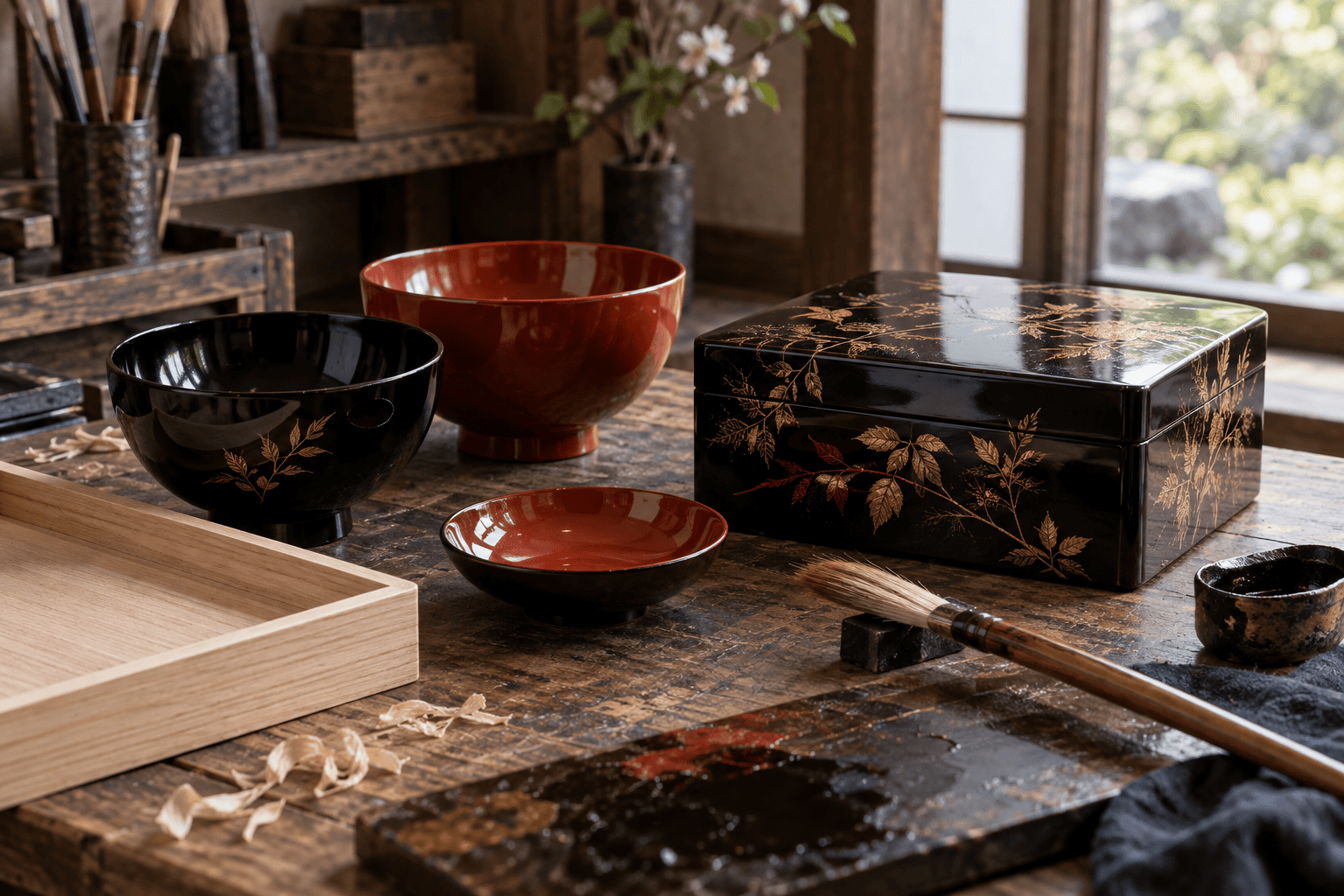
Japanese Lacquerware Guide (2026): Best Regions, Urushi, Maki-e, Wajima and What to Buy
TL;DR
Japanese lacquerware is called shikki, while urushi is the natural lacquer material and finish. The best-known regional traditions include Wajima, Aizu, Echizen, Yamanaka, Kiso, Kagawa, Kishu and Ryukyu lacquerware. Buy by region, workshop, base material and condition—not by a vague “Japanese lacquer” label alone.
- Best-known name: Wajima-nuri, but Aizu, Echizen and Yamanaka offer excellent practical ware.
- Real query distinction: lacquerware can use wood, cloth, paper, bamboo or molded bases; “wooden” is not automatic.
- Food use: follow the maker’s care label; old, cracked or unknown coatings need caution.
- Search smarter: pair the region with 漆器, 椀, 重箱, 盆, 蒔絵 or 螺鈿.
As of September 2026, the smartest way to shop Japanese lacquerware is to start with a regional technique, not a marketplace adjective. Japan’s Association for the Promotion of Traditional Craft Industries maintains the official Traditional Crafts of Japan framework and regional listings.[1] Wajima’s craft community is still rebuilding after the 2024 Noto Peninsula earthquake, so provenance and direct support for identified workshops matter more than ever.
What Is Japanese Lacquerware?
Japanese lacquerware, Japanese lacquer ware and Japanese wooden lacquerware are commonly called shikki (漆器). Natural Japanese urushi is sap refined from the lacquer tree, then cured under controlled humidity. It is not ordinary paint drying by evaporation. The Agency for Cultural Affairs documents urushi craft as part of Japan’s cultural heritage work.[2]
What is Japanese lacquerware made of? Traditional bases include turned or carved wood, but cloth, bamboo, paper and later molded materials also appear. A seller may use “lacquerware” for synthetic coatings. Read 素地 (base), 木製 (wood), 天然木 (natural wood), 漆塗 (urushi coated), カシュー塗 (cashew coating) and ウレタン塗装 (urethane coating). This answers the recurring questions “is Japanese lacquerware plastic?” and “what are Japanese lacquer bowls made of?” without pretending every piece is identical.
Best Japanese Lacquerware Regions and Traditions
| Tradition | Region | Known for | Shopping note |
|---|---|---|---|
| Wajima-nuri | Wajima, Ishikawa | Layered wooden ware, bowls, trays, boxes | Look for 輪島塗 and an identified workshop; do not infer age from wear. |
| Aizu-nuri | Aizuwakamatsu, Fukushima | Bowls, jubako, trays, decorative techniques | A broad production area with traditional and modern lines. |
| Echizen shikki | Sabae, Fukui | Professional tableware and durable serving ware | Especially relevant for restaurant-grade bowls and trays. |
| Yamanaka shikki | Kaga, Ishikawa | Turned-wood bowls and visible grain | Woodturning and light forms are central to the identity. |
| Kiso shikki | Nagano | Trays, furniture, practical tableware | Known for functional pieces and varied base materials. |
| Kagawa shikki | Kagawa | Carved and colored lacquer techniques | Kinma, zonsei and choshitsu are useful search terms. |
| Kishu shikki | Kainan, Wakayama | Everyday trays, boxes and tableware | Ranges from traditional wood to molded bases; read the material line. |
| Ryukyu lacquerware | Okinawa | Vermilion ware and bold local decoration | Distinct regional tradition, often searched as 琉球漆器. |
This regional list covers the intent behind famous Japanese lacquerware, types of Japanese lacquerware, modern Japanese lacquerware and best Japanese lacquerware. The Wajima Museum of Urushi Art provides specialist context for Wajima-nuri and lacquer art.[3] Aizuwakamatsu’s official tourism information similarly introduces Aizu lacquerware in its local setting.[4]
Urushi, Maki-e and Raden: Japanese Lacquer Techniques
Urushi names the material and can also describe a finish. Maki-e is decoration made by sprinkling metal powder into lacquer; hira-maki-e, taka-maki-e and togidashi-maki-e create different relief and polish. Raden sets thin shell into the surface. Chinkin cuts lines and fills them with gold; carved lacquer builds colored layers before carving. A gold Japanese lacquer box is not automatically maki-e, and mother-of-pearl is not automatically raden—read the technique line.
Japanese black lacquer, red lacquerware and gold lacquerware describe color, not quality. Contemporary Japanese lacquer artists also apply urushi to fountain pens, watch dials, jewelry, combs, leather, sculpture and furniture. For a Japanese lacquer fountain pen or Japanese urushi watch, verify the underlying manufacturer and the decorating studio separately.
What Japanese Lacquerware Should You Buy?
| Object | Japanese search | What to inspect |
|---|---|---|
| Soup/rice bowl | 椀 / 汁椀 / 飯椀 | Check diameter, wood or resin base, and dishwasher warning. |
| Lidded bowl | 蓋付椀 | Match lid fit and inspect rim chips. |
| Bento / jubako | 弁当箱 / 重箱 | Check every tier, divider and lid. |
| Serving tray | 盆 / 会席盆 | Large trays are vulnerable to warping and edge chips. |
| Writing box | 硯箱 | Confirm whether inkstone and water dropper are included. |
| Tea caddy | 棗 / 茶入 | Tea-ceremony pieces can carry artist, school and box provenance. |
| Jewelry or document box | 小箱 / 文箱 | Inspect hinges, corners, lining and odor. |
| Chopsticks and spoon | 箸 / 漆スプーン | Ask whether finish is natural urushi or synthetic coating. |
| Maki-e pen or watch dial | 蒔絵 万年筆 / 漆文字盤 | Verify the maker and whether decoration is hand-applied. |
Antique Japanese lacquer boxes, vintage Japanese lacquer trays and old Japanese lacquer furniture need stronger condition checks than new tableware. Ask for angled light photos showing hairline cracks, lifting lacquer, clouding, warped lids, repaired corners and missing fittings. “Japanese lacquer box antique” in a title is not provenance. A signed wooden storage box (tomobako), artist seal, workshop label and purchase history are better evidence.
Is Japanese Lacquerware Food Safe, Toxic or Dishwasher Safe?
Properly cured natural urushi tableware is made for use, but raw urushi can trigger severe skin reactions. Never experiment with uncured lacquer. For new bowls, follow the identified maker’s food-contact and care instructions. For antique, cracked, peeling, odor-heavy or unknown pieces, use them decoratively until a qualified conservator or maker assesses them. The Victoria and Albert Museum’s conservation material explains lacquer’s layered construction and care sensitivity.[5]
Most traditional lacquerware should not go in a dishwasher, microwave, oven or prolonged soak. Wash promptly with a soft sponge and mild detergent, wipe dry, and avoid abrasive pads and direct sun. Do not use cooking oil as a universal “restoration.” A Japanese lacquer repair or restoration involving valuable maki-e, raden or an antique surface belongs with a specialist.
Why Is Japanese Lacquerware Expensive?
Price can reflect repeated ground and lacquer layers, curing time, turning or carving, decorative labor, artist reputation, workshop provenance and condition. It can also reflect rarity or dealer markup. Compare like with like: a molded everyday tray, a natural-wood Wajima bowl, a signed maki-e writing box and a museum-grade antique are not one market.
When assessing Wajima lacquerware value or an Aizu lacquerware box, record dimensions, weight, base material, technique, signature, workshop, original box and flaws. Search sold comparables, not only active asking prices. Avoid claims such as “museum quality” unless the seller provides objective provenance.
How to Buy Japanese Lacquerware from Japan
- Step 1 — choose intent: daily bowl, bento, tea object, decorative box, pen, furniture or collectible antique.
- Step 2 — search Japanese terms: combine a region with 漆器 and the object name.
- Step 3 — verify material: distinguish natural wood and urushi from resin, cashew and urethane finishes.
- Step 4 — inspect condition: request rim, corner, underside, signature and box photographs.
- Step 5 — compare total cost: include service fee, protective packing and dimensional shipping.
- Step 6 — order: use OneMall Universal Shopping for eligible Japanese stores and marketplaces, then consolidate compatible orders during 90 days of free storage.
OneMall uses two-stage payment: product price plus service fee first, international shipping after warehouse receipt. Service fees start at ¥200 per supported marketplace order. Consolidation is free for the first six orders; each additional order is ¥100. For fragile bowls or boxes, product inspection and protective packing matter more than squeezing everything into the smallest parcel.
Compare the best Japan proxy services and cheapest Japan proxy services by landed cost.
Frequently Asked Questions
What is Japanese lacquerware called?
Shikki (漆器) is lacquerware; urushi (漆) is the natural lacquer material. Region names such as Wajima-nuri and Aizu-nuri identify traditions.
What is maki-e?
Maki-e is a family of Japanese lacquer decoration techniques using sprinkled metal powder. It is not a generic name for every gold-colored lacquer item.
Is Wajima lacquerware always made of wood?
Traditional Wajima-nuri is associated with carefully prepared wooden bases and layered processes, but verify each listing and workshop rather than relying on title keywords.
Can I use vintage Japanese lacquer bowls for food?
Only when the finish is stable and the material and prior use are known. Cracked, peeling or unknown pieces are safer as display objects pending expert advice.
Where can I buy Japanese lacquerware?
Identified workshops, regional cooperatives, department stores and reputable vintage dealers are strong sources. OneMall can purchase eligible Japanese listings that do not offer overseas checkout.
Last updated: 2026-09-24.
References
- Traditional Crafts of Japan. https://www.kougei.or.jp/en/
- Agency for Cultural Affairs, Japan. https://www.bunka.go.jp/english/
- Wajima Museum of Urushi Art. https://www.city.wajima.ishikawa.jp/art/
- Aizuwakamatsu tourism, traditional crafts. https://www.aizukanko.com/
- Victoria and Albert Museum, Japanese lacquer. https://www.vam.ac.uk/articles/japanese-lacquer