
 Shopping Guide
 HELP / FAQs


 By onemall
TL;DR
Japanese-market rice cookers are cheaper and better-specced than the export models, but every one of them is built for Japan’s 100-volt mains. Buy a domestic Zojirushi or Tiger from Japan only if you can run it on 100 V or a properly rated step-down transformer. When that condition is met, the saving is real: a flagship Zojirushi that lists at ¥92,180 new in Japan sells used at roughly ¥60,000.
- Japan runs on 100 V AC, 50 Hz in the east and 60 Hz in the west[1] — a voltage used essentially nowhere else.
- A 5.5-cup flagship draws 1,240 W[2], so any transformer has to be big, heavy and rated well above that. This is not a travel-adapter situation.
- The saving is genuine when it applies — the Zojirushi Enbudaki NW-NB10 lists at ¥92,180 including tax on Zojirushi’s own store[2]; an unused display unit is around ¥67,000 on Japanese resale.
- Small cookers are the sensible import — a 3-cup unit is around 3 kg and ¥8,000–¥13,000, which survives international shipping economics far better than a 6.5 kg flagship.
- If you want plug-and-play abroad, buy the overseas model instead. Zojirushi sells 220–240 V versions for export markets; those are a different product line, not the one in Japanese listings.
Here is the honest 2026 position, and it is not the one most import guides give you: buying a Japanese rice cooker from Japan is one of the few “buy from Japan” categories where the answer is often don’t — and knowing exactly when it flips to do is worth more than a list of model numbers. As of August 2026, the machines are excellent and the used prices are genuinely good. The electricity is the whole problem.
The 100-volt problem, stated plainly
Japan’s mains supply is uniformly 100 volts AC, with 50 Hz in eastern Japan and 60 Hz in the west[1]. Domestic appliances are rated for exactly that. North America runs at a nominal 120 V, most of Europe and much of Asia at 220–240 V.
A rice cooker is not a phone charger. Zojirushi’s flagship Enbudaki NW-NB10 draws 1,240 W while cooking and weighs about 6.5 kg[2]. Three consequences follow:
- On 220–240 V mains, plugging it in directly destroys it. There is no ambiguity here and no fuse that saves you.
- On 120 V mains it is running roughly 20% over its rated voltage — outside the specification the manufacturer designed and warranted it for. Some people do it anyway; nobody who sells the machine will back you if it fails.
- A step-down transformer has to be sized for 1,240 W plus headroom, which in practice means a heavy 1,500–2,000 W unit that costs real money and takes up counter space.
The second thing to know: modern Japanese cookers are computers. Pressure-IH models run scheduled heating profiles, and the induction heating circuitry is tuned to the supply frequency. That is why the manufacturers make separate export models rather than shipping the domestic one with a different plug.
When buying a Japanese-market cooker actually makes sense
| Your situation | Buy a Japan-domestic (100 V) model? | Why |
|---|---|---|
| Living in Japan, or moving there | Yes | Native voltage. Used domestic stock is the cheapest way to a good cooker anywhere. |
| You already own a 1,500 W+ step-down transformer | Yes | The marginal cost is just the cooker; the flagship models have no export equivalent. |
| You want a specific Japan-only model or a discontinued one | Yes, with a transformer | Lines like Enbudaki are not sold abroad in any voltage. |
| You are on 120 V and want it to just work | Only with eyes open | 20% over rated voltage, out of spec, no warranty support. |
| You are on 220–240 V and want it to just work | No | Buy the manufacturer’s 220–240 V export model instead. |
What Japanese rice cookers cost on the Japanese market right now
These are live Japanese listings in yen. Compare the flagship against its ¥92,180 list price on Zojirushi’s own store[2] — that is the size of the gap you are buying into.


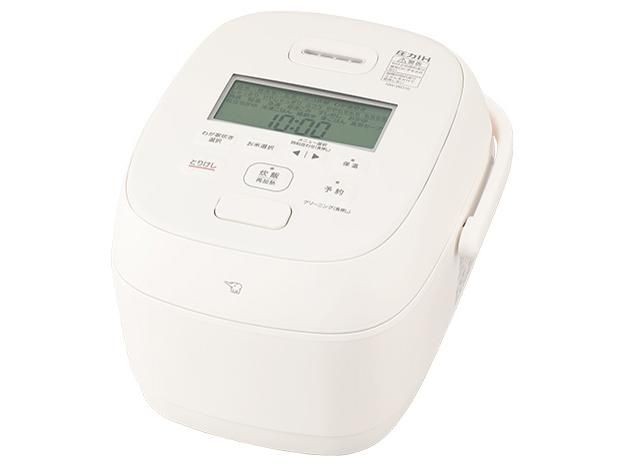
Read the pattern rather than the individual prices. The entry 3-cup microcomputer model is under ¥10,000 and weighs about 3 kg, which is the one shape of this purchase that shipping does not punish. The 5.5-cup pressure IH model in the middle is the volume seller in Japanese kitchens. The Enbudaki at the top is the machine you buy specifically because there is no export version of it — Zojirushi’s rotation-IH design with four bottom heaters[3] only exists in the domestic line.
Tiger[4] is the other name worth searching; its pressure-IH range competes directly with Zojirushi’s and often sells for less used, simply because it has less name recognition among overseas buyers.
How to buy a rice cooker from Japan: step by step
- Step 1 — Settle the voltage question first. Before you look at a single listing, decide whether you are on 100 V, buying a transformer, or should be shopping the export model instead. Everything below is wasted effort if this answer is “none of the above”.
- Step 2 — Search in Japanese and read the model number. Use 炊飯器 (rice cooker) with 象印 (Zojirushi) or タイガー (Tiger). The model code — NW-NB10, NP-GG05, NS-LF05 — tells you capacity and heating type; the listing title often does not. 未使用 means unused, 新品 means new.
- Step 3 — Order through OneMall. Paste the item URL or buy from the search results. OneMall purchases on your behalf from Mercari[5], Amazon Japan, Yahoo! Auctions and other Japanese platforms that will not ship to you directly.
- Step 4 — Pay the inspection fee, always. On a used appliance this is the single highest-value ¥-per-risk decision in the whole process. Unboxing photos confirm the inner pan is present and unscratched, and that a “new” unit is genuinely sealed.
- Step 5 — Do not over-consolidate. Free storage runs 90 days and the first six orders combine free (¥100 per order beyond that), but a rice cooker is a big rigid box. Adding it to a parcel of small goods can push the whole shipment into a higher weight band.
- Step 6 — Choose the carrier on volumetric weight, not actual weight. Shipping is billed on whichever is greater. A 6.5 kg cooker in its retail carton frequently prices as 10 kg or more. Sea mail through Japan Post[6] is dramatically cheaper on bulky items if you can wait; EMS is the middle option.
- Step 7 — Budget duty into the comparison. The US revoked its US$800 de minimis exemption on 29 August 2025[7], so US-bound parcels are dutiable whatever they cost. On a ¥60,000 appliance that is a material number, and it belongs in the maths before you decide the Japanese price is a bargain.
OneMall’s service fee on a Mercari order is a flat ¥300 (as of 2026), whatever the item costs. On a ¥67,000 cooker the fee is still ¥300 — a flat fee does the work. The costs that actually move on an appliance purchase are shipping and duty, not the proxy fee.
The honest verdict
If you are on 100 V, Japanese resale is the cheapest route to a very good rice cooker, full stop. If you have a transformer and want a machine with no export equivalent, the flagship domestic models are worth the effort. If you just want a Japanese-brand cooker that works when you plug it in, buy the manufacturer’s export model in your own voltage and spend the difference on rice.
For the wider fee picture, see our breakdown of what Japanese proxy shopping costs in 2026, and the cheapest Japan proxy services compared. When you are ready to order, OneMall handles the purchase, the inspection and the forwarding.
Frequently Asked Questions
Can I use a Japanese rice cooker in the US?
Japanese domestic cookers are rated for 100 V[1] and US mains is nominally 120 V, so the appliance would be running about 20% above its rated voltage — outside specification, and not something the manufacturer supports. The safe route is a step-down transformer rated comfortably above the cooker’s draw, which for a 1,240 W flagship[2] means a 1,500 W or larger unit.
Can I use a Japanese rice cooker in Europe or Australia?
Not directly. On 220–240 V mains a 100 V appliance is destroyed on first use. You need a step-down transformer sized for the cooker’s wattage, or you should buy the manufacturer’s 220–240 V export model instead.
What is the cheapest way to buy a Zojirushi rice cooker from Japan?
Buy used or unused-boxed stock on Japanese resale rather than new retail, choose the smallest capacity that suits your household, and ship by sea mail if you can wait. A 3-cup unused unit runs ¥8,000–¥13,000 against a flagship’s ¥92,180 list price[2], and its lower volume keeps the shipping bill down too.
Is Zojirushi or Tiger better?
They are close competitors with similar pressure-IH technology[3][4]. Zojirushi has stronger name recognition overseas, which means Tiger units of comparable specification often sell for less on the Japanese used market — a reason to search both.
Do Japanese rice cookers have English menus?
Domestic-market models are labelled in Japanese. The controls are simple enough to learn from the model’s manual, but if English labelling matters to you, that is another argument for the export model.
References
- Japan National Tourism Organization, “Japan Electrical Outlet” — mains voltage and frequency. https://www.japan.travel/en/plan/plug-and-electricity/
- Zojirushi Direct, NW-NB10 product page — list price, power consumption and weight. https://www.zojirushi-direct.com/item/NWNB10_BZ.html
- Zojirushi official, Enbudaki (炎舞炊き) NW-NB series — rotation-IH heating structure. https://www.zojirushi.co.jp/syohin/rice/ricecooker/nw-nb/enbudaki.html
- Tiger Corporation, official site. https://www.tiger-corporation.com/ja/
- Mercari, official corporate site. https://about.mercari.com/en/
- Japan Post, international mail services (EMS, airmail, sea mail). https://www.post.japanpost.jp/int/ems/index_en.html
- Federal Register, “Suspending Duty-Free De Minimis Treatment for All Countries” (effective 29 August 2025). https://www.federalregister.gov/documents/2025/08/05/2025-14897/suspending-duty-free-de-minimis-treatment-for-all-countries
Last updated: 2026-09-16.