
 Shopping Guide
 HELP / FAQs


 By onemall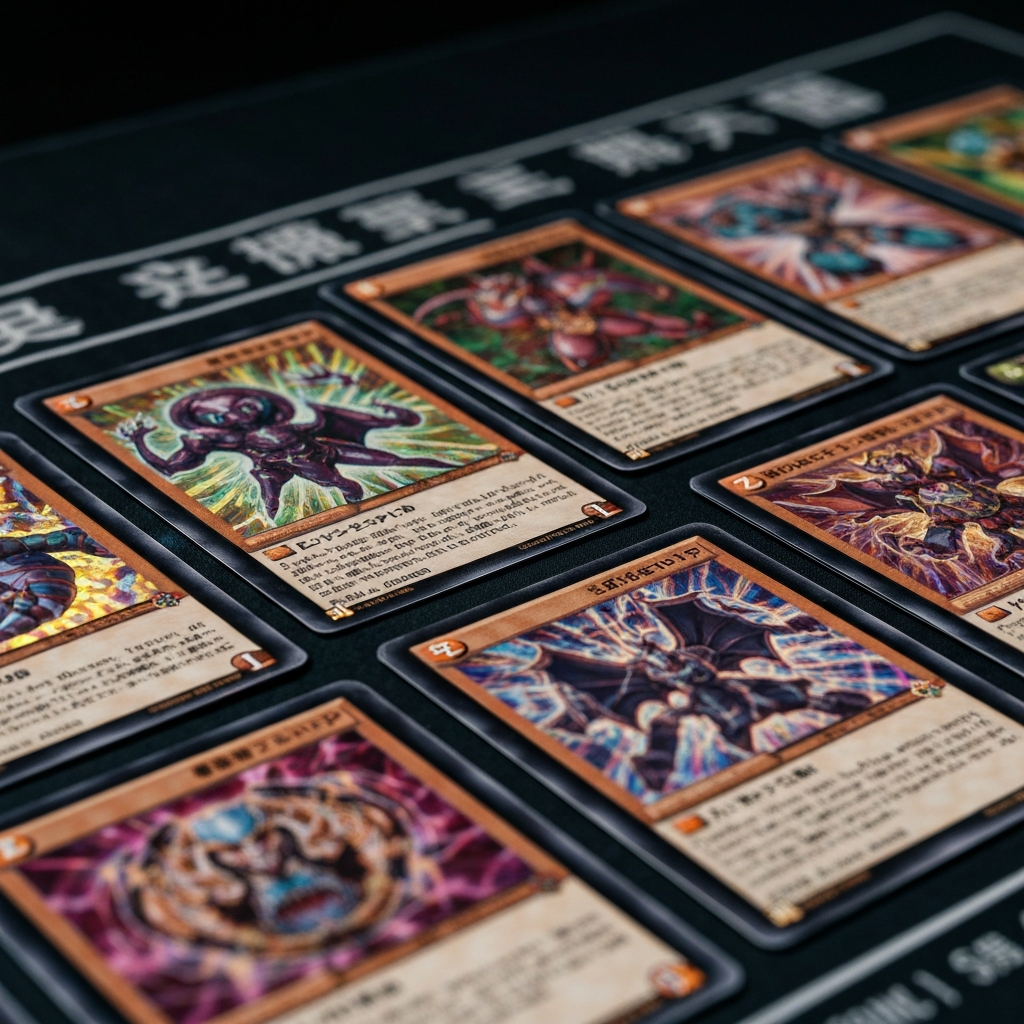
If you have ever priced out a Yu-Gi-Oh booster box at your local card shop and winced, you are not alone. Duelists across the world are discovering that the fastest way to land cheap Yu-Gi-Oh cards — and often the cheapest Yu-Gi-Oh booster box prices around — is to buy Yu-Gi-Oh from Japan directly, where the game was born and where new sets still hit shelves first.
This guide breaks down why Japanese Yu-Gi-Oh cards are worth chasing, what makes them physically different from English cards, and exactly how to buy Yu-Gi-Oh cards Japan sellers list on marketplaces like Mercari, Yahoo Auctions, and Suruga-ya using a proxy shopping service.
TL;DR
As of August 2026, the cheapest way to buy Yu-Gi-Oh cards from Japan is to source fresh booster packs, structure decks and singles on Mercari, Yahoo Auctions or Suruga-ya — often priced below English retail — and forward them through a proxy service, remembering Japanese cards need small-size sleeves.
- Japanese Yu-Gi-Oh sets often release earlier and price lower than English product.
- Japanese cards use the small size (59mm x 86mm) and need Japanese-size sleeves.
- Mercari, Yahoo Auctions, Suruga-ya and Amazon.co.jp don’t ship abroad — use a proxy.
- OneMall service fees start a flat ¥300 per item with 90 days of free storage after arrival (30 days after consolidation).
Why Buy Yu-Gi-Oh Cards Japan Instead of Locally
Yu-Gi-Oh, published by Konami[1], remains one of the best-selling trading card games in the world, and Japan is still the primary market where new mechanics and cards debut. For anyone building a Yu-Gi-Oh card game guide mentality around value, three facts matter most:

- Japanese structure decks and boosters usually release earlier than their English counterparts, sometimes by many months.
- Yen pricing on a fresh Yu-Gi-Oh booster pack Japan release is frequently lower than the US or EU retail price for the equivalent English product.
- Secondary market Yu-Gi-Oh rare cards — especially older Asian-exclusive prints — can be found on Japanese resale platforms for a fraction of Western aftermarket prices.
Japan’s broader cross-border e-commerce activity is well documented by the Japan External Trade Organization[2], which tracks how overseas shoppers increasingly rely on proxy and forwarding services to access Japanese retail and auction sites that do not ship internationally on their own.
Where to Buy Yu-Gi-Oh Cards for the Best Prices
So where to buy Yu-Gi-Oh cards once you have decided to source from Japan? The three most reliable marketplaces are:
- Mercari[3] — Japan’s largest flea-market app, excellent for individually listed singles and loose booster packs at genuinely affordable Yu-Gi-Oh TCG prices.
- Yahoo Auctions Japan[4] — the go-to for graded singles, sealed vintage boxes, and competitive bidding on scarce prints.
- Suruga-ya[5] — a long-established hobby retailer with fixed pricing on graded and near-mint cards, useful when you want predictable Yu-Gi-Oh card price without bidding wars.
Amazon.co.jp[6] is another dependable option for brand-new, factory-sealed booster boxes at retail pricing, particularly around a new Yu-Gi-Oh TCG 2026 set launch when domestic stock is still fresh.
The catch: none of these platforms ship internationally by default. That is where a proxy shopping service comes in — you place the order in Japan, the proxy receives it at a Japanese warehouse, and then forwards it to you. This is exactly the kind of Yu-Gi-Oh proxy shopping workflow that has made buying from Japan realistic for overseas collectors.
Japanese vs English Yu-Gi-Oh Cards: The Sleeve Problem
One detail that trips up first-time importers is size. When comparing Japanese vs English Yu-Gi-Oh cards, the physical dimensions are genuinely different — Japanese cards measure roughly 2.35″ x 3.38″ (59mm x 86mm), noticeably smaller than the standard English-language card size. This is the same small-format standard used across most Japanese TCGs.
Practically, this means:
- Standard English-size sleeves will not fit a Japanese Yu-Gi-Oh deck snugly — cards will rattle around and get scuffed.
- You need dedicated “Japanese size” or “small size” sleeves, sold separately from standard sleeves at most card shops and online.
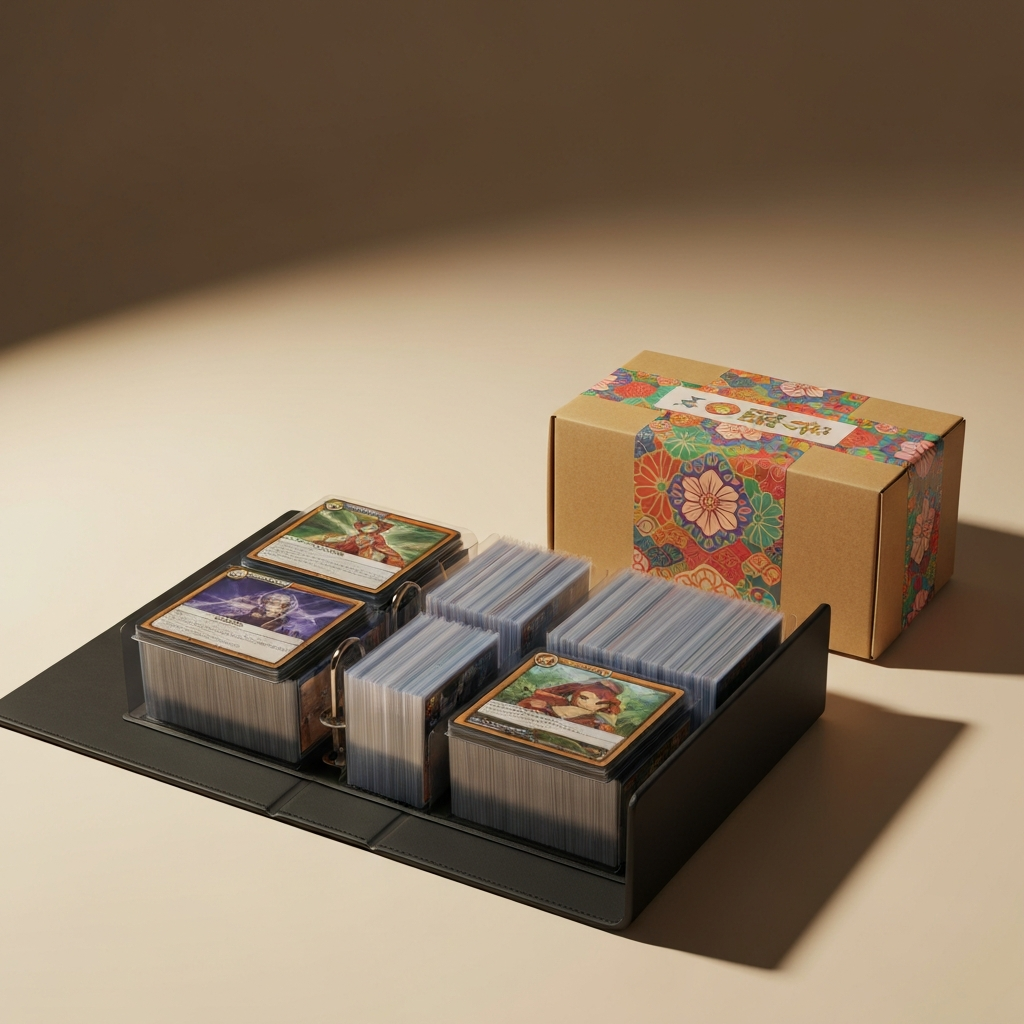
- If you mix Japanese and English cards in one Yu-Gi-Oh trading cards binder or deck box, plan for two sleeve sizes, not one.
This is a minor logistics detail, but it is exactly the kind of thing that separates a smooth first import from a frustrating one — so factor sleeve size into your budget alongside the cards themselves.
Building Value: Structure Decks, Boosters, and Investment Potential
Whether you are chasing the best Yu-Gi-Oh cards for competitive play or building a long-term collection, Japanese releases offer a wider selection at a lower entry cost:
- Structure decks — pre-built, themed decks that are usually the cheapest way to acquire a playable strategy plus a handful of reprinted staples.
- Booster boxes — buying a sealed box direct from Japan is often the path to the cheapest Yu-Gi-Oh booster box per-pack cost, since you avoid import markup added by Western distributors.
- Singles and rare pulls — Japanese-exclusive rarities and older prints can carry real collector and Yu-Gi-Oh card investment value, particularly for cards that never received a Western reprint.
Keep in mind that importing physical goods into your home country may involve customs duties or import taxes depending on declared value; rules vary by country and are outlined by national customs authorities such as Japan Customs[7]. Always check your own country’s threshold before placing a large order.
How OneMall Makes Buying Yu-Gi-Oh Cards From Japan Easy
This is where OneMall comes in as a proxy shopping service built specifically for this kind of cross-border hobby shopping. OneMall supports Mercari, Yahoo Auctions, Amazon Japan, Rakuten, Suruga-ya, ZOZOTOWN, and Rakuma, so you can source cards from every marketplace mentioned above through a single account.
A few features make it particularly useful for card collectors:
- AI Image Search — upload a photo of a card or box art and instantly find matching listings across Japanese marketplaces, handy when you only know a card by its artwork.
- 90 days of free storage after arrival (30 days after consolidation) — hold your structure decks and boosters in OneMall’s warehouse while you keep shopping, then ship everything together.
- Package consolidation — combining multiple orders into a single international shipment can cut shipping costs by roughly 30-50% compared to shipping each order separately, and the first six orders combined are free (¥100 per additional order after that).
- Professional product inspection — before your cards ship, OneMall can check that the package matches the listing and arrived undamaged.
Service fees are transparent and start a flat ¥300 per item, so you know the real cost before you commit. For international transport, shipments typically move via EMS through Japan Post[8] or private couriers, giving you a choice between cost and speed.
Put together, this turns “how do I buy Yu-Gi-Oh from Japan” from a logistics headache into a simple three-step process: order on the Japanese marketplace of your choice through OneMall, let your cards accumulate in free storage, then consolidate and ship once.
Shop Yu-Gi-Oh Cards on OneMall


Quick Comparison
| Marketplace | Best for | Ships internationally on its own |
|---|---|---|
| Mercari | Individually listed singles and loose packs at low prices | No (domestic only) |
| Yahoo Auctions Japan | Graded singles, sealed vintage boxes, scarce prints | No (domestic only) |
| Suruga-ya | Fixed pricing on graded / near-mint cards | No (domestic only) |
| Amazon.co.jp | Brand-new factory-sealed booster boxes at retail | Limited / restricted for overseas accounts |
Frequently Asked Questions
Are Japanese Yu-Gi-Oh cards cheaper than English cards?
Often yes. Fresh Yu-Gi-Oh booster pack Japan releases and structure decks are typically priced in yen at or below their eventual English retail price, and secondary-market cheap Yu-Gi-Oh cards on platforms like Mercari can undercut Western aftermarket prices significantly, especially for older sets.
Do I need special sleeves for Japanese Yu-Gi-Oh cards?
Yes. Japanese cards use the small card size (2.35″ x 3.38″ / 59mm x 86mm), so you need Japanese-size or “small size” Yu-Gi-Oh card sleeves, not standard English-size sleeves, or the fit will be loose and cards can shift and scuff.
Where to buy Yu-Gi-Oh cards from Japan if the seller won’t ship internationally?
Most Japanese marketplaces like Mercari, Yahoo Auctions, and Suruga-ya only ship domestically. A proxy shopping service such as OneMall places the order on your behalf, receives it at a Japanese address, and forwards it internationally.
Is buying Yu-Gi-Oh cards from Japan good for investment?
Some Japanese-exclusive rares and early prints have held or increased in value over time, making Yu-Gi-Oh card investment a real strategy for patient collectors, though like any collectible market, prices can fluctuate and past performance is not a guarantee.
What is the cheapest way to get a Yu-Gi-Oh booster box in 2026?
For the cheapest Yu-Gi-Oh booster box in the current Yu-Gi-Oh TCG 2026 cycle, buying a sealed box directly from a Japanese retailer or marketplace and shipping it via a consolidated proxy order usually beats paying import markup through a local Western retailer.
References
- Konami Digital Entertainment, official corporate site. https://www.konami.com/
- Japan External Trade Organization (JETRO), overview of Japanese retail and e-commerce. https://www.jetro.go.jp/en/
- Mercari, official marketplace site. https://www.mercari.com/
- Yahoo Auctions Japan, official auction platform. https://auctions.yahoo.co.jp/
- Suruga-ya, official hobby and collectibles retailer. https://www.suruga-ya.jp/
- Amazon.co.jp, official Japanese Amazon storefront. https://www.amazon.co.jp/
- Japan Customs, import regulations and duty information. https://www.customs.go.jp/english/
- Japan Post, EMS international shipping service. https://post.japanpost.jp/int/ems/
Last updated: 2026-09-28.